https://shop.fervogear.com/cart

Lewis Hamilton Issues Stark Warning on F1’s Critical Limits


Highlights
- Christian Danner doubts Lewis Hamilton’s continued top-level performance.
- Danner agrees with Ralf Schumacher on Hamilton’s Leclerc challenge.
- Hamilton struggles to match Charles Leclerc’s pace consistently.
- Leclerc outperformed Hamilton in most sessions at Miami Grand Prix.
- Age reduces drivers’ reflexes and ability to maintain elite flow.
- Hamilton’s future in F1 uncertain amid rising young talent.
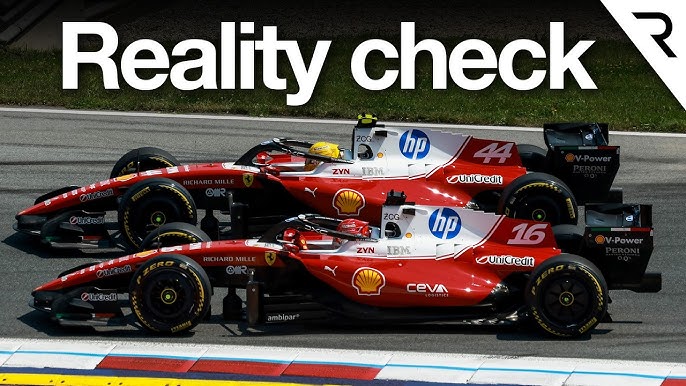
Christian Danner questions whether Lewis Hamilton can sustain peak performance against Ferrari teammate Charles Leclerc, highlighting a widening pace gap through recent weekends, including Miami.
Danner aligns with Ralf Schumacher’s view that Leclerc sets the benchmark at Ferrari. He argues Hamilton faces a demanding reference point amid a tightening front-of-grid landscape.

Hamilton shows progress adapting to Ferrari, yet his speed profile remains inconsistent relative to Leclerc, particularly over single laps and early-practice phases that shape weekend direction.

Miami underlined the trend. Leclerc led every session except the race, where a 20-second penalty cost him victory despite finishing first on the road, reinforcing his weekend-long advantage.
Danner cites age-related factors. He references the diminishing “flow state” elite drivers rely on, and notes Gerhard Berger’s admission that the instinctive edge fades even while results remain respectable.
“Maintaining that instinctive flow becomes harder with age,” Danner says, pointing to reduced reflexes and split-second processing.
He frames this as a broader pattern. Fernando Alonso, still competitive at 44, also faces the same ceiling when measured against the outright peak represented by Leclerc.
The competitive implication for Ferrari is clear. Leclerc’s pace naturally shapes setup baselines and development direction, while Hamilton’s experience adds depth but must convert to repeatable qualifying speed.
Hamilton still brings race-day resilience: tyre management, traffic reading, and tactical decision-making. Those strengths can mitigate deficits, but they rely on track position earned on Saturdays.
Leclerc’s session-by-session edge in Miami emphasized a persistent single-lap gap to Hamilton.
The 2026 rules horizon adds uncertainty. New power units and aero changes could shuffle priorities, but sharper transient responses may again favor younger drivers with peak adaptability.
Danner’s assessment stops short of writing Hamilton off. The seven-time champion’s legacy is secure, yet sustaining title-level pace depends on reducing the qualifying delta to Ferrari’s benchmark.
Ferrari’s reference point remains Leclerc; Hamilton’s route back hinges on consistent qualifying execution and confidence on the limit.
Visual Summary
Leclerc (Youth)
Hamilton (Age 41)
Formula 1’s new battle: youth vs. legacy —
Hamilton faces the toughest rival yet as age meets Leclerc’s “flow state” speed.
?️
Aging reflexes
vs
?
“Flow state” advantage
4x
Leclerc out-qualified Hamilton in Miami
Leclerc out-qualified Hamilton in Miami
20s Penalty
Cost Leclerc Miami win
Cost Leclerc Miami win
41 Y
Hamilton’s age
Hamilton’s age
The peak of F1 demands instinct and reflex.
Hamilton’s legend is secure, but as age rises, the gap widens—and youth pushes the pace.
How long can the greats stay ahead of the next generation?
Hamilton’s legend is secure, but as age rises, the gap widens—and youth pushes the pace.
How long can the greats stay ahead of the next generation?

Daniel Miller reports on Formula 1 Grand Prix weekends with race-day analysis, team-radio highlights, and point-standings updates. He explains power-unit upgrades, aerodynamic developments, and driver rivalries in straightforward, SEO-friendly language for a global F1 audience.