https://shop.fervogear.com/cart

Fred Vasseur Accuses Rival of ‘Cheating’ After Ferrari Comment

Highlights
- Ferrari introduced 32 upgrades so far in 2026 F1 season.
- Mercedes brought 17 upgrades, most significant at Canadian Grand Prix.
- Toto Wolff questioned Ferrari’s rapid updates under cost cap rules.
- Fred Vasseur denied cheating claims and defended Ferrari’s development.
- FIA monitors teams closely to enforce budget compliance rules.
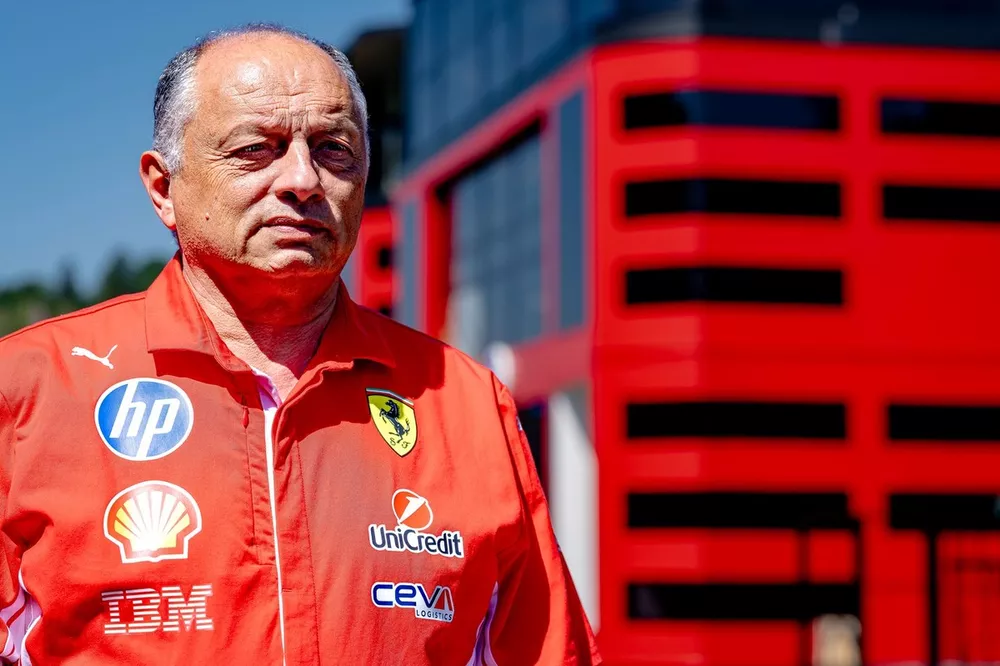
Ferrari team principal Fred Vasseur pushes back at Toto Wolff’s insinuation that Ferrari is “cheating” with its rapid upgrade cadence in the 2026 season.
Wolff raised doubts about Ferrari’s development rate under the budget cap, citing Mercedes’ smaller buffer for continuous parts production. His remarks intensified scrutiny around cost control.

Ferrari has logged 32 upgrades, beginning with Miami and followed by Barcelona, while Mercedes lists 17, headlined by its Canada package. Wolff’s full comments framed the recent debate.
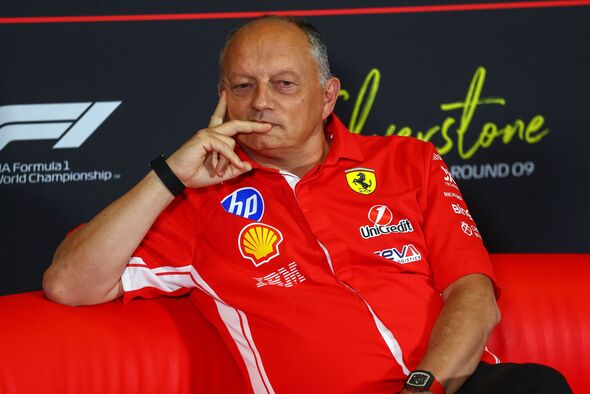
Vasseur counters that many listed items are refinements or adjusted specifications, which teams must declare but not in exhaustive detail. He argues media tallies inflate perceived performance swings.
He also calls Wolff’s suggestion ironic, noting Red Bull or Mercedes are lauded for development efficiency, while Ferrari’s pace triggers suspicion rather than credit.
“When Red Bull or Mercedes develop, they are ‘geniuses.’ When Ferrari develops, it is seen as cheating,” Vasseur argues.
Wolff says Mercedes cannot match Ferrari’s frequency of parts under current headroom, and predicted some rivals would slow. He hinted Ferrari might hit resource limits later.
The debate follows Wolff’s earlier comments questioning Ferrari’s update rate under the cap, which framed the competitive narrative through recent rounds.
Ferrari lists 32 car updates so far; Mercedes counts 17, with its biggest step arriving in Canada.
Vasseur stresses compliance with FIA oversight, which requires teams to declare changes but not disclose full specifications. He says the scale being reported exaggerates reality.
He also points to 2026 regulations enabling more meaningful in-season refinement. Bringing gains early, he says, stacks tenths over multiple events and compounds competitiveness.
“Consistent development can mean a few tenths over several races, which adds up,” Vasseur says, prioritizing early-season momentum.
Wider context matters. Several rivals have moderated update frequency, but Ferrari’s approach remains aggressive by design. That contrast fuels the public dispute with Mercedes.
The tension underscores a fine margin championship. With the cap policed tightly, the question becomes not who upgrades most, but who converts updates into repeatable performance.
Expect further scrutiny as the FIA continues routine audits and monitoring. Both Ferrari and Mercedes aim to sustain gains before the mid-season break, with more parts likely inbound.
Wolff’s initial comments set the tone after recent races, sharpening focus on resource allocation and efficiency within the cap structure.
Vasseur’s stance remains firm: development intensity is strategic, not suspicious, and reflects a calculated push to bank performance early in the campaign.
Earlier remarks from Mercedes intensified this storyline, framing Ferrari’s development as a standout feature of the season’s opening phase.
Vasseur has repeatedly highlighted the value of driver leadership and operational execution alongside technical steps, tying gains to consistent, race-by-race progress.
The debate will likely persist through the European stretch, where correlation, manufacturing cadence, and cost discipline will decide who sustains momentum.
As competitive narratives evolve, both teams balance pace of updates against reliability, correlation risk, and cap headroom, under the FIA’s ongoing compliance checks.
For Wolff’s framing of Ferrari’s rate of change, see his remarks earlier this week, which sparked the current exchange.
For Vasseur’s perspective on how updates are logged and interpreted, his explanation adds useful nuance to the raw counts.
The conversation extends into the driver sphere as well, with reactions inside the paddock to Ferrari’s visible rate of change.
Vasseur previously underlined the role of leadership and cohesion during this push, emphasizing the human element behind the upgrade cycle.
The story, at core, is about efficiency inside the cap: design choices, manufacturing agility, and the discipline to focus on lap time, not headlines.
This is where Ferrari and Mercedes now contest ground, with every tenth and every declared change closely examined by rivals and regulators alike.
How this balance plays out through the next rounds will define whether Ferrari’s early-season aggressiveness converts into sustained competitive advantage.
Equally, Mercedes’ path hinges on maximizing its Canada-led step while preserving headroom for subsequent refinements across chassis and aero.
With the pack compressing, the decisive factor is not the number of upgrades, but their efficacy, durability, and alignment with the 2026 ruleset direction.
That is where the championship battle now lives: inside the operations, the wind tunnel, and the accounting ledger.
Read Wolff’s earlier comments that triggered this debate at Mercedes’ questioning of Ferrari’s upgrade rate, which framed the cost-cap angle.
Vasseur’s clarification on how Ferrari classifies and declares parts is expanded in Ferrari’s upgrade claims explained, including the distinction between new parts and adjustments.
Reaction within the paddock includes George Russell’s surprise at Ferrari’s pace of change, adding driver context to the technical discussion.
For a broader sense of Ferrari’s internal direction under Vasseur, see Vasseur’s praise for Hamilton’s influence on the team’s standards and approach.
Visual Summary
Ferrari
Mercedes
“Is Ferrari cheating?“
– Toto Wolff
– Toto Wolff
“We play by the rules.
What’s ironic is the suspicion.”
– Fred Vasseur
What’s ironic is the suspicion.”
– Fred Vasseur
THE UPGRADE RACE
32
Ferrari Upgrades
Ferrari Upgrades
17
Mercedes Upgrades
Mercedes Upgrades
2026
F1 Season
F1 Season
💸 Cost Cap
⬆ Frequent Upgrades
👀 FIA watching
⬆ Frequent Upgrades
👀 FIA watching
Ferrari surges ahead in the upgrade race,
Mercedes casts doubts with cost cap claims.
The battle isn’t just on track—it’s in the rulebook.
Scrutiny. Suspicion. Speed.
Mercedes casts doubts with cost cap claims.
The battle isn’t just on track—it’s in the rulebook.
Scrutiny. Suspicion. Speed.

Daniel Miller reports on Formula 1 Grand Prix weekends with race-day analysis, team-radio highlights, and point-standings updates. He explains power-unit upgrades, aerodynamic developments, and driver rivalries in straightforward, SEO-friendly language for a global F1 audience.