

https://shop.fervogear.com/cart

Lewis Hamilton Voices F1 Fans’ Frustration Over New Rules


Highlights
- 2026 F1 rules remove MGU-H, altering energy recovery methods.
- Power split equally between combustion engines and electric power.
- MGU-K now produces 350 kW, nearly three times more power.
- Drivers must manage energy via braking, coasting, and super clipping.
- Hamilton says new rules complicate driving and fan understanding alike.
- Energy management now crucial for cornering and race strategy.
Lewis Hamilton voices frustration with the 2026 Formula 1 power unit rules, arguing the removal of the MGU-H and stricter energy splits make racecraft more constrained and harder for fans to follow.
The new regulations mandate a near 50:50 power balance between the combustion engine and electrical output. With the MGU-H removed, recovery now relies on the uprated MGU-K, which delivers up to 350 kW—almost three times its previous output.

Energy harvesting is concentrated in braking phases, with drivers leaning heavily on lift-and-coast and so-called “super clipping” to meet deployment targets. That management extends into qualifying, where banking charge for high-speed sections can be as decisive as outright pace.
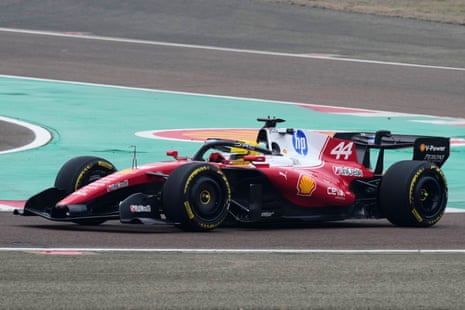
Corner approach has changed accordingly. Drivers cannot simply run flat through medium and fast turns because that risks depleting battery charge needed for the next acceleration zone, forcing trade-offs that shape the entire lap.
Previously, the MGU-H provided a steadier stream of electrical energy from the turbo, reducing the compromise between pushing and harvesting. Without it, off-throttle moments are pivotal for recovery, and the overall energy budget feels tighter across race stints.
MGU-K output rises to 350 kW, nearly triple its previous level under the old formula.
Hamilton underlines the issue in a video recorded during the Miami Grand Prix, saying the rules are difficult to grasp not only for viewers but for drivers adapting in real time to deployment windows and harvesting demands.
“The rules are confusing for fans and drivers alike,” says Hamilton, highlighting the tension between peak corner speed and battery conservation.
Braking plays a larger role in replenishing charge, and teams prioritize lift-and-coast windows to stabilize state of charge over a stint. That shifts emphasis in strategy and setup, affecting braking balance choices, tyre usage patterns, and how aggressively drivers can attack out-laps and in-laps.
The competitive edge now lies with teams that model energy flow most accurately and tailor deployment to circuit characteristics. That battle sits alongside Hamilton’s ongoing title fight with Ferrari and Mercedes, where small efficiency gains translate into significant lap-time dividends.
For spectators, the consequence is a race rhythm shaped by energy targets as much as tyre and fuel considerations. The visual of lifting before braking zones is now intrinsic to performance rather than a sign of conservatism.
Drivers lift and coast even in qualifying to bank energy for straights and DRS zones.
As teams refine software, deployment maps, and driver cues, the 2026 season continues to evolve around these constraints. Hamilton’s comments capture the core challenge: extracting peak pace while living within a stricter energy envelope on every lap.
Visual Summary
🔥
Combustion
Old: Dominant
⚡
Electric
Now: Equal Share
Racing, Now a Balancing Act
“Push hard, lose battery. Save battery, lose speed.”
Energy recovery is only via braking, coasting, or ‘super clipping’⚡
The MGU-H is gone.
Now, every corner is a choice: attack or recharge. Even the drivers and fans are left scratching their heads.
Now, every corner is a choice: attack or recharge. Even the drivers and fans are left scratching their heads.
😕
Lewis Hamilton: “Even we don’t really get these new rules. Every lap is a gamble—attack too much, battery won’t last the straights!”

Daniel Miller reports on Formula 1 Grand Prix weekends with race-day analysis, team-radio highlights, and point-standings updates. He explains power-unit upgrades, aerodynamic developments, and driver rivalries in straightforward, SEO-friendly language for a global F1 audience.