
https://shop.fervogear.com/cart

What Caused Verstappen’s Red Bull Rear-Wing Failure? | F1 Insight

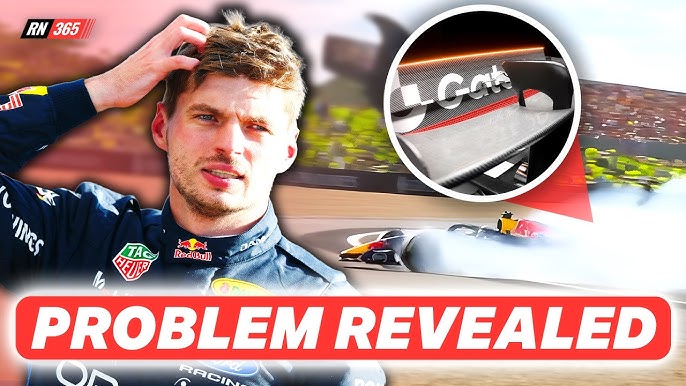
Highlights
- Verstappen’s RB22 rear wing malfunction affected two race weekends
- Rear wing failed to close properly during Austrian and British GPs
- Failure caused loss of downforce, leading to Verstappen’s Silverstone crash
- Red Bull suspects actuator or mechanical system failure in rear wing
- Issue arose during braking, disrupting car balance and grip
- Engineers working to fix problem before Belgian Grand Prix at Spa
Max Verstappen suffers recurring rear‑wing malfunctions on Red Bull’s RB22 across Austria and Britain, culminating in his Silverstone crash, as the team races to implement a Spa-ready fix.
Telemetry and trackside observations show the upper element fails to close reliably, leaving the wing partially open and stripping rear downforce at precisely the moments drivers lean on stability.

Rear wing fails to close, compromising downforce precisely during braking and turn-in.
The malfunction first appears in Austrian qualifying, then returns at Silverstone, where a balance spike under braking triggers the snap at Stowe and forces Verstappen’s retirement.
Red Bull focuses on the rear‑wing actuator and associated linkages, suspecting an intermittent mechanical fault rather than pure hydraulic or software error.
Such failures are uncommon, but the competitive impact is severe because DRS hardware also influences aerodynamic load when closed, particularly as brake pressure builds and speed bleeds.
The team’s broader form already faces scrutiny after compromised weekends, as outlined in recent Red Bull issues, amplifying urgency to stabilise RB22 performance before Spa.
Engineers target Spa-Francorchamps for a fully validated rear‑wing solution.
Data review centres on correlation between DRS command, actuator position, and load sensors, seeking evidence of hysteresis or binding that leaves the flap fractionally open under deceleration.
Because the failure emerges on the brakes, the car loses rear support exactly as weight transfers forward, magnifying the rotation and reducing the driver’s margin through high‑speed entries.
The competitive stakes are clear for the title fight, as flagged in Verstappen Red Bull warning, with reliability now as decisive as outright pace.
Any repeat would expose the team strategically, complicating setups and tyre use, and adding pressure alongside intra‑team considerations seen in Perez–Verstappen dynamics.
A fractionally open DRS flap can trigger sudden yaw spikes and rear snaps at high speed.
Red Bull plans to replace suspect hardware, re‑baseline the mechanism on rigs, and deploy additional sensors for validation during practice before locking race specifications.
The goal is straightforward: restore confidence so Verstappen can attack Spa’s high‑load sections without management compromises that bleed lap time and increase risk.
That reset would strengthen the team’s strategic toolkit, supporting the title defence outlined in Verstappen Red Bull defense.
In a season defined by fine margins, resolving a small, intermittent mechanism could decide outcomes. The RB22 needs full aerodynamic integrity back, immediately.
Visual Summary
⚠️
Verstappen’s Rear Wing Fails Twice
Verstappen’s Rear Wing Fails Twice
🇦🇹
First Problem: Austria Qualifying
Rear wing won’t close — car feels unstable
First Problem: Austria Qualifying
Rear wing won’t close — car feels unstable
🇬🇧
Critical Failure: Silverstone
At high speed, wing stuck open.
Verstappen crashes out
Critical Failure: Silverstone
At high speed, wing stuck open.
Verstappen crashes out
🔧
Engineers rush to fix
Focus: Spa next, stability vital
Engineers rush to fix
Focus: Spa next, stability vital
One tiny failure,
total loss of control.
Red Bull must solve the rear wing glitch to keep Verstappen’s title hopes on track at Spa.
total loss of control.
Red Bull must solve the rear wing glitch to keep Verstappen’s title hopes on track at Spa.

Daniel Miller reports on Formula 1 Grand Prix weekends with race-day analysis, team-radio highlights, and point-standings updates. He explains power-unit upgrades, aerodynamic developments, and driver rivalries in straightforward, SEO-friendly language for a global F1 audience.