
https://shop.fervogear.com/cart

Lando Norris Compares Spa Defeat to Formula 4 in Heartfelt Reflection

Highlights
- Lando Norris compares F1 cars to Formula 4 on Spa corners
- Five “straight mode” uses per lap allowed at 2026 Belgian GP
- “Corner mode” mandatory at Eau Rouge and Blanchimont corners
- Norris says low downforce reduces challenge, corner feels less intense
- Suggested tightening Eau Rouge or reducing downforce to increase challenge
- Spa’s reduced energy levels may diminish track’s traditional excitement
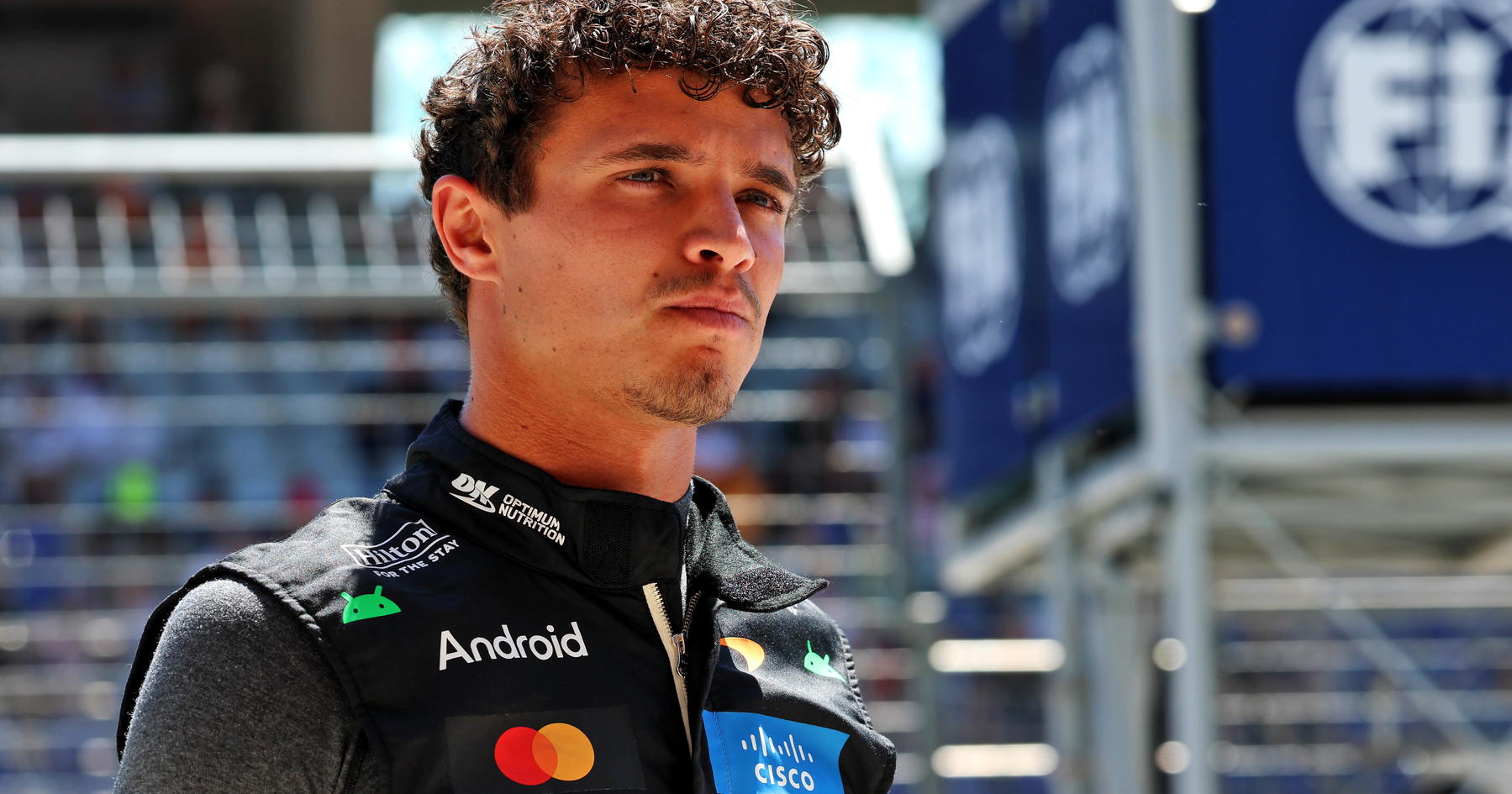
Lando Norris says Spa’s signature corners now feel closer to Formula 4 under 2026 rules, arguing the circuit’s famous challenge has faded despite efforts to restore driver workload.
Drivers may use straight mode five times per lap, but must remain in corner mode at Eau Rouge and Blanchimont, preventing drag-reduction during the highest lateral-load sections.

Straight mode opens front and rear wings to cut drag. Corner mode closes them for stability. Norris argues the delta between settings reduces intensity, even with the 2026 downforce trim.
He highlights commitment zones like Raidillon, where lifting automatically shuts the wings, creating a large balance shift exactly when precision matters most.
“It will not even be a challenge… the difference is too big when you go from open to shut.”</fervogear_custom]
Small adjustments, he says, can tip the car into instability and trigger crashes. With wings open, behaviour drifts toward junior-formula characteristics rather than Formula 1’s distinctive platform.
To restore jeopardy without courting risk, Norris suggests tightening Eau Rouge, cutting overall downforce further, or increasing power through the turns.
[fervogear_custom]Norris stresses the goal is to make Eau Rouge tougher without making it dangerous.
He also expects Pouhon to be flat less often because of reduced power, eroding the track’s trademark rhythm and perceived energy.
The 2026 framework aims to curb dependency on downforce and improve racing, but at Spa it risks sanitising the extremes that historically defined the venue, as explored in our Circuit Spa-Francorchamps feature.
Strategically, variable wing usage and power deployment will create setup trade-offs across teams, with execution likely to decide margins through traffic and tyre phases.
Five straight-mode activations per lap reshape top speed and energy deployment.
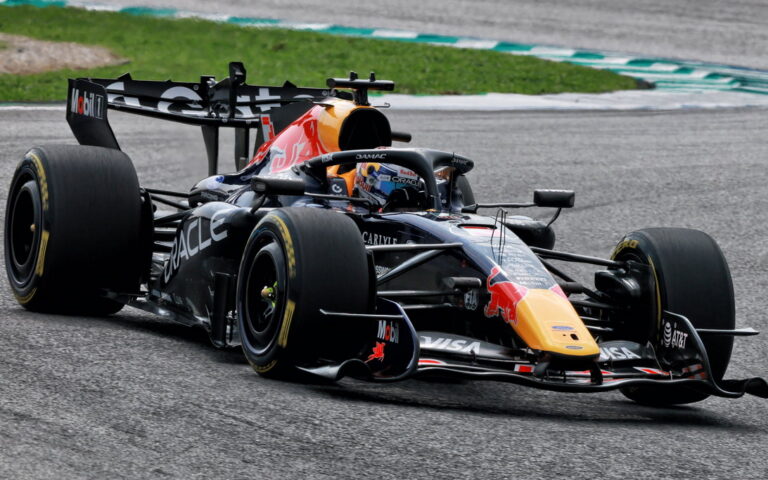
Examples include Verstappen and Red Bull’s approach at Spa, which emphasises efficiency without compromising stability.
McLaren must balance efficiency with stability at commitment points, while rivals refine different compromises. Recent paddock insight shows how approaches are already diverging, from Spa paddock stories to Norris’s recent Spa setback, illustrating those trade-offs.
Whether the revisions enhance racing or blunt Spa’s identity will only become clear across the season, starting with how teams adapt through practice and qualifying.
For Norris, the balance remains simple: preserve safety, but restore the sensation and jeopardy that made Spa a benchmark for driver commitment.
Visual Summary
F1 (speed, grip)
(less grip) F4
Lando Norris:
“Spa’s most famous corners now feel almost easy — like driving F4, not F1.”
“Spa’s most famous corners now feel almost easy — like driving F4, not F1.”
2026 “Straight mode” (open wings) vs “Corner mode” at Spa
×5 /lap
at Eau Rouge & Blanchimont
“Small changes can lead to crashes.
Open wings make F1 cars feel like F4 here.”
Spa is losing its F1 bite.
Will “challenge” return – or is it gone for good?

Daniel Miller reports on Formula 1 Grand Prix weekends with race-day analysis, team-radio highlights, and point-standings updates. He explains power-unit upgrades, aerodynamic developments, and driver rivalries in straightforward, SEO-friendly language for a global F1 audience.