

https://shop.fervogear.com/cart

Lewis Hamilton Reveals Shocking Impact of FP3 Crash

Highlights
- Hamilton crashed his Ferrari during FP3 at Spa-Francorchamps.
- Ferrari repaired the SF-26 until just before qualifying.
- Rear suspension was changed, affecting car’s balance and stability.
- Hamilton qualified sixth despite the compromised car setup.
- Team praised for rapid repairs amid challenging preparation.
- Focus now shifts to race day performance and strategy.
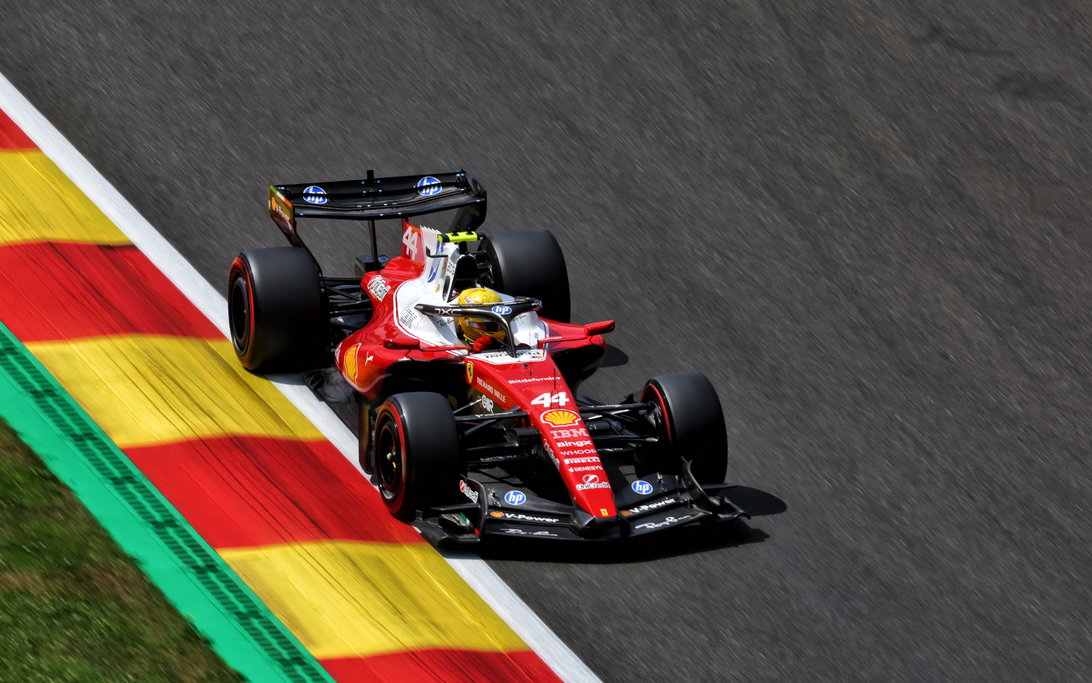
Lewis Hamilton faces a late complication at Spa after crashing in the closing minutes of FP3, damaging his Ferrari and compressing preparations for qualifying later the same day.
The impact in the middle sector disrupts Ferrari’s run plan, forcing rapid repairs to the SF-26 as the team races the clock to make the session and preserve competitiveness.

The accident caps a disrupted build-up following his FP3 crash, with Ferrari prioritising structural integrity and legality to ensure Hamilton can take part in qualifying.
Hamilton confirms the rear suspension is changed during repairs, altering compliance and geometry. That shift unsettles the balance and costs performance compared to FP3 running, as detailed in Ferrari’s setup assessment.
Crucially, the work completes before parc fermé applies at the start of qualifying, but the late finish limits baseline checks. Once qualifying begins, setup freedom is tightly constrained.
Ferrari replaces the rear suspension pre-qualifying, leaving the SF-26 with a different balance than in FP3.
Despite the compromise, Hamilton qualifies sixth. It’s a solid salvage, though the lap lacks the pace shown earlier, reflecting a car that is stable enough but short of peak confidence.
The crew deserves credit for pushing to the deadline and preserving track time. Limited run mileage before qualifying inevitably reduces correlation and narrows the operational window.
Hamilton secures P6 despite a compressed turnaround and a balance shift that trims confidence in high-speed sections.
Spa magnifies any setup imbalance. High-speed corners and long laps punish instability and can raise tyre degradation risks, especially if rear support differs from the intended baseline.
Strategically, Ferrari may lean toward stability for race stints. Within parc fermé, only minor tweaks, such as front wing flap angle and differential settings, can fine-tune balance.
Track position remains pivotal, but Spa’s overtaking opportunities offer recovery prospects. Hamilton’s adaptation will be measured against rivals, including Max Verstappen and teammate dynamics after Ferrari’s intra-team focus.
Spa’s demands amplify suspension changes, influencing stability, confidence, and tyre wear over long stints.
The race may hinge on start execution, managing traffic through the middle sector, and keeping tyres in the window. Safety cars frequently shape Spa strategies and could reset margins.
Hamilton’s weekend now turns on extracting consistency from a compromised platform. As noted in Ferrari’s late-setback analysis, clean air and disciplined stint management will be decisive.
With qualifying stabilised after the FP3 setback, the emphasis shifts to maximising points and limiting championship damage in a weekend that tests resilience as much as outright speed.
Visual Summary
💥
Hamilton Crashes in Final Practice
Ferrari’s frantic repair reshapes his race weekend—and the car itself.
🔧
⏱️
🏁
Garage scramble
Compromised Setup
Grid P6
Compromised Setup
Grid P6
6
QUALIFYING RESULT: 6th
After crash repairs
car balance lost, pace missing
Key Numbers:
FP3 Crash: T15
Repairs: 17 min
Grid: P6
FP3 Crash: T15
Repairs: 17 min
Grid: P6
Hamilton: “Not the car I had this morning, but proud of the team for getting me back out.”
Spa-Francorchamps
Next: Race Day
Spa’s elevations test
Hamilton’s skill and Ferrari’s repairs.
Hamilton’s skill and Ferrari’s repairs.
Daniel Miller reports on Formula 1 Grand Prix weekends with race-day analysis, team-radio highlights, and point-standings updates. He explains power-unit upgrades, aerodynamic developments, and driver rivalries in straightforward, SEO-friendly language for a global F1 audience.