
https://shop.fervogear.com/cart

Ferrari’s Bold Strategy Fails but Stays Strong Belgian GP Contender

Highlights
- FP1 and FP2 sessions showed contrasting team performance trends.
- Mercedes mostly maintained original energy management strategy in FP2.
- Ferrari tested new energy harvesting strategy but lost sector two time.
- FP2 results did not fully reflect Ferrari’s true Spa pace.
- FP3 will be crucial to validate Friday’s setup adjustments.
- Energy management remains key at demanding Spa-Francorchamps circuit.
Friday at Spa-Francorchamps delivers mixed signals. FP1 and FP2 offer contrasting pictures, complicating the early read on the competitive order.
Electrical energy recovery proves central across Spa’s long lap. FP1 gives a cleaner performance map, with sector times exposing car strengths and trade-offs.
FP2 shifts focus to deployment experiments rather than headline laps, obscuring single-lap form and exaggerating gaps between programmes.
Energy deployment experiments dominated FP2, skewing single-lap times across the field.
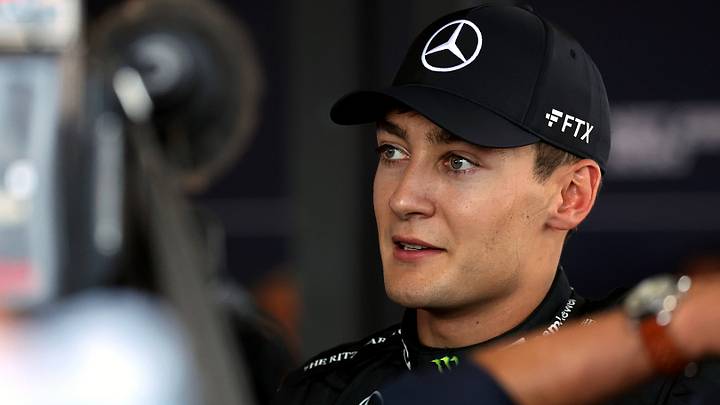
Mercedes responds to a tricky FP1 by refining Kimi Antonelli’s W17 balance. The team maintains its baseline energy strategy, prioritising consistency over aggressive redeployment.
Ferrari pursues a more radical route. The Scuderia trials a new harvesting approach, aiming to convert strong mid-sector speed into gains in Sectors 1 and 3.
[p fervogear_custom]Ferrari’s new harvesting cost roughly 0.5s in Sector 2 after a small downforce reduction.[/p fervogear_custom]
The plan backfires. A small downforce drop, combined with altered energy timing, erodes Sector 2 performance by around half a second, without offsetting gains elsewhere.
That context explains the headline gaps. Lewis Hamilton’s seven-tenths deficit and Charles Leclerc’s 1.1s are inflated by run plans and a Leclerc error, as outlined in the Hamilton and Leclerc Belgian GP analysis.
Teams also log race runs to benchmark tyre behaviour and energy budgets. That will shape strategy after reviewing Belgian GP long-run pace data overnight.
FP2 times likely underrepresent Ferrari’s true pace, given programme variance and driver errors.
Hybrid deployment windows remain decisive under current power unit limits. Spa’s heavy braking and long full-throttle sections magnify harvesting and deployment timing choices.
FP3 becomes the validation run. Teams must lock in energy maps and aero levels before qualifying, as flagged in the 2026 F1 Belgian GP preview.
FP3 is the key validation window for setup choices and energy plans before parc fermé.
If Ferrari rebalances its approach, the team should reassert its Sector 2 strength. That could restore overall lap time against Red Bull and Mercedes.
Upgrade pathways matter here. The Scuderia’s development direction, and whether recent Ferrari upgrades will keep rivals close, will be tested by Saturday’s cleaner reads.
Expect tight margins once programmes converge. Energy management, tyre prep, and tow effects will likely decide qualifying at Spa.
Visual Summary
Ferrari: Energy ↘
Lost 0.5s in S2
Mercedes: Energy ⇔
Stable, Seeking More
Energy Management Decides The Day ⚡
Ferrari gambled with a new energy plan—fast in Sectors 1 & 3, but lost 0.5s in Sector 2.
Mercedes kept things steady, giving Kimi Antonelli a smoother run.
Qualifying will reveal if Ferrari’s experiments pay off.
Spa’s energy puzzle is far from solved.
Mercedes kept things steady, giving Kimi Antonelli a smoother run.
Qualifying will reveal if Ferrari’s experiments pay off.
Spa’s energy puzzle is far from solved.

James William covers the IMSA WeatherTech SportsCar Championship, from the Rolex 24 at Daytona to sprint-race formats. His reports include prototype performance reviews, GT class battles, and pit-stop strategy insights for endurance-racing fans.