
https://shop.fervogear.com/cart

Mercedes’ Smart Qualifying Loophole Sparks Major Performance Gain

Highlights
- Mercedes exploits legal MGU-K rules to boost qualifying performance
- New method uses throttle lift timing to cut MGU-K power abruptly
- Technique allows max electrical power until finish line during qualifying
- Drivers like George Russell benefit from enhanced qualifying power delivery
- FIA banned prior MGU-K sudden shutdown but not this new tactic
- Mercedes’ innovation may influence future qualifying strategies and FIA rules
Mercedes introduces a legal MGU-K deployment tactic that enhances qualifying performance by exploiting a precise interpretation of the shutdown rules.
The approach maximizes electrical assistance to the finish line, delivering a late-lap gain without breaching written regulations.
Current rules require the MGU-K to ramp down output no faster than 50 kW per second for safety and reliability when switching off.
Earlier this season, teams tested an emergency shutdown that killed MGU-K output instantly, but the FIA outlawed its use in qualifying on safety grounds.
Mercedes instead uses a permitted exception. If the driver fully lifts off the throttle, the internal combustion engine stops producing power, allowing a faster MGU-K rundown.
The team’s control software identifies an exact lift point a few meters before the timing line, delaying any ramp-down until the very end of the lap.
That lets the car deploy maximum electrical energy right to the line, as illustrated during the session at Spa in the 2026 Belgian qualifying.
A full throttle lift permits an immediate MGU-K drop, avoiding the mandated 50 kW/s ramp while the ICE is inactive.
The execution demands accuracy from driver and software, which must track battery state and car position simultaneously.
The pay-off is a stronger final-sector punch and less wasted deployment after a premature ramp-down.
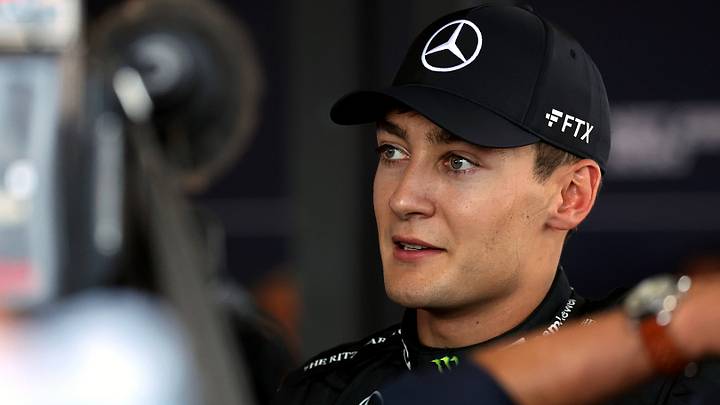
Drivers gain a short, decisive burst when it counts most. George Russell’s efforts underline the effect, as covered in recent Mercedes analysis.
Rookie Kimi Antonelli also benefits in early qualifying phases, complementing his growing confidence, highlighted in Mercedes’ Belgium weekend coverage.
Mercedes turns a safety-driven constraint into a qualifying edge by timing lift-off to the last meters of the lap.
This is primarily a qualifying tool. Over a race stint, the trade-offs in energy management and lift points limit its utility.
Rivals can copy the strategy, but consistent calibration and driver timing are non-trivial, especially with changing grip and wind.
Regulatory risk remains. The FIA may issue a clarification if it deems the practice contrary to intent, even if currently compliant.
Any clampdown would likely target the permissive lift-off clause or tighten the definition of shutdown sequencing.
The FIA previously banned instant MGU-K shutdowns in qualifying, but this lift-triggered approach currently sits within the letter of the rules.
Mercedes’ recent battery upgrade appears synergistic, improving usable deployment windows and prediction accuracy.
Together, the hardware and control logic sharpen the final push, where hundredths often decide grid position.
For now, Mercedes holds a small but meaningful advantage born from meticulous rule reading and execution.
Expect close monitoring from rivals and the FIA, and potentially a mid-season directive if the advantage grows.
Visual Summary
100%
MGU-K battery delivers maximum power… right up to the finish line 🏁
Mercedes’ “MGU-K On The Edge” Trick
Clever rule reading lets Mercedes unleash full electric boost until the last meter of a qualifying lap —
pure legal innovation in action.
pure legal innovation in action.
FIA engineered safe limits. Mercedes found the surgical throttle lift loophole.
The result? Extra punch for Russell & Antonelli — and fresh fuel for the F1 tech war.
The result? Extra punch for Russell & Antonelli — and fresh fuel for the F1 tech war.
⚡️
Battery drained
at max output
➡️
👟
Driver
lifts throttle at line
➡️
🚦
Instant cut-off
at finish
When the rulebook closes a door, F1 teams find a window.
Mercedes’ MGU-K trick is yet another move in the endless technical chess game of Grand Prix racing.
Will the FIA block this next?
Mercedes’ MGU-K trick is yet another move in the endless technical chess game of Grand Prix racing.
Will the FIA block this next?

James William covers the IMSA WeatherTech SportsCar Championship, from the Rolex 24 at Daytona to sprint-race formats. His reports include prototype performance reviews, GT class battles, and pit-stop strategy insights for endurance-racing fans.