
https://shop.fervogear.com/cart

Max Verstappen’s Escape Plan Revealed: ‘There’s Always a Way Out’

Highlights
- Max Verstappen extends Red Bull contract through 2030 season
- Contract includes likely escape clauses allowing early departure
- Extension announced just before the Dutch Grand Prix
- Verstappen’s future depends on team performance and sport’s direction
- Financial motives could influence Verstappen’s decision to leave
- Red Bull’s recent performance decline raises future uncertainty
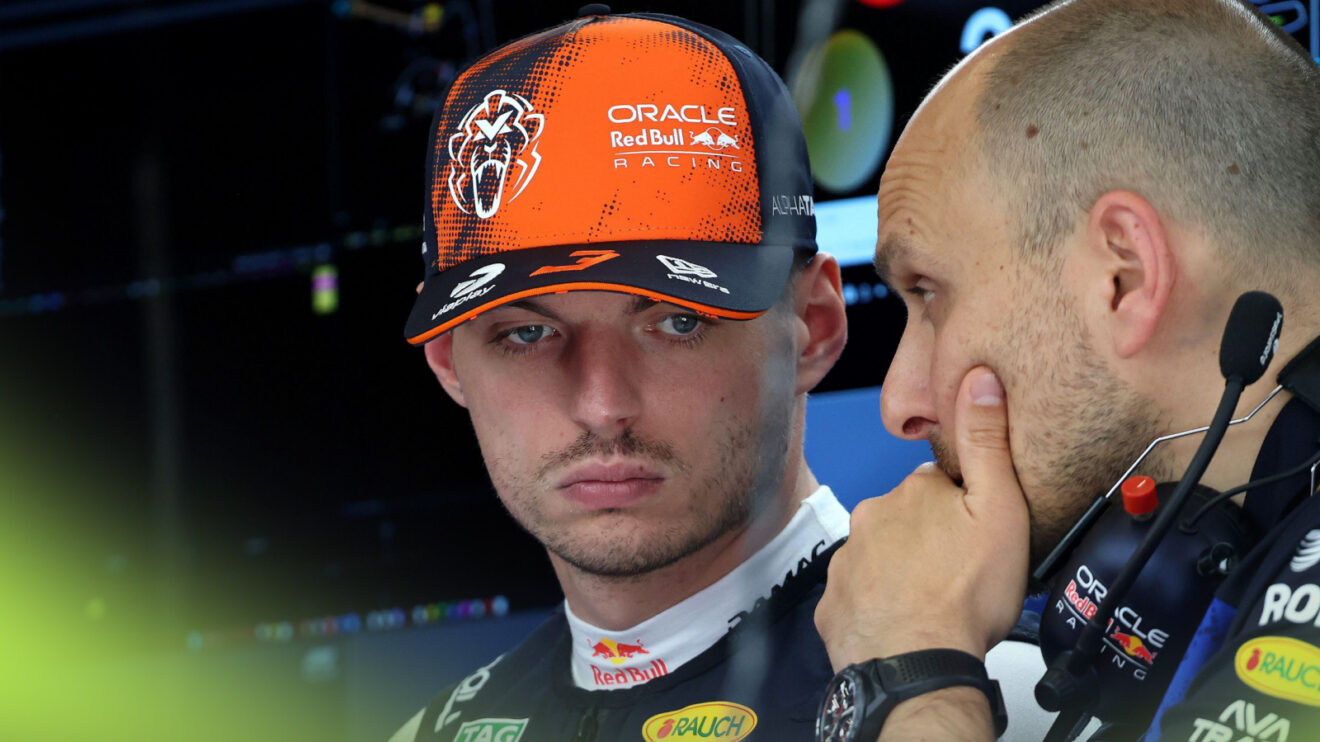
Max Verstappen signs a new Red Bull deal running to 2030, announced in the build-up to the Dutch Grand Prix, reinforcing his commitment while speculation persists about his long-term plans.
Former F1 engineer Bernie Collins says modern contracts almost always contain exit mechanisms, stressing there is “always a way out” for teams and drivers if circumstances change.

That flexibility reflects competitive reality. A top team pays for peak performance, and an unhappy or misaligned partnership rarely serves either side across multiple seasons.

Verstappen’s previous agreement reportedly included a 2026 break option. The new term resets the horizon but, as Collins notes, likely preserves leverage through written clauses and performance triggers.
The 2026 power unit overhaul and aero package shift add uncertainty. Verstappen will weigh Red Bull’s trajectory, engine competitiveness, and internal stability before committing emotionally to the full term.
“There is always a way out” — Bernie Collins on modern F1 contracts and mutual exit routes.
Red Bull’s recent form dip complicates the picture. Development pace and operational sharpness are under scrutiny against McLaren, Mercedes, and Ferrari across varying circuit profiles.
The extension offers near-term calm, but it does not close escape routes. If a rival project looks decisively stronger, a buyout remains a credible mechanism in today’s market.
Verstappen’s new deal runs through 2030, yet flexibility remains central to its structure.
The timing also follows a bruising Zandvoort weekend, including Verstappen’s incident that fed a wider debate about risk and margins. Post-race analysis of his crash underscores how small errors can reshape narratives.
Publicly, Red Bull frames the deal as a long-term alignment of goals, echoing its recent pledge of commitment to keep Verstappen central to its future through the regulation reset.
Behind the scenes, money still matters. If priorities shift, financial terms can enable an exit, particularly if a factory programme promises a clearer 2026 competitive pathway.
For now, the agreement reduces noise and stabilises the dressing room. The real test arrives with the 2026 regulations, when engine efficiency, deployment strategies, and chassis trade-offs redefine the order.
2026’s power unit and aero reset will be the decisive benchmark for Verstappen’s long-term stay.
Until then, results will drive sentiment. Each development step, strategy call, and reliability run will inform whether this extension becomes a decade-long partnership or a flexible bridge to new options.
Context from recent form and team dynamics — including evolving competition and driver market moves — will shape how solid this “2030” headline truly is.
Visual Summary
🏎️
🔑
Verstappen signs through 2030,
but the escape key is never far away…
but the escape key is never far away…
🔒
“Locked” until
2030
“Locked” until
2030
⚡
But
escape clause
But
escape clause
💸
Money can open
the door
Money can open
the door
Full term or early exit?
Despite a fresh contract keeping Max Verstappen in Red Bull colors until at least 2030, the key to his future is always within reach — escape clauses, money, and shifting ambitions mean the door is never fully closed. F1’s most coveted seat is ‘locked in’, but as history shows, in this sport, contracts are just the starting lights, not the finish line.

Daniel Miller reports on Formula 1 Grand Prix weekends with race-day analysis, team-radio highlights, and point-standings updates. He explains power-unit upgrades, aerodynamic developments, and driver rivalries in straightforward, SEO-friendly language for a global F1 audience.