https://shop.fervogear.com/cart

Top F1 Players React to Critical Recent Rule Changes

Highlights
- F1 officials meet Friday to review Miami Grand Prix rule changes
- 2026 regulations tweaked for safety and qualifying session engagement
- Recoverable energy reduced from 8MJ to 7MJ during qualifying
- New pull-away detection system ensures safer slow race starts
- Tyre blanket temperature and rear light visibility upgraded for safety
- Max Verstappen criticizes changes; F1 community awaits further decisions
FIA officials and key stakeholders meet Friday to review the Miami Grand Prix rule tweaks. The focus is the early impact of 2026 regulation adjustments targeting safety and qualifying-session engagement.
Representatives from the FIA, Formula 1 management, teams, and power unit manufacturers will assess data, driver feedback, and operational notes gathered across practice, qualifying, and the race in Miami.

Significant revisions are unlikely at this stage. The meeting aims to confirm alignment on intent, identify side effects, and set priorities for the next calibration step.
The FIA trimmed recoverable energy in qualifying from 8MJ to 7MJ, moderating peak deployment and encouraging strategic battery use without compromising hybrid relevance.
Qualifying recoverable energy drops from 8MJ to 7MJ to moderate peak deployment.
Race ‘boost’ levels were reduced, while the allowable super-clipping power ceiling rose from 250kW to 350kW. The blend targets drivability, energy recovery balance, and closer competitive spread.
A new low-power pull-away detection safeguards race starts. If a car releases the clutch and accelerates abnormally slowly, the MGU-K delivers a minimum assist to avoid creating a dangerous concertina.
New pull-away detection auto-engages MGU-K and activates flashing lights to protect race starts.
The system triggers flashing rear and side lights to alert following drivers. It offers no competitive advantage, intervening only to reach a defined baseline acceleration threshold.
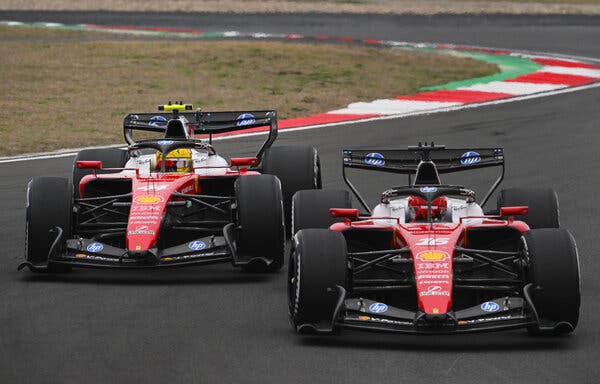
Intermediate tyre-blanket temperatures were raised to reduce cold-tyre snaps when switching compounds. Rear lights were updated for improved brightness and visibility in poor conditions.
Electric deployment characteristics were softened to aid control, complementing the revised recovery and clipping limits introduced for 2026-spec hybrid power units.
The FIA shaped the package with Formula 1, teams, power unit suppliers, and drivers. The goal remains predictable car behavior and better raceability without undermining technical ambition.
Miami’s first outing under the tweaks produced cleaner on-track flow and fewer marginal scenarios. Initial paddock reaction was cautiously positive, though some drivers voiced reservations.
Super-clipping ceiling increases to 350kW; race boost is trimmed for drivability.
Max Verstappen criticised elements of the changes, arguing scope remains for improvement. His stance underscores the trade-offs between energy recovery freedom, deployment windows, and wheel-to-wheel robustness.
Friday’s review will target unintended consequences, modelling gaps, and operational clarity. Expect data-driven tweaks rather than philosophy shifts as officials refine the 2026 framework.
The competitive objective is unchanged: sustain safety gains while preserving strategic complexity and on-track jeopardy as teams optimise around the revised hybrid and tyre operating windows.
Visual Summary
?
?
F1 Tweaks Turned On
Official review in progress after bold safety & performance tweaks debut at Miami ?
Official review in progress after bold safety & performance tweaks debut at Miami ?
-1MJ in qualifying recoverable energy
Safer, more strategic quali
+Super Clipping power
limit (250 → 350kW)
limit (250 → 350kW)
More tactical power surges
MGU-K Auto Boost for slow starts
Safety flash if stalled ?
Brighter rain lights &
hotter intermediate tyres
hotter intermediate tyres
Fewer slips, better vision ?️
?
Smoother racing
, but some
drivers still skeptical
?
Smoother racing
, but some
drivers still skeptical
?

Daniel Miller reports on Formula 1 Grand Prix weekends with race-day analysis, team-radio highlights, and point-standings updates. He explains power-unit upgrades, aerodynamic developments, and driver rivalries in straightforward, SEO-friendly language for a global F1 audience.