https://shop.fervogear.com/cart

Who Made the Biggest Gains and Losses at Race Starts?

Highlights
- New 2026 power units cause turbo lag, affecting race starts.
- Williams and Ferrari gained 22 and 21 positions respectively.
- Charles Leclerc leads drivers with 12 positions gained.
- Audi, Red Bull, and Mercedes lost most positions at starts.
- Toto Wolff admits Mercedes clutch system needs improvement.
- Teams focus on start performance ahead of Canadian Grand Prix.
Race starts are defining early 2026 Formula 1, with MGU-H removed and turbo lag introduced. After four rounds, start data highlights clear winners and losers.
Without the MGU-H, turbos rely solely on exhaust flow for boost. Drivers juggle revs and clutch bite to pre-spool. Reaction and launch management now decide metres and positions.

Calibration is everything: clutch bite-point, rear axle load, torque delivery, and energy deployment. Tiny misjudgments amplify turbo lag, separating clean launches from bogged starts.
Williams and Ferrari lead opening-lap gains with +22 and +21 after four races.
Two teams profit most. Williams and Ferrari have gained 22 and 21 positions respectively across Australia, China, Japan, and Miami. Their routes differ but the outcome is consistent: track position.
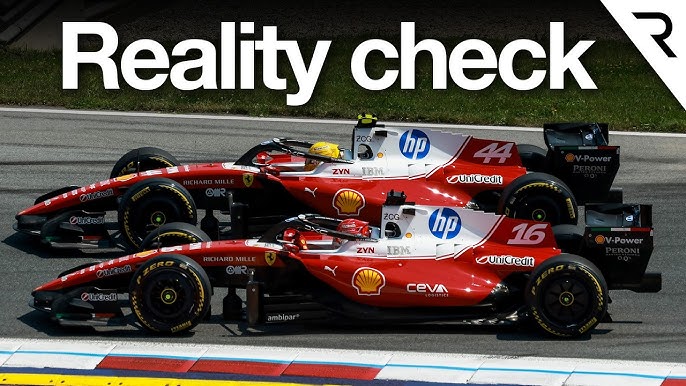
Ferrari’s smaller turbocharger appears to trade peak power for faster spool, aiding starts. Williams often qualifies deeper, creating first-lap opportunities against slower traffic and cautious rivals.
Charles Leclerc leads individuals with 12 positions gained. Carlos Sainz and Alexander Albon follow on 11. Esteban Ocon sits on 10 for Haas, with Lewis Hamilton on nine.
Charles Leclerc tops the leaderboard with 12 first-lap positions gained.
At the other end, Audi, Red Bull, and Mercedes have lost 34, 30, and 24 places respectively on opening laps. The totals reflect both incidents and execution weaknesses.
Audi’s number is driven by Nico Hulkenberg, responsible for 33 losses. Twelve came in Miami after an early front-wing change, yet persistent launch inconsistency remains visible.
Red Bull’s deficit is skewed by Max Verstappen’s first-lap spin in Miami, costing 20 places. Even so, repeatable starts have proven elusive under the new mapping constraints.
Toto Wolff acknowledges Mercedes must improve clutch control and grip modelling.
Mercedes illustrates the trade-offs best. Championship leader Kimi Antonelli has lost 20 positions across events and sprints, the only driver to cede ground in every outing.
Toto Wolff concedes the clutch release model and grip correlation need work. Improving bite-point control and predicting surface evolution should stabilise launches without sacrificing reliability.
Operationally, starts are now a frontline performance differentiator. Software, procedures, and hardware around turbo spool and torque delivery offer immediate lap-one value.
With margins tight, early losses compress strategies and complicate tyre management. Poor launches force aggressive undercuts, higher degradation, and riskier overtakes later.
Teams will target start performance during the break before the Canadian Grand Prix.
Teams now pivot to the Canadian Grand Prix break. Expect renewed focus on clutch calibration, turbo matching, and driver procedures, as this new turbo era keeps race starts pivotal.
Visual Summary
Williams
Ferrari
VS
Audi
Turbo Lag Challenge ⚡️
Standout Starters ?
Leclerc
+12
biggest individual gainer
+12
biggest individual gainer
Sainz
Albon
+11
Albon
+11
Ocon (Haas) +10, Hamilton +9
Williams: making up for poor qualifying with lightning first laps
Ferrari: small turbo = faster launches
Ferrari: small turbo = faster launches
Stalls & Spins ?
Nico Hulkenberg
–33
(Audi’s agony)
–33
(Audi’s agony)
Verstappen (spin, Miami): –20
Antonelli (Mercedes): –20 (lost positions in every race)
Antonelli (Mercedes): –20 (lost positions in every race)
Audi, Red Bull & Mercedes: suffering most from clutch & turbo starts
Turbo Boost
Balance
Starts = Season’s Battlefront
The new turbo era makes race launches an all-or-nothing risk.
Gains and losses at Turn 1 power the early championship narrative.
Who will crack the turbo/clutch code by Canada?
Gains and losses at Turn 1 power the early championship narrative.
Who will crack the turbo/clutch code by Canada?
Watch the grid like never before—every start is a game-changer!

James William covers the IMSA WeatherTech SportsCar Championship, from the Rolex 24 at Daytona to sprint-race formats. His reports include prototype performance reviews, GT class battles, and pit-stop strategy insights for endurance-racing fans.