https://shop.fervogear.com/cart

Max Verstappen’s Surprising Sabbatical Before Big F1 Overhaul


Highlights
- Max Verstappen may pause F1 career after 2024 season.
- Verstappen unhappy with current 50-50 combustion-electric power split.
- 2025 power split planned to shift to 60-40 combustion engine.
- F1 aims to reintroduce sustainable fuel V8 engines by 2030–2031.
- Otmar Szafnauer compares Verstappen’s potential break to Räikkönen’s hiatus.
- Verstappen trails championship leader Kimi Antonelli by 74 points.
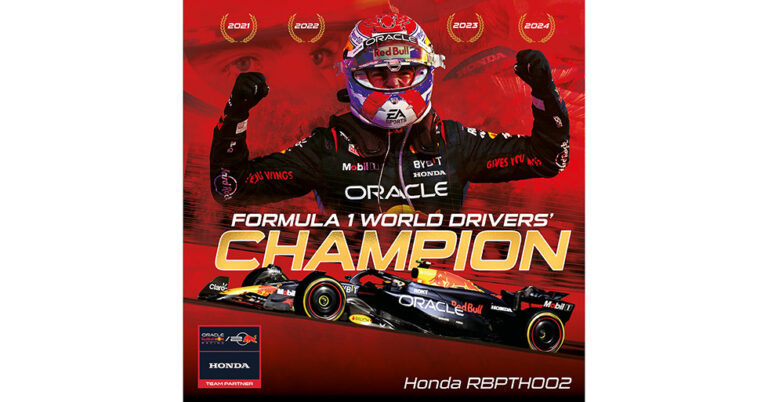
Max Verstappen is considering a post-2024 sabbatical from Formula 1, aligned to a future engine reset, as dissatisfaction with current hybrid rules shapes his long-term outlook.
Former team boss Otmar Szafnauer floats the possibility, calling any exit a short-term loss while suggesting a return when F1’s next major power unit shift arrives.

Verstappen weighing a sabbatical after 2024 underscores how regulations can influence even generational talents.
Verstappen opposes the current 50-50 combustion-to-electric split, arguing it blunts response and limits exploitation of Red Bull’s strengths. After four races, he trails Mercedes rookie Kimi Antonelli by 74 points.
The rules move to a 60-40 combustion advantage next season, a subtle recalibration that may reduce the electric dependency but not fundamentally change the powertrain philosophy.
FIA president Mohammed Ben Sulayem has confirmed plans to reintroduce V8 engines running on fully sustainable fuel around 2030–2031, with backing from senior figures including Toto Wolff and Laurent Mekies.
F1 targets sustainable-fuel V8s from 2030–2031, promising classic response with modern efficiency.
That timeline creates a logical re-entry point for Verstappen if he steps away. Szafnauer compares the scenario to sabbaticals taken by Kimi Räikkönen and Fernando Alonso, who returned successfully.
Such breaks can reset motivation and perspective. For F1, however, losing Verstappen even temporarily would dilute a key competitive benchmark and global headline act.
Technically, the 50-50 split demands aggressive energy recovery, precise deployment, and strict thermal management. It rewards teams mastering software strategies as much as mechanical grip and aerodynamic efficiency.
A 60-40 split in 2025 could ease energy management demands but will not rewrite the hybrid era’s fundamentals.
Verstappen favors immediate throttle response and engine-driven rotation. The current architecture constrains that feel, increasing lift-and-coast and complicating corner entry balance.
The 2025 tweak could slightly rebalance drivability and energy use. Some teams may gain on consistency; others could face calibration challenges across circuits and conditions.
Should Verstappen pause his career, Red Bull would need to reframe development feedback loops and race-day strategy leadership, while managing the commercial impact of his absence.
Conversely, staying through the transition would test Red Bull’s adaptability and Verstappen’s patience, with incremental gains possible as teams optimize for the 60-40 split.
Räikkönen’s rally and snowmobile detour, followed by race wins on return, shows sabbaticals can be productive. Alonso’s resurgence offers a modern parallel.
For now, Verstappen races on. The coming months will reveal whether incremental rule changes satisfy him, or whether he waits for a new V8 era to re-engage fully.
Visual Summary
Verstappen at the Threshold
Will F1’s biggest star step through the door or return for a new era?
Championship gap after 4 races:
-74
Verstappen
?
⛽
?
The road ahead: Hybrids now → More combustion → V8s return (2030)
Szafnauer: “A once-in-a-generation driver”
Could F1’s next era tempt him back?
Could F1’s next era tempt him back?

Daniel Miller reports on Formula 1 Grand Prix weekends with race-day analysis, team-radio highlights, and point-standings updates. He explains power-unit upgrades, aerodynamic developments, and driver rivalries in straightforward, SEO-friendly language for a global F1 audience.