https://shop.fervogear.com/cart

Ferrari Poised for Strong Future After Overcoming Frustration


Highlights
- Ferrari introduced 11 new upgrades at Miami Grand Prix.
- Charles Leclerc spun on final lap, causing damage.
- Leclerc received penalty, finishing sixth after corner cutting.
- Lewis Hamilton damaged car early after collision with Colapinto.
- Ferrari showed competitiveness but failed to secure strong points.
- James Hinchcliffe optimistic about Ferrari’s progress despite setbacks.
Ferrari arrives in Miami with an 11-part upgrade for the SF-26, yet leaves with modest points after incidents and a late penalty undermine a weekend that briefly promised podium potential.
The sprint format compresses practice and locks set-ups early under parc ferme, limiting correlation work on new parts and amplifying any misstep during a weekend intended to benchmark development.

Lewis Hamilton’s race unravels immediately after contact with Franco Colapinto damages his car, stripping valuable downforce and leaving him outside realistic points contention despite strategy flexibility and clean air running.

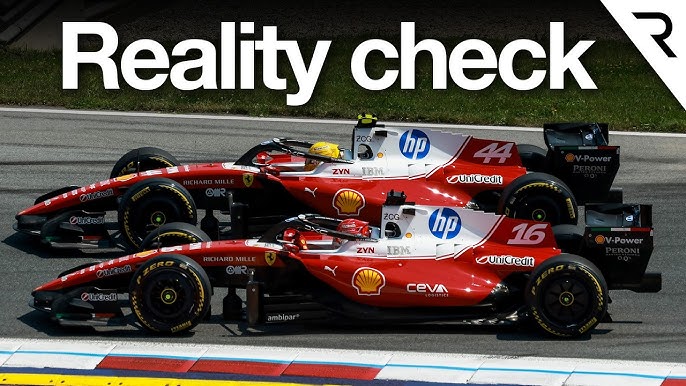
Charles Leclerc, by contrast, shows competitive pace, leading briefly and running within podium range as Ferrari’s upgraded package proves at least directionally sound against the front-runners through varying fuel loads.
The final lap undoes that progress. A spin and barrier strike inflict damage, forcing Leclerc to shortcut corners to reach the flag and incur a penalty dropping him to sixth.
Leclerc’s final-lap spin turned a likely podium into P6 after a penalty for corner-cutting.
Teammate fortunes also falter. The combination of early damage on one car and late errors on the other disguises the underlying step, leaving Ferrari with fewer points than performance suggested.
Former driver James Hinchcliffe stresses patience. Upgrades rarely deliver instant, headline-lap gains, particularly across a sprint weekend that compresses learning and can mask efficiency gains in balance and tyre management.
Ferrari introduced 11 new components, a broad push that requires mileage to correlate.
The package’s breadth matters. Eleven new components indicate a coordinated aero and mechanical direction, but meaningful validation depends on clean runs across fuel windows, wind conditions, and traffic profiles.
Parc ferme restrictions reduce scope to pivot set-up around fresh parts. That makes Friday correlation crucial and leaves teams vulnerable if damage or incidents skew tyre usage and stint profiles.
Sprint parc ferme compresses learning, increasing the penalty for early missteps.
Even so, Ferrari’s pace at stages against the leaders signals a workable baseline. That matters more than a single result, provided subsequent events confirm the wind-tunnel and CFD direction.
Focus now shifts to refining the package window, protecting floor and wing integrity in traffic, and extracting qualifying performance that unlocks cleaner race stints and tyre life.
The outlook remains constructive. If Miami represents noisy data rather than a trend, Ferrari has the ingredients to convert potential into consistent podium contention over the next sequence of races.
Visual Summary
Ferrari’s Big Upgrade — Broken Hopes in Miami
11 new parts, podium pace, but late mistakes and bad luck leave only crumbs of points
11 upgrades, 0 celebration
?
Hamilton’s hopes crashed early after being hit by Alpine, car limping for the rest of the race.
Hamilton’s hopes crashed early after being hit by Alpine, car limping for the rest of the race.
⭐️
Leclerc leads in Lap 4, podium in sight, but… spins on the final lap!
Leclerc leads in Lap 4, podium in sight, but… spins on the final lap!
?
Barrier impact & a desperate shortcut = penalty & points lost
Barrier impact & a desperate shortcut = penalty & points lost
?
6th & 8th
for Ferrari
6th & 8th
for Ferrari
? Hinchcliffe: “This is a platform. Progress remains.”
Next stop: Redemption?

Daniel Miller reports on Formula 1 Grand Prix weekends with race-day analysis, team-radio highlights, and point-standings updates. He explains power-unit upgrades, aerodynamic developments, and driver rivalries in straightforward, SEO-friendly language for a global F1 audience.