https://shop.fervogear.com/cart
Lando Norris Reveals Powerful Plan to Transform F1 Racing


Highlights
- Lando Norris urges F1 to simplify racing, like go-kart principles.
- Significant 2027 rule changes will alter power split in power units.
- Audi, Honda, GM, and Ford are investing in new F1 power units.
- Norris suggests lighter cars and durable tires for closer racing.
- Current active aerodynamics reduce drag but don’t solve core racing issues.
- Mercedes plans major upgrade for Canadian Grand Prix this season.
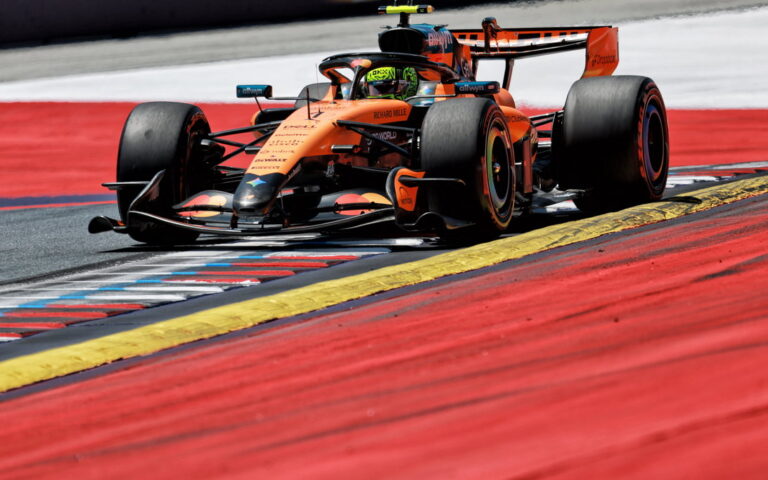
Lando Norris urges Formula 1 to prioritise simpler, karting-style principles to improve racing, questioning key elements of the 2026 regulations during ongoing discussions about the sport’s direction.
He argues the current focus on active aerodynamics and battery deployment masks the core issue: cars struggle to follow closely without energy deltas dictating battles.

Under the 2026 framework, the 350kW MGU-K and the internal combustion engine target a roughly 50-50 output split, with active aero reducing drag as the MGU-H disappears.
Further revisions are under evaluation for 2027, potentially rebalancing the power split to improve drivability and raceability without over-reliance on electrical boost windows.
The rule direction has attracted manufacturers. Audi and Honda commit to full works programmes, Ford partners Red Bull Powertrains, while General Motors targets a future in-house unit, currently aligned for 2029.
“Good racing isn’t having a driver at full battery and another at zero.”</fervogear_custom]
Norris’s prescription is straightforward: lighter cars, reduced inertia, and tyres robust enough to sustain close combat without overheating, so drivers can attack consistently rather than manage temperatures and charge.
[fervogear_custom]Lighter cars and durable tyres sit at the heart of Norris’s vision for sustained close racing.
He likens the goal to karting, where minimal downforce, strong slipstreaming, and pack racing produce natural overtaking without artificial aids or extreme energy differentials.

Norris recognises commercial realities. Any redesign must safeguard manufacturer interests and marketing goals while delivering a spectacle that rewards flat-out driving and reduces procedural energy exchanges.
Karting-style pack battles remain Norris’s benchmark for true raceability.
The FIA continues to iterate the 2026 package, leaving scope for 2027 refinements if raceability targets are missed, with teams pushing for clarity to guide car concepts.
Meanwhile, competitive development carries on. Mercedes plans a significant upgrade for the Canadian Grand Prix, part of a broader push to stabilise balance sheets and on-track performance.
The competitive outcome hinges on whether the next ruleset curbs mass and aero dependency. If not, energy management will keep deciding duels more than tyre grip and driver ingenuity.
Visual Summary
Norris Wants Racing “Flat-Out” Again
Pure Battles
“22 cars in a line racing—that’s what we want!”
Norris calls for lighter cars & better tyres.
?↔️?↔️?
Norris calls for lighter cars & better tyres.
?↔️?↔️?
Tech Tangle
Battery, wings, rules—
drivers aren’t racing flat-out.
Norris says:
“Good racing isn’t full battery ⛽ vs empty ?.”
drivers aren’t racing flat-out.
Norris says:
“Good racing isn’t full battery ⛽ vs empty ?.”
⬅️
Bring Back Slipstream Battles
?
2026
2027+
Vision
2027+
Vision
ICE + Battery 50/50
Active Aero, New Brands
Go-Kart Spirit?
Active Aero, New Brands
Go-Kart Spirit?
“Karting offers the closest thing to perfect racing.”
— Lando Norris

Daniel Miller reports on Formula 1 Grand Prix weekends with race-day analysis, team-radio highlights, and point-standings updates. He explains power-unit upgrades, aerodynamic developments, and driver rivalries in straightforward, SEO-friendly language for a global F1 audience.