https://shop.fervogear.com/cart

F1 Drivers Receive Vital Tips as ‘Perfect Storm’ Threatens Canadian GP

Highlights
- Canadian GP forecast predicts heavy rain Sunday at 16:00 local time
- Pirelli advises full wet tyres due to cold, wet conditions
- Air temperature expected unusually low, around 11-12 degrees Celsius
- Mercedes brings technical upgrades adding competition unpredictability
- Tyre strategy and pit stops critical amid changing track conditions
Heavy rain is forecast for Sunday’s Canadian Grand Prix at 16:00 local in Montreal, setting up a strategic and operational examination for every team at Circuit Gilles Villeneuve.
Pirelli signals that full wet tyres could be optimal if the downpour arrives, citing an unusual blend of temperature, circuit characteristics, and water levels that complicate warm-up and grip retention.

Pirelli indicates full wet tyres could be the optimal race-start choice if rain persists.
Air temperatures of 11-12C are expected. On a low-energy lap, tyres shed heat quickly, making it harder to sustain the intermediate’s narrower working range across runs and Safety Car phases.
Intermediates remain the default in light rain, but prolonged cold and standing water increase the risk of dropping below temperature, triggering understeer, traction loss, and potentially spiralling degradation.
Recent precedent supports that view. Two seasons ago Haas started on full wets and advanced early, leveraging initial grip and stability before the crossover favoured lighter-tread options.
Ambient 11–12°C is unusually low for Montreal and punishes tyre warm-up.
Strategy hinges on reading crossover timing, pit entry risk, and Safety Car probability. Teams will target undercut windows while protecting tyre temperature on out-laps, behind traffic on a cooling track.
Mercedes arrives with technical updates that could shift its operating window. In mixed conditions, that may bring sharper tyre usage or, conversely, fresh set-up unknowns through parc fermé.

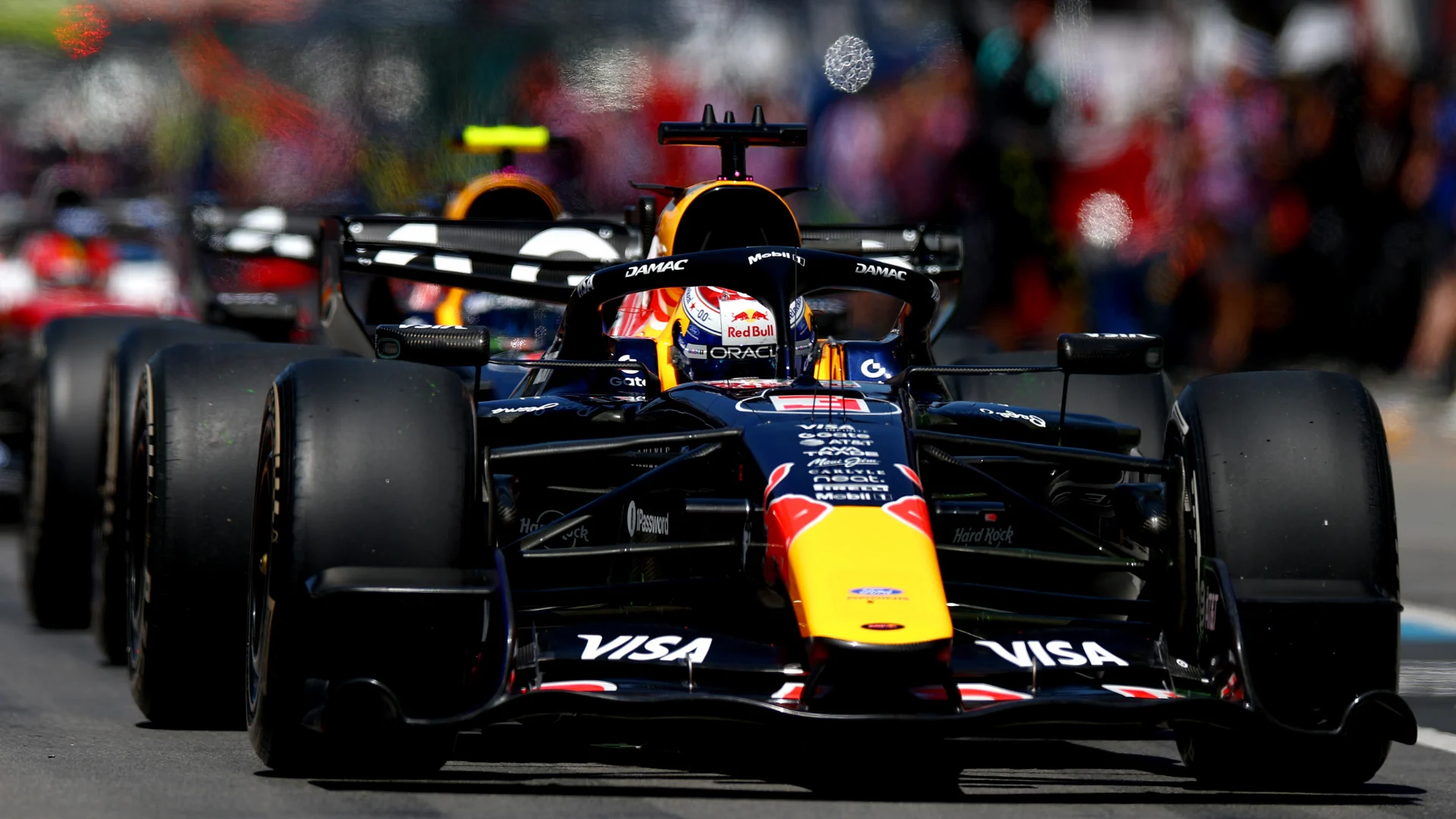
Max Verstappen has been framed as a potential dark horse this weekend. Wet-weather adaptability and execution could offset variability elsewhere, if set-up compromises don’t lock pace into a narrow window.
Mercedes’ upgrades add a wildcard to an already weather-driven competitive picture.
Race control may intervene if visibility worsens, a possibility underscored by the recent FIA rain warning for the Canadian GP and the circuit’s history of rapid weather swings.
Operationally, temperature management will dominate. Teams must balance wing level, ride height, and brake blanking to preserve tyre energy without compromising straight-line speed or aquaplaning resistance.
Expect frequent adjustments to tyre usage and pit timing as conditions evolve. That dynamic could amplify gains for those executing early calls, as seen in past Montreal races.
For driver-by-driver context, see team reactions to Canada, and check the full schedule via the 2026 F1 Canadian GP start time guide.
Visual Summary
INTER
Intermediate
⚡
FULL WET
Full Wet
“A perfect storm of cold, rain, and low-grip puts full wet tyres in the spotlight — whoever adapts fastest, wins!”
?️ 95%
Chance of rain
11°C
Air temp
?
Unpredictable order
Expect pitwall roulette
— It’s not just rain: technical upgrades, cold tyres, and fast-changing conditions will turn Sunday into a true test of adaptability.
— It’s not just rain: technical upgrades, cold tyres, and fast-changing conditions will turn Sunday into a true test of adaptability.

Daniel Miller reports on Formula 1 Grand Prix weekends with race-day analysis, team-radio highlights, and point-standings updates. He explains power-unit upgrades, aerodynamic developments, and driver rivalries in straightforward, SEO-friendly language for a global F1 audience.