https://shop.fervogear.com/cart

Lando Norris Predicts ‘Insanely Tricky’ Canadian GP Amid Rain Threat

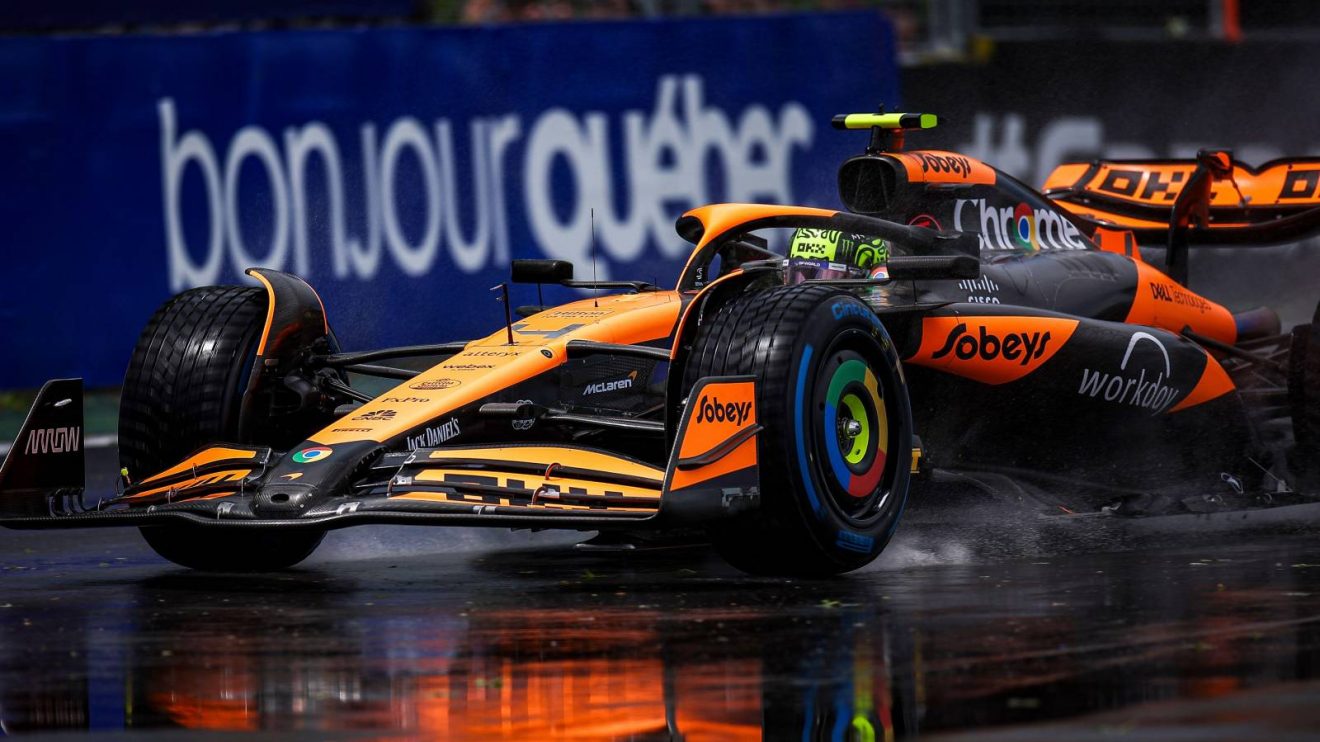
Highlights
- Rain forecasted throughout Canadian GP day, with cold temperatures.
- FIA declared a rain hazard due to over 40% rain chance.
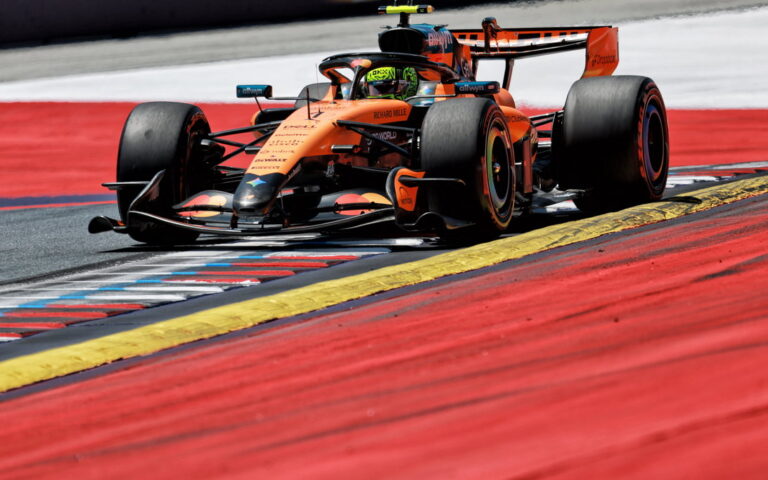
- Lando Norris qualified third behind George Russell and Kimi Antonelli.
- Drivers have little experience with 2026 cars in wet conditions.
- Cold weather may hinder tyre warming, affecting race grip.
- Teams must adapt quickly to wet and cold race conditions.
Lando Norris warns the Canadian Grand Prix will be “insanely tricky” as persistent rain and colder temperatures threaten Sunday in Montreal. He starts third behind George Russell and Kimi Antonelli.
Forecasts indicate light-to-moderate rain through the race window, with temperatures around ten degrees lower than typical. That compresses margins and exposes the field’s limited wet running with 2026 machinery.

The rain hazard designation underlines strategic jeopardy. Set-up choices from qualifying must now serve a persistently wet outlook under parc fermé limits on major changes.
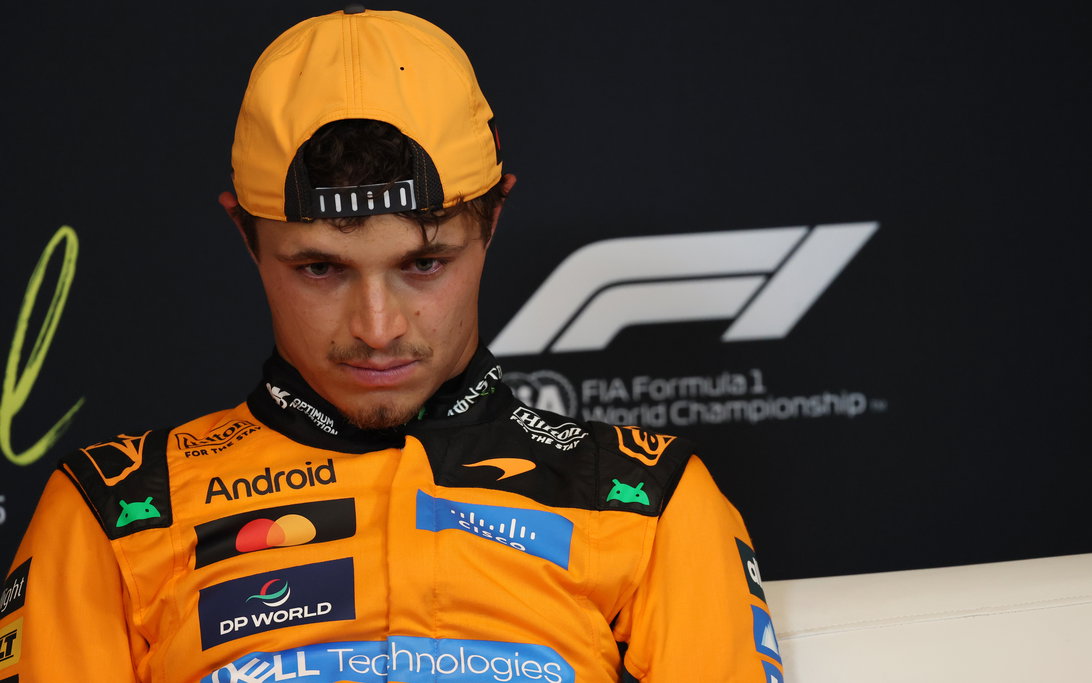
Grip will pivot on the crossover between full wets and intermediates. Cold track temperatures narrow working ranges, complicating out-lap warm-up and punishing small errors at Montreal’s traction zones.
Temperatures forecast around 10 degrees lower than usual will make tyre warm-up difficult.
Drivers also lack reference points for these cars in the wet. Only a handful have tested the newer models in rain, pushing teams toward simulation and sparse practice data.
Norris acknowledged the uncertainty, saying, “It is our job, but it could be an insanely tricky race,” with rapid compound switches likely and grip evolving corner-to-corner.
“It is our job, but it could be an insanely tricky race.” — Lando Norris
The competitive picture remains fluid. Russell’s pole, Antonelli’s front-row slot, and Norris’s third reflect qualifying speed, but wet conditions often rebalance strengths in traction, braking, and tyre warm-up.
Montreal amplifies risk. Long straights cool tyres and brakes, while heavy braking zones and painted lines punish over-commitment. Safety car probability climbs with close walls and patchy drainage.
FIA flags the event as a rain hazard, with the chance of precipitation exceeding 40%.
Operational execution could decide outcomes. Clean pit entries, timely calls, and avoiding double-stack delays matter, alongside out-lap prep, brake temperature control, and driver tools for differential and torque mapping.
Strategy will hinge on reading crossover windows and microclimate shifts. Tyre allocation rules constrain flexibility, so burning extra intermediates early could leave teams exposed in the finale.
Within parc fermé, only limited tweaks are permissible. Teams will rely on allowable wing trims, cooling settings, pressures, and driver feel to unlock confidence in low-grip phases.
Expect a race shaped by risk management and adaptability. Those who anticipate the next weather swing best should prosper, with Norris, Russell, and Antonelli central to the storyline.
Visual Summary
“Insanely Tricky Canadian GP Awaits”
Rain, cold & new cars: The ultimate test of skill and survival
?️ 40%+
Rain Hazard
(FIA Warning)
(FIA Warning)
❄️ -10°C
Lower Temps
Tyre Warmup Risk
Tyre Warmup Risk
P3
Norris on Grid
(Starting 3rd)
(Starting 3rd)
Unpredictability
⚡️
Will strategy decide glory or chaos?
?️
Rain & Cold = Unknowns
New cars, little wet data
?
Setups in Flux
Teams gamble for grip
⚖️
Skill & Focus Test
Error = Race Over

Daniel Miller reports on Formula 1 Grand Prix weekends with race-day analysis, team-radio highlights, and point-standings updates. He explains power-unit upgrades, aerodynamic developments, and driver rivalries in straightforward, SEO-friendly language for a global F1 audience.