https://shop.fervogear.com/cart

Exciting Shorter Monaco Grand Prix: The Ultimate F1 Sprint Race


Highlights
- Monaco GP distance set at 260 km, shortest F1 race.
- 2026 rules lock front and rear wings in high downforce.
- Active aerodynamics have no effect on Monaco’s tight circuit.
- Overtaking rare; teams usually make only one pit stop.
- Fuel consumption is low; race emphasizes driver skill and precision.
- Lewis Hamilton seen as strong contender for 2026 Monaco victory.
Monaco stands apart in 2026 as F1’s shortest race and the lone event with wings locked in high downforce, pushing emphasis toward driver execution over complex car management.
The FIA’s active-aero framework introduces Corner and Straight modes, but Monaco will not permit switching, nullifying a key 2026 tool that shapes behaviour elsewhere.

The race remains a contest of precision through 78 laps of the 3.337km layout, where barriers police mistakes and track position dictates strategy.

Distance underscores Monaco’s uniqueness. F1 standard race length is 305km, yet Monaco covers 260km, almost 45km shorter, effectively making it grand prix racing’s original sprint.
Monaco’s race distance is fixed at 260km, nearly 45km shorter than F1’s standard.
Tyre degradation is minimal without sustained high-load corners, so the field usually targets a single stop. That plan reflects overtaking scarcity rather than compound limits, explored in the Monaco Grand Prix strategy analysis.
Overtaking rarity makes a single stop the prevailing approach unless external factors intervene.
Fuel use is also low, trimming the need for lift-and-coast and freeing drivers to prioritise traction, braking points, and traffic management.
Active aerodynamics matter at most venues. In Monaco, they are irrelevant. With no switching zones, wings remain fixed in high downforce for practice, qualifying, and the race.
No active-aero switching will be allowed; wings stay in high-downforce mode all weekend.
That configuration amplifies mechanical grip demands and increases reliance on slow-speed rotation, traction, and kerb compliance, areas where car characteristics and setup philosophies diverge markedly.
Hybrid recovery behaves differently here. Frequent braking zones allow easy harvesting, but deployment bites less without aero offload, so gains from push phases, including the final-corner Overtake Mode, are constrained.
Track position therefore becomes everything. Drivers often pace the field deliberately to manufacture pit windows, protecting teammates or insulating their own stop against undercuts and traffic.
Despite the shorter distance, Monaco is no free-for-all. Passing opportunities are scarce, and mistakes carry immediate penalty, so patience and discipline frequently outweigh raw pace.
Competitive focus inevitably turns to leading protagonists. Lewis Hamilton profiles as a strong contender, while Red Bull may encounter atypical limitations tied to Monaco’s traits and the frozen aero configuration.
Lewis Hamilton is widely viewed as a leading contender for the 2026 Monaco victory.
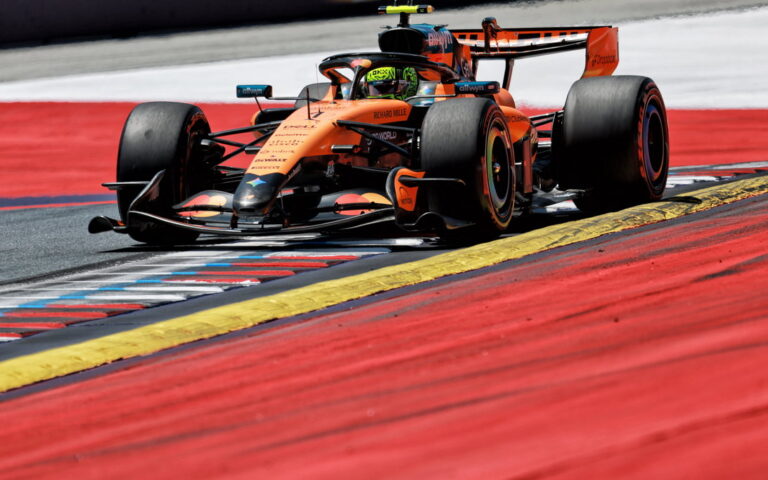
Attention also falls on Lando Norris and McLaren’s low-speed balance as Ferrari and Mercedes pursue qualifying supremacy. Further context appears in the 2026 Monaco Grand Prix preview, including setup notes.
Weather remains significant for track evolution and tyre warm-up, with cloud cover and temperature swings shaping grip. The latest outlook appears in the Monaco Grand Prix weather briefing for this weekend.
Ultimately, Monaco rewards execution. Precision, patience, and disciplined pace management decide results more than software modes, making 2026’s unique constraints a genuine test of driver craft and operational sharpness.
Visual Summary
260 km (vs 305 km norm)
💪 Sprint DNA
Driver Skill
No wing tricks. Wings locked for max grip.
No wing tricks. Wings locked for max grip.
0 Aero Modes
No “Straight/Corners” switching.
Just Monaco muscle.
Overtaking?
?♂️
Almost none.
Position = Everything
Precision
Speed?
(But not flat-out)
Old School
2026 Rules
2026 Rules
Always Unique
Shorter, slower, trickier
Shorter, slower, trickier
2026: No Aero Games Pure grip, pure nerve
Only in Monaco
Strategy = Patience, Timing ⏰
Strategy = Patience, Timing ⏰
A 78-lap sprint for legends—
Monaco 2026 is all about the driver.
Monaco 2026 is all about the driver.
Hamilton: Favored on finesse
Red Bull: Extra challenge ahead
Monaco 2026: Not the fastest, just the hardest.

Daniel Miller reports on Formula 1 Grand Prix weekends with race-day analysis, team-radio highlights, and point-standings updates. He explains power-unit upgrades, aerodynamic developments, and driver rivalries in straightforward, SEO-friendly language for a global F1 audience.