https://shop.fervogear.com/cart

Unlock Every F1 Team’s Key Tech Upgrades for Monaco GP


Highlights
- All 11 F1 teams brought 30 combined technical upgrades to Monaco
- McLaren led with six upgrades focusing on rear winglets and suspension
- Red Bull introduced four upgrades including a ‘squirrel-shaped’ rear winglet
- Audi removed straight-mode actuators, added cooling features and aerodynamic tweaks
- Aston Martin and Haas each introduced three upgrades without winglets
- Ferrari, Williams, and Racing Bulls made minor suspension and aero adjustments
Monaco 2026 produces the busiest upgrade slate of the season, with all 11 teams deploying 30 changes. Packages target low-speed load and robustness for the tight, bumpy Monaco street circuit.
Rear-wing winglets become the weekend’s visual motif. Mercedes, Red Bull, and McLaren push the most aggressive interpretations, seeking yaw stability and corner-exit traction under Monaco’s fixed-wing, straight‑mode restrictions.

Those themes echo the Monaco GP build-up.
All 11 teams deploy a combined 30 upgrades for Monaco’s unique demands.
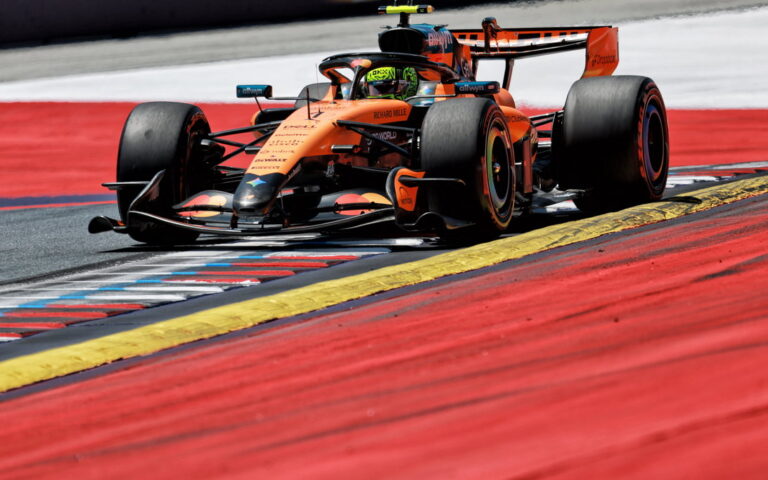
McLaren leads with six upgrades. A distinctive rear winglet manages tip vortices and exit load. Revised front-suspension fairings increase lock clearance, aiding consistency through Loews and the Swimming Pool.
Rear-suspension geometry and the beam wing are refined for efficiency. A diffuser stay adds stiffness, protecting platform control over bumps and kerbs.
Red Bull counters with four items. The headline is a ‘squirrel-shaped’ rear winglet to manage spanwise flow. New front brake-cooling exits and larger sidepod outlets address thermal load in traffic.
Red Bull’s ‘squirrel-shaped’ rear winglet headlines its four-part package.
A front-suspension tweak mirrors McLaren’s approach, helping flow conditioning and mechanical balance at extreme lock. The intent is predictable rotation without sacrificing traction.

Audi introduces four changes shaped by Monaco’s regulations. With straight‑mode disabled by fixed wings, the team removes the actuators, reducing weight and potential compliance.
A small rear winglet and reprofiled mirrors direct flow toward the sidepods. A revised roll hoop and engine-cover treatment expand cooling capacity for prolonged low-speed running.
Audi removes straight‑mode actuators because fixed wings render the system inactive at Monaco.
Aston Martin brings three updates without a winglet. The package features an exhaust wing aligned with 2026 trends, revised front-suspension hardware, and extra bodywork louvres for cooling.
Haas also installs three changes and omits a winglet. Focus areas include front-suspension modifications and an exhaust wing concept that mirrors Aston Martin’s direction.
McLaren tops the count with six items, including a diffuser stay and revised suspension.
Ferrari updates three areas. A front-suspension tweak accompanies two aero devices to raise load around the floor and diffuser. The thrust aligns with Ferrari’s Monaco focus on downforce.
Racing Bulls adds two parts. A front-suspension tweak supports a rear-wing flap combined with a central winglet, targeting consistent balance in traffic.
Williams brings a new exhaust tailpipe, a clear step from recent events, plus a front-suspension adjustment. The emphasis is tractability over kerbs and traction zones.
Alpine, Cadillac, and Mercedes each deliver a single item, primarily rear-wing winglets. The executions vary in complexity, but the gains are marginal in Monaco’s narrow performance window.
The collective trend underlines Monaco’s demands for low-speed load, cooling headroom, and steering-lock management. For driver adaptation to these changes, see Lando Norris’s Monaco approach.
Visual Summary
McLaren #1
6 upgrades
⬆️
6 upgrades
⬆️
Most innovative team at Monaco
↗️
↖️
⬆️
↗️
⬆️
aero tweaks everywhere
↖️
⬆️
↗️
⬆️
aero tweaks everywhere
Winglet arms race: all eyes on new rear solutions
McLaren’s 6 major upgrades lead paddock
Every team adapts for Monaco’s extreme corners
⚡
2026 Monaco GP = pure engineering theatre: new winglets, wild shapes, relentless upgrades.
2026 Monaco GP = pure engineering theatre: new winglets, wild shapes, relentless upgrades.

Daniel Miller reports on Formula 1 Grand Prix weekends with race-day analysis, team-radio highlights, and point-standings updates. He explains power-unit upgrades, aerodynamic developments, and driver rivalries in straightforward, SEO-friendly language for a global F1 audience.