https://shop.fervogear.com/cart

Mercedes Expose Hidden George Russell Issue in Barcelona Race

Highlights
- George Russell’s pace dropped due to incorrect front wing adjustment.
- Adjustment error caused by a faulty adjuster gun during last pit stop.
- Russell kept second after Kimi Antonelli retired with mechanical failure.
- Mercedes’ two-stop strategy underperformed against Hamilton’s three-stop plan.
- Lewis Hamilton won, securing Ferrari’s first victory of the season.
- Mercedes aims to improve pit procedures and car balance moving forward.
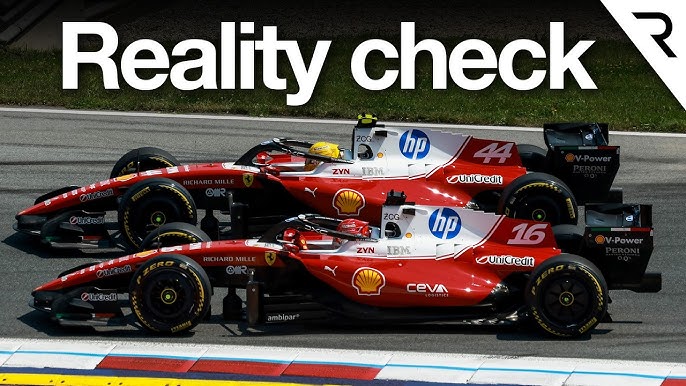
Mercedes confirms an equipment fault left George Russell compromised late in Barcelona-Catalunya, blunting his pace from pole and reshaping his fight with Kimi Antonelli and Lewis Hamilton.
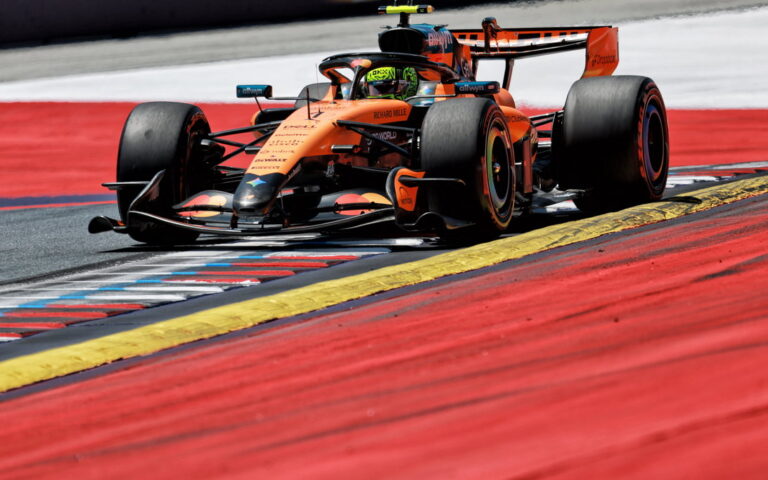
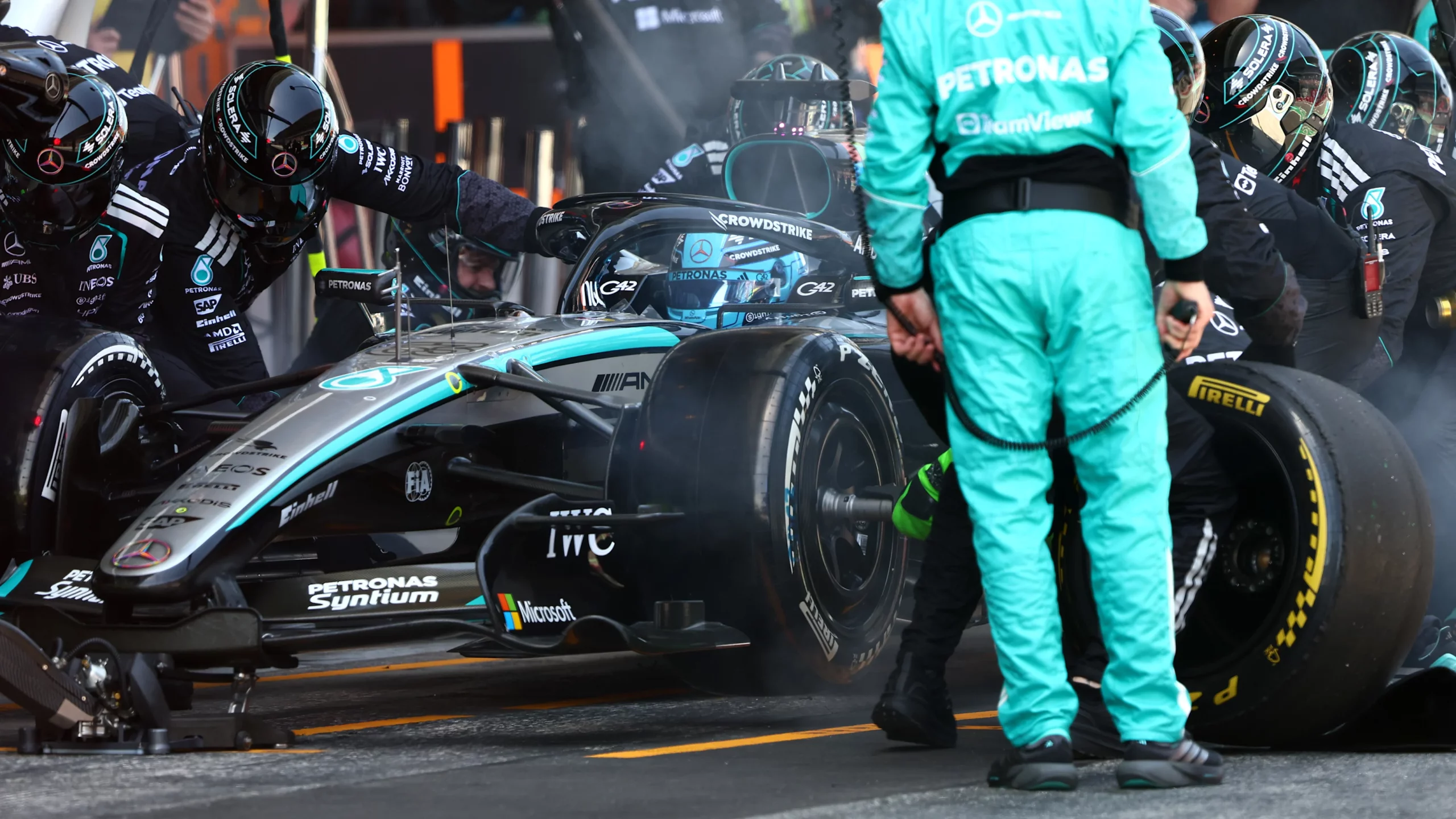
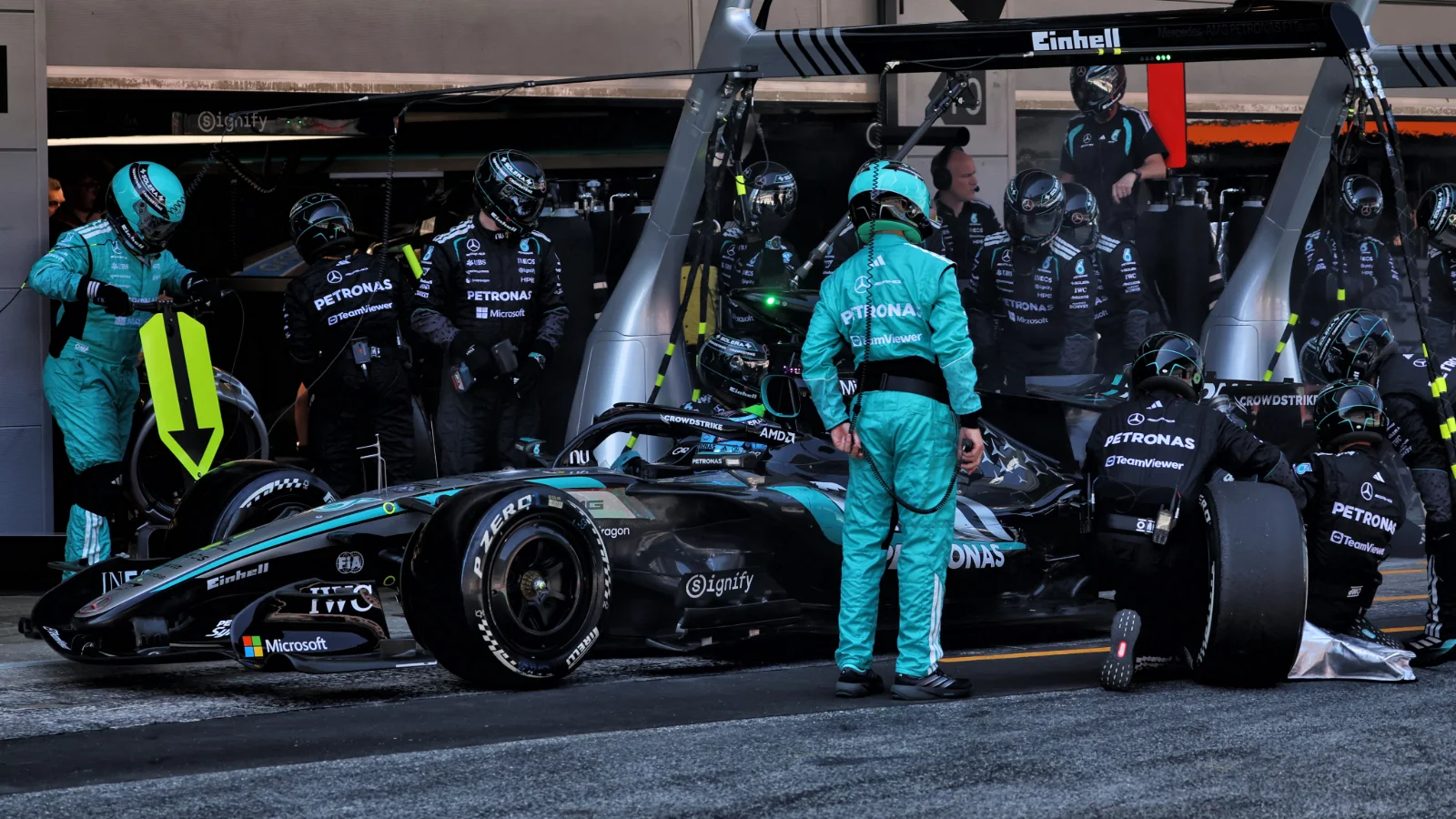
The team traced the drop to an incorrectly set front wing at Russell’s final stop, caused by a malfunctioning adjuster gun that shifted the W17 toward pronounced oversteer.

Russell controlled the early phases, but the imbalance escalated on the last stint. Antonelli passed in the closing laps, before retiring with a mechanical failure that ultimately preserved Russell’s second.
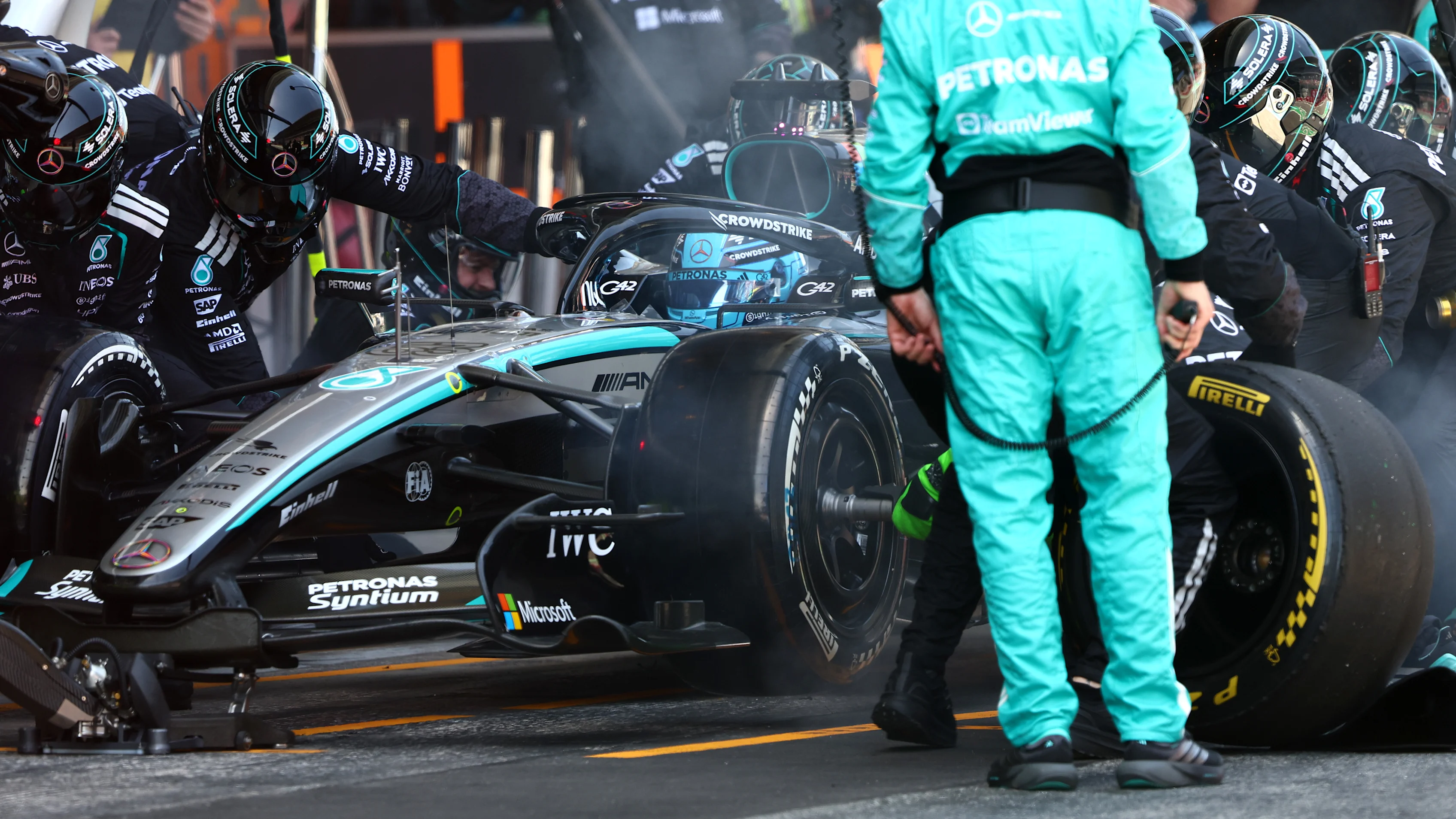
Deputy team principal Bradley Lord said the faulty gun misapplied the planned adjustment, compromising the aero balance and tyre management when Russell most needed stability to defend track position.
A faulty adjuster gun set the front wing incorrectly, inducing late‑stint oversteer on the W17.
Strategy compounded the problem. Mercedes committed Russell to two stops for track position, while Hamilton’s camp pushed a three‑stop, shaping the decision‑making under a race punctuated by a timely Virtual Safety Car.
Hamilton executed aggressively, leveraging the VSC and fresher tyres to overturn the deficit and win, delivering Ferrari’s first victory of the season with consistently stronger pace on low‑fuel sprints.
Mercedes’ two‑stop left Russell exposed to degradation, while Hamilton’s three‑stop maximized tyre life and VSC timing.
The contrast exposed ongoing strategic and operational gaps at Mercedes, from pit‑equipment robustness to procedures under pressure. The team signals renewed focus on process, seeking fewer unforced errors at critical moments.
Lord nonetheless praised Russell’s overall performance after recent setbacks, noting his control from pole and resilience despite the imbalance that curtailed his ability to sustain representative late‑stint lap times.
The outcome underlines the car’s potential when correctly balanced. Mercedes plans setup refinements and pit‑lane safeguards to prevent repeats, drawing lessons from Barcelona as the calendar intensifies.
Mercedes will review pit equipment, tooling redundancy, and procedural checks before the next races.
Technically, small front‑wing mis‑sets can shift aero load by critical points, amplifying oversteer and tyre thermal stress. That explains Russell’s fade relative to Antonelli before the Ferrari’s failure.
Converting strong qualifying into wins now hinges on meticulous stops and sharper calls. Reduce variability, and Russell’s early‑stint pace should translate into sustained pressure on Ferrari and Red Bull.
Visual Summary
DNF
Russell’s Race Unravels:
From pole position and leading pace, a botched front wing adjustment sent Russell’s Mercedes slipping back—just as rivals attacked.
Despite bravely wrestling his oversteering car, he was overtaken by Antonelli before a lucky break when Ferrari’s prodigy retired.
Hamilton ⎯ on a bold 3-stop strategy ⎯ swept to victory for Ferrari, highlighting Mercedes’ tactical and pit crew headaches.
Hamilton ⎯ on a bold 3-stop strategy ⎯ swept to victory for Ferrari, highlighting Mercedes’ tactical and pit crew headaches.
Lesson? In F1, even the smallest error can send dreams spinning off track.
Barcelona 2026 will haunt Mercedes pit lane.
Barcelona 2026 will haunt Mercedes pit lane.

Daniel Miller reports on Formula 1 Grand Prix weekends with race-day analysis, team-radio highlights, and point-standings updates. He explains power-unit upgrades, aerodynamic developments, and driver rivalries in straightforward, SEO-friendly language for a global F1 audience.
Related FervoGear guide: custom race suits built for driver protection, custom fit, and sponsor-ready design.