https://shop.fervogear.com/cart
The 2026 Unknown Set to Shake Up F1’s Austrian GP

Highlights
- 2026 power units face first high-altitude test at Austrian GP
- Red Bull Ring’s altitude reduces oxygen, impacting engine performance
- Turbochargers must spin faster; risk of increased lag and heat
- MGU-H removal complicates turbo control and energy management
- Smaller turbos spool faster; larger turbos deliver stronger airflow
- Energy limits and altitude may cause unpredictable race dynamics
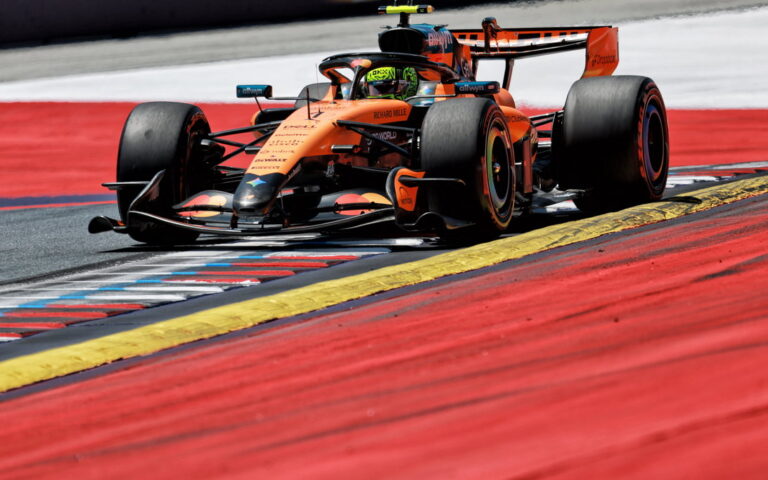
Formula 1 reaches the Red Bull Ring for the first high‑altitude test of the 2026 power units. The Styrian circuit sits 678 metres above sea level.
That context sharpens attention on the Austrian Grand Prix schedule, with teams managing practice learning quickly. Altitude changes car behaviour and power unit demands immediately.

Lower air pressure cuts density to about 92% of sea level, trimming oxygen by 7.5–8.5 percent. Turbochargers must shoulder more work to sustain combustion efficiency.

Compressors therefore run faster than teams have seen at most early‑season venues. That raises lag risk and thermal load through the exhaust and charge‑air systems.
Williams trackside chief Paul Williams frames this as the first real altitude examination of the 2026 units. He warns throttle response could slow if the turbo struggles to spool.
MGU‑H removal makes turbo control harder and increases reliance on battery deployment.
The 2026 rules remove the MGU‑H, as outlined in the FIA F1 rule changes. Control shifts to wastegates, software, and electrical deployment to cover turbo response.
Honda trackside general Shintaro Orihara expects greater battery use to mask spool deficits. That risks earlier depletion on the straights, where Austria’s qualifying allowance is only 6 MJ.
Austria’s qualifying energy allowance is capped at 6 MJ, tightening trade‑offs.
Spielberg’s short lap amplifies the trade‑offs. Slow‑corner exits punish lag, while long full‑throttle runs reward mass flow once the compressor is fully spooled.
Hardware choices diverge across manufacturers. Smaller Ferrari‑style turbos spool quickly and reduce lag. Larger Audi‑style units need time but deliver stronger airflow at speed.
Small compressors risk choking at flow limits, driving up temperatures and costing power. Bigger hardware brings inertia and packaging penalties but offers headroom at altitude.
Altitude at 678 metres cuts oxygen by roughly eight percent, challenging compressor speed and cooling.
Teams will juggle deployment maps, lift‑and‑coast windows, and brake‑by‑wire recovery to balance charge. Battery spent to mask lag may compromise attack or defence later on straights.
Weather could tilt the equation further by shifting density and cooling. Teams will adapt run plans and qualifying modes accordingly, as flagged in the Austrian GP weather alert.
The weekend should expose contrasting philosophies and calibration agility. Expect performance swings as engineers trade transient response for sustained power across Spielberg’s unique demands.
Visual Summary
TURBO
🌫 Air: -8%
New F1 Engines Climb Austria’s Thin Air
Turbo trouble, slower response & fresh unknowns atop the Styrian Alps
⏩
Ferrari
Spools Fast
(Quick Acceleration)
(Quick Acceleration)
⇄
💨
Audi
More Airflow
(Top Speed Power)
(Top Speed Power)
?
MGU-H is gone: turbos now fight lag & energy limits alone
🔥
Turbos work harder: Hotter, more stress, more lag
Turbos work harder: Hotter, more stress, more lag
⚡
Battery “Boosts”: Used to fill turbo lag—but drain faster
Battery “Boosts”: Used to fill turbo lag—but drain faster
💨
Every team’s gamble: Fast spool or big push? Reliability or raw speed?
Every team’s gamble: Fast spool or big push? Reliability or raw speed?
How will the 2026 engines survive Austria’s thin air?
?

Daniel Miller reports on Formula 1 Grand Prix weekends with race-day analysis, team-radio highlights, and point-standings updates. He explains power-unit upgrades, aerodynamic developments, and driver rivalries in straightforward, SEO-friendly language for a global F1 audience.
Related FervoGear guide: custom race suits built for driver protection, custom fit, and sponsor-ready design.