https://shop.fervogear.com/cart

How Ferrari Strategically Fights Tyre Degradation Effectively

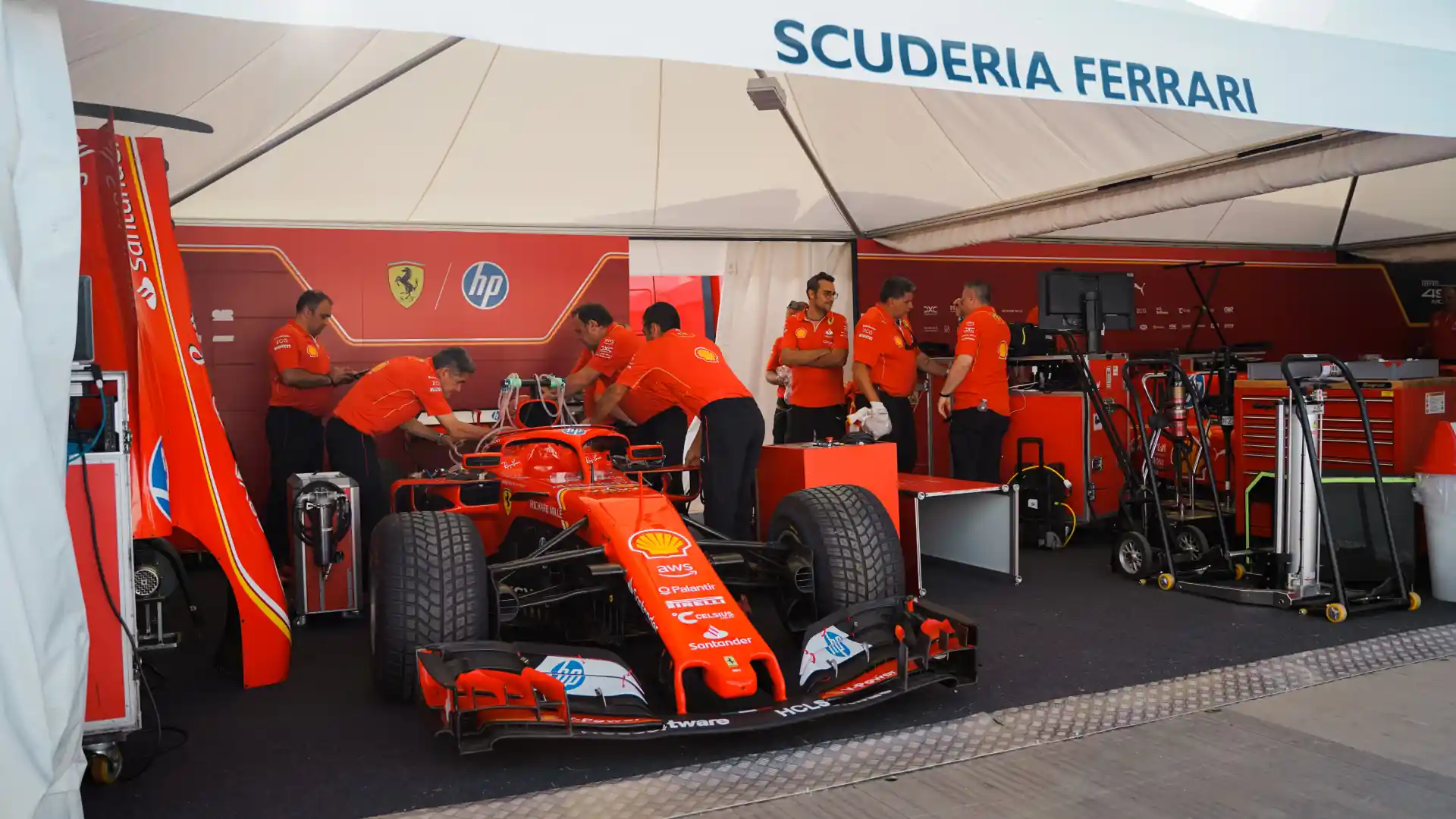
Highlights
- Ferrari introduced new rear wheel rims at Barcelona-Catalunya GP.
- Rims feature carbon fibre ring replacing traditional spokes.
- Upgrade aims to reduce tyre degradation by better heat management.
- Barcelona GP took place from June 12 to 14, Round 7.
- Next races: Austria (June 26–28) and Great Britain (July 3–5).
- Ferrari partnered with BBS to develop the innovative rim design.
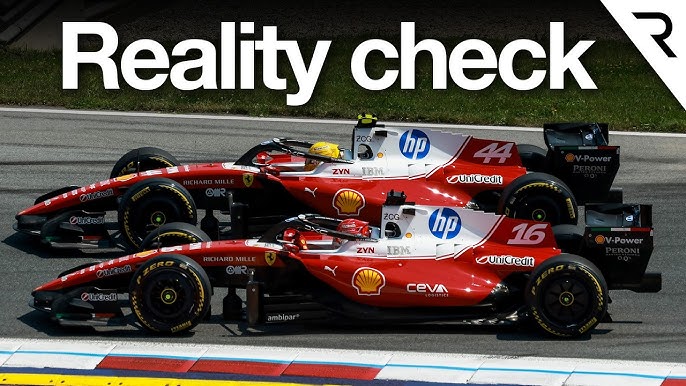
Ferrari introduced BBS-developed rear wheel rims at the Barcelona-Catalunya Grand Prix, targeting tyre degradation by improving heat management under race conditions.
The update ran in Round 7 from June 12–14, offering a meaningful test at a venue renowned for punishing tyres and exposing thermal weaknesses.

The design replaces conventional spokes with a circumferential ring, apparently carbon fibre, bonded near the rim face perimeter to influence airflow, heat rejection, and carcass temperature stability.
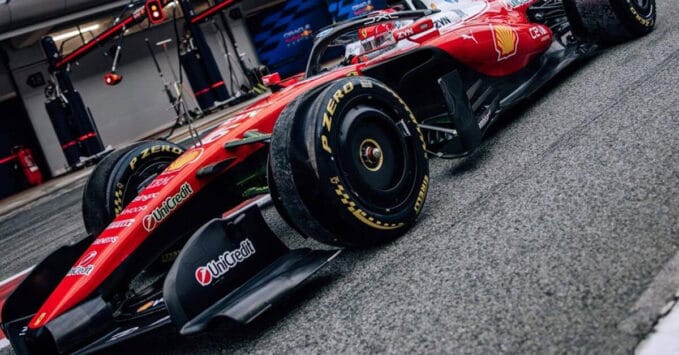
Overheated tyres lose grip quickly; stabilising temperature can extend stints, sustain lap time, and reduce the undercut risk that often forces earlier pit windows.
Ferrari’s rim uses a carbon ring in place of conventional spokes to stabilise tyre temperatures.
The approach sits within FIA wheel and rim prescriptions. Any added carbon element must satisfy structural, temperature, and safety criteria without contravening material or dimensional restrictions.
Collaboration with BBS highlights supplier integration, mirroring Ferrari’s broader mid-season push for incremental gains across mechanical and thermal domains.
[p]The potential advantage is cumulative rather than headline. Cleaner temperature control trims degradation deltas over a stint, particularly valuable at Austria and Silverstone, where high-speed loads stress the shoulders.[/p]
Cumulative tyre-life gains can be decisive at Austria and Silverstone, where high-speed corners punish overheated shoulders.
Realising benefits demands setup refinement. Brake duct tuning, pressures, and camber must align with the rim’s behaviour, alongside strategy emphasis seen in recent Barcelona updates.
Measuring impact will require disciplined correlation. Ambient conditions, compound choice, and stint length can mask gains, so Barcelona data becomes a baseline for subsequent weekends.
Barcelona offers the correlation baseline; true value emerges as conditions vary across upcoming rounds.
The shift underlines Formula 1’s evolution beyond pure aero and power. Material science and wheel assemblies now contribute meaningful lap-time, complementing recent engine upgrades in Ferrari’s package.
Delivery still depends on execution from drivers and team. Managing expectations remains essential for momentum, particularly amid rising pressure on Leclerc and Ferrari.
Visual Summary
BBS
◼️
Tyre Degradation ↓
(Heat stays in control)
Ferrari’s Rim Revolution
New carbon ring rear rims tame tyre heat.
Fewer pit stops. Longer consistency.
Engineered with BBS for Barcelona, Austria & Silverstone challenges.
New carbon ring rear rims tame tyre heat.
Fewer pit stops. Longer consistency.
Engineered with BBS for Barcelona, Austria & Silverstone challenges.
??
Barcelona
Barcelona
??
Austria
Austria
??
Britain
Britain

Daniel Miller reports on Formula 1 Grand Prix weekends with race-day analysis, team-radio highlights, and point-standings updates. He explains power-unit upgrades, aerodynamic developments, and driver rivalries in straightforward, SEO-friendly language for a global F1 audience.
Related FervoGear guide: custom race suits built for driver protection, custom fit, and sponsor-ready design.