

https://shop.fervogear.com/cart

Discover How Many Engine Parts Each F1 Driver Has Used in 2026

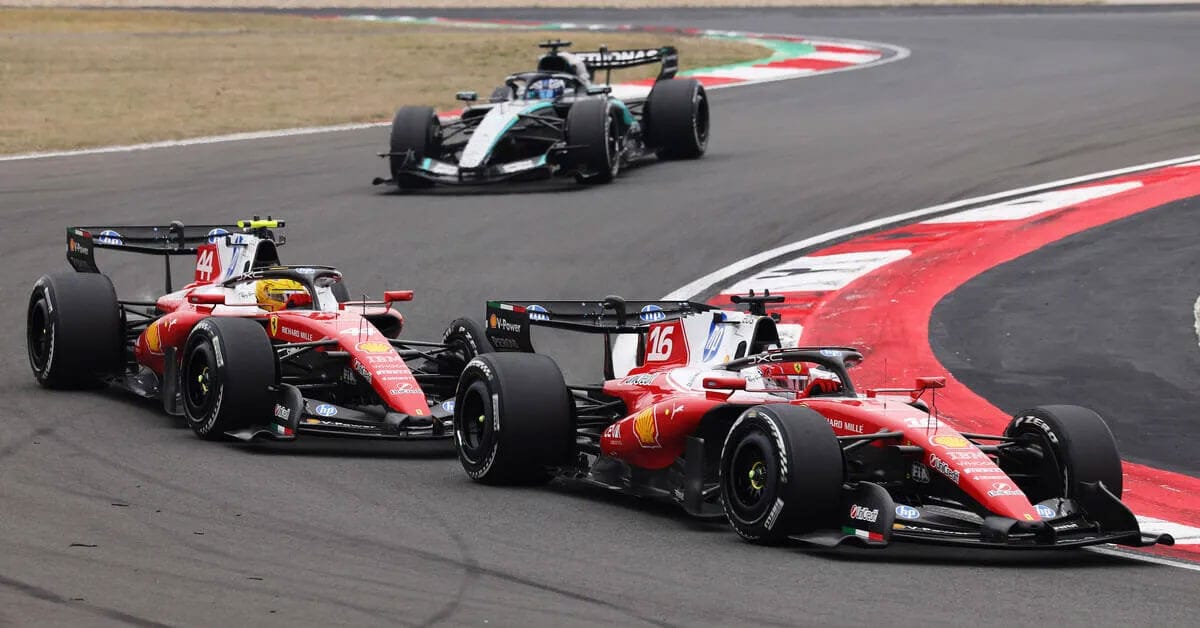
Highlights
- Drivers have limits on seven power unit components in 2026 F1.
- Exceeding part limits causes grid penalties starting with a 10-place drop.
- Lando Norris and Oscar Piastri use components conservatively within limits.
- Isack Hadjar and Fernando Alonso push component usage to maximum allowed.
- Max Verstappen uses fewer components; Leclerc is closer to limits.
- Upcoming Belgian and Hungarian GPs increase focus on managing penalties.
Power unit management shapes the 2026 Formula 1 season, with seven regulated components dictating strategy and grid prospects as the calendar moves toward Belgium and Hungary.
Each driver runs ICE, turbocharger, MGU-K, Energy Store, Control Electronics, PU auxiliary components, and exhaust. Allowances are strict and define when teams must accept penalties.

ICE and turbocharger allowances stand at four. MGU-K, Energy Store, and Control Electronics are limited to three. Exhausts are capped at four, with six PU-ANC parts permitted before penalties.
Exceeding any allowance triggers grid penalties. The first additional component costs a 10-place drop, with five places added for each subsequent breach.
Drivers take a 10-place grid drop for the first extra component, then five places for each subsequent change.
Usage data updates after every race weekend, enabling precise planning and fan scrutiny through detailed power unit components usage trackers.
Teams diverge in strategy. Lando Norris keeps counts conservative, with two ICEs and turbos, plus three MGU-Ks and Energy Stores, leaving headroom for the second half.
Oscar Piastri mirrors that caution, running two ICEs and turbos, and only one MGU-K so far, reducing exposure to late-season penalties.
George Russell edges closer to the thresholds, using three ICEs, three turbos, and multiple exhausts, but still sits within the permitted range.
Isack Hadjar adopts a more aggressive stance, already on four ICEs and four turbos, with maximum ES and CE allocations used.
Fernando Alonso stretches limits further, reaching the six-unit cap on PU auxiliary parts, alongside four MGU-Ks and Energy Stores, heightening the risk if reliability falters.
Fernando Alonso has already reached the six-unit limit on PU auxiliary components, signalling heavy wear.
Among title contenders, Max Verstappen runs lighter, with two ICEs to date, while Charles Leclerc presses harder, reaching three for ICE, turbo, and MGU-K.
Verstappen’s caution aligns with insights from his recent reunion with a Williams engineer, emphasising efficiency and controlled mileage.
Calendar pressure now escalates. Spa and the Hungaroring demand robust deployment plans, with overtaking chances and parc fermé constraints shaping risk appetite.
Package development also matters. McLaren’s progress ties to the latest McLaren-Mercedes engine updates, seeking durability without sacrificing deployment freedom.
Upcoming Belgian and Hungarian rounds intensify the trade-off between performance gains and penalty risk.
Elsewhere, reliability projects continue, underscored by Ferrari’s recent engine update as manufacturers chase stability inside the allocation.
The teams that best balance peak performance with careful component rotation will protect grid position and maintain momentum as the title fight tightens.
Visual Summary
Engine Component Limit Race
SAFE
LIMIT
ICE
ICE
TC
Turbo
MG
MGU-K
ES
Energy Store
CE
Control Elec.
PU
PU-ANC
EX
Exhaust
Grid Penalty Risk
Penalty!
✔
Verstappen, Norris: Playing it safe, below limits.
Verstappen, Norris: Playing it safe, below limits.
⚡
Leclerc, Russell: Hugging the edge, approaching max components.
Leclerc, Russell: Hugging the edge, approaching max components.
🚨
Hadjar, Alonso: At their limits. Another part = grid penalty!
Hadjar, Alonso: At their limits. Another part = grid penalty!
Blue: Conservative strategy
Yellow: Tracking close to limit
Red: At the maximum allowed
Every new engine part used over the limit = grid penalty next race
Yellow: Tracking close to limit
Red: At the maximum allowed
Every new engine part used over the limit = grid penalty next race

Daniel Miller reports on Formula 1 Grand Prix weekends with race-day analysis, team-radio highlights, and point-standings updates. He explains power-unit upgrades, aerodynamic developments, and driver rivalries in straightforward, SEO-friendly language for a global F1 audience.