
https://shop.fervogear.com/cart

McLaren Cites ‘Starvation’ Factor to Boost Excitement at Belgian GP

Highlights
- Spa Grand Prix challenges 2026 power units with energy “starvation.”
- Drivers must manage energy carefully to avoid performance loss.
- Spa has limited braking zones for harvesting energy.
- Five straight-mode zones add strategic complexity for teams.
- Overtaking expected to increase due to energy mismanagement risks.
- Belgian GP on July 19 crucial for Ferrari and Red Bull.
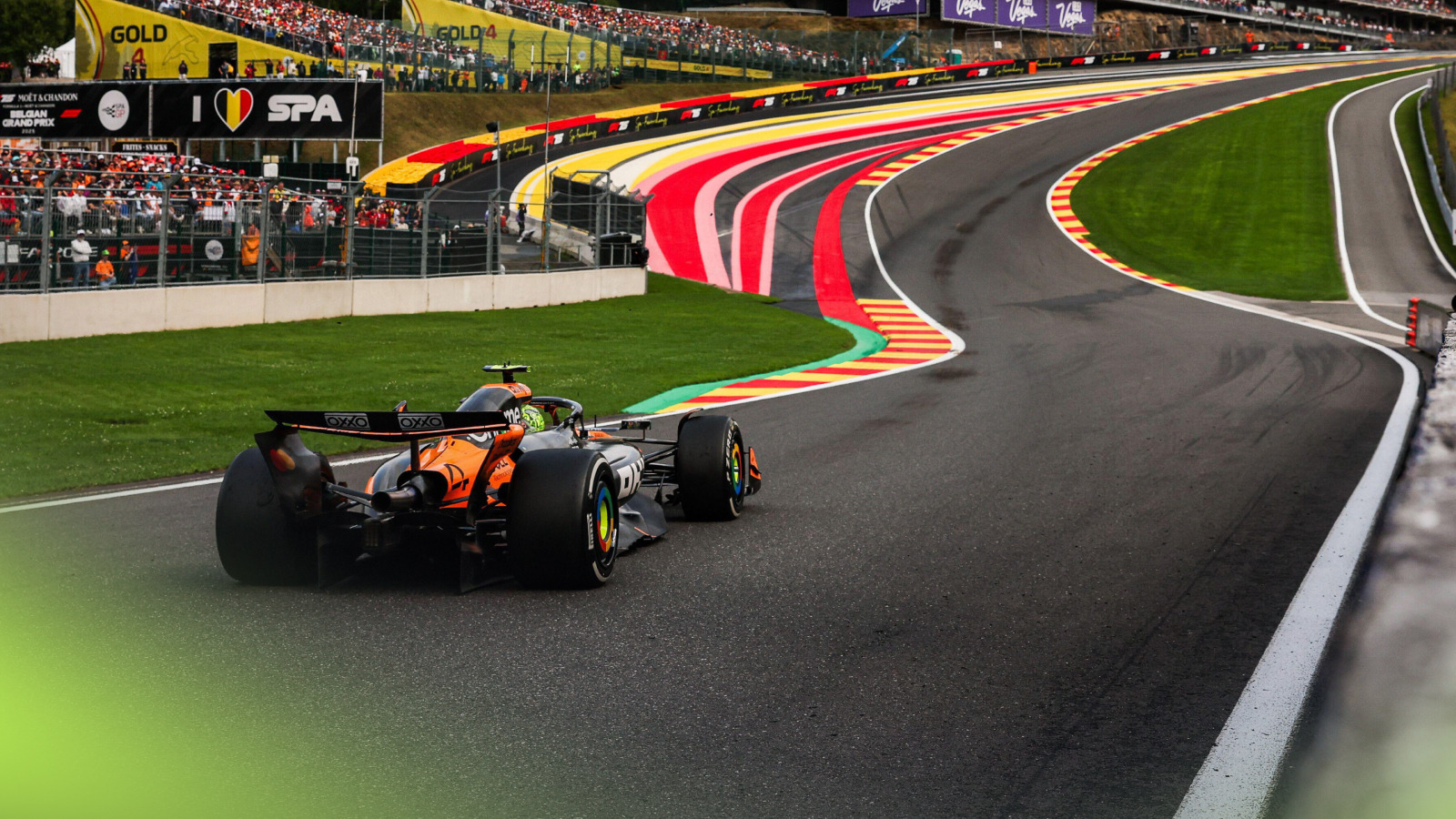
McLaren team principal Andrea Stella warns energy starvation will shape the Belgian Grand Prix at Spa-Francorchamps on July 19, with 2026 power-unit rules exposing limits in harvesting and deployment.
Spa’s 7.004km lap stresses units split 50:50 between ICE and electric drive. Early deployment risks depletion, echoing Fernando Alonso’s warning that drivers could be “finito” before the chequered flag.

Energy recovery opportunities are scarce. Heavy-braking zones arrive mainly at La Source, Les Combes, and the Bus Stop. The rapid middle sector, including Pouhon, offers no meaningful harvesting.
That scarcity forces conservative mapping and careful lift-and-coast, without surrendering lap time. Silverstone showed similar variability, producing speed deltas that enlivened racing while stretching drivers’ management bandwidth.
Spa offers only three heavy-braking zones for harvesting: La Source, Les Combes, and the Bus Stop.
As Stella explained last week, Spa tempts deployment along Kemmel and towards Stavelot, yet lateral loads through Eau Rouge, Raidillon, and Blanchimont restrict straight mode and complicate state-of-charge targets.
Five designated straight‑mode zones alter the trade‑offs. Teams must balance peak assists against stability demands, wing level, and tyre protection, often preserving energy for exits rather than headline speeds.
Five straight‑mode zones introduce new strategic trade‑offs in 2026.
Historically, Spa rewarded low-drag packages. Under current rules, that approach can be counterproductive, with straight mode reducing the need to trim wing and exposing cars in loaded corners.
Misjudged deployment will create slowdowns on long climbs and out of key chicanes, handing rivals DRS and momentum. Expect more overtakes triggered by energy timing, not outright power.
Misjudged deployment could leave drivers “finito” on key laps, opening overtaking chances.
The stakes are high. The July 19 race is pivotal for Ferrari and Red Bull, and will test execution under the new energy balance at Spa-Francorchamps.
Tyre management also matters at Spa’s abrasive, high-load sections. Teams must align energy usage with degradation windows and stint lengths, amplifying strategic divergence.
Expect a contest decided by precise harvesting, disciplined deployment, and aero compromise, rather than peak power alone.
Visual Summary
FULL POWER
CAUTION
STARVATION!
Spa Energy Starvation: Drivers Risk Running Dry on F1’s Longest Lap
⏳
7.004 km
Longest lap in F1
Longest lap in F1
⚡
3 Braking Zones
Few recharge points
Few recharge points
🔄
5 “Straight Mode”
Deployment areas
Deployment areas
🔋
⚡
❗
⚡
❗
Deploy too soon and risk running empty before the finish. Every lap is a tense calculation between speed and survival.
🟥
Aggressive
Aggressive
VS
🟩
Conservative
Conservative
At Spa 2026, victory goes to the drivers and teams who master the fine balance of energy, tyre, and nerve.
Who will dare, and who will run dry?
Who will dare, and who will run dry?

Daniel Miller reports on Formula 1 Grand Prix weekends with race-day analysis, team-radio highlights, and point-standings updates. He explains power-unit upgrades, aerodynamic developments, and driver rivalries in straightforward, SEO-friendly language for a global F1 audience.