
https://shop.fervogear.com/cart

Gabriel Bortoleto Calls on FIA to Fix F1 Issue Without Causing More Problems

Highlights
- Gabriel Bortoleto urges FIA to avoid rushing major safety rule changes.
- Silverstone GP ended under safety car due to Verstappen’s lap 48 crash.
- Software glitch caused false “Safety Car In This Lap” message.
- Leclerc won, followed by Russell and Hamilton at British Grand Prix.
- Bortoleto supports red flags only for serious safety incidents.
- FIA advised to prioritize safety and avoid overcomplicated rule changes.
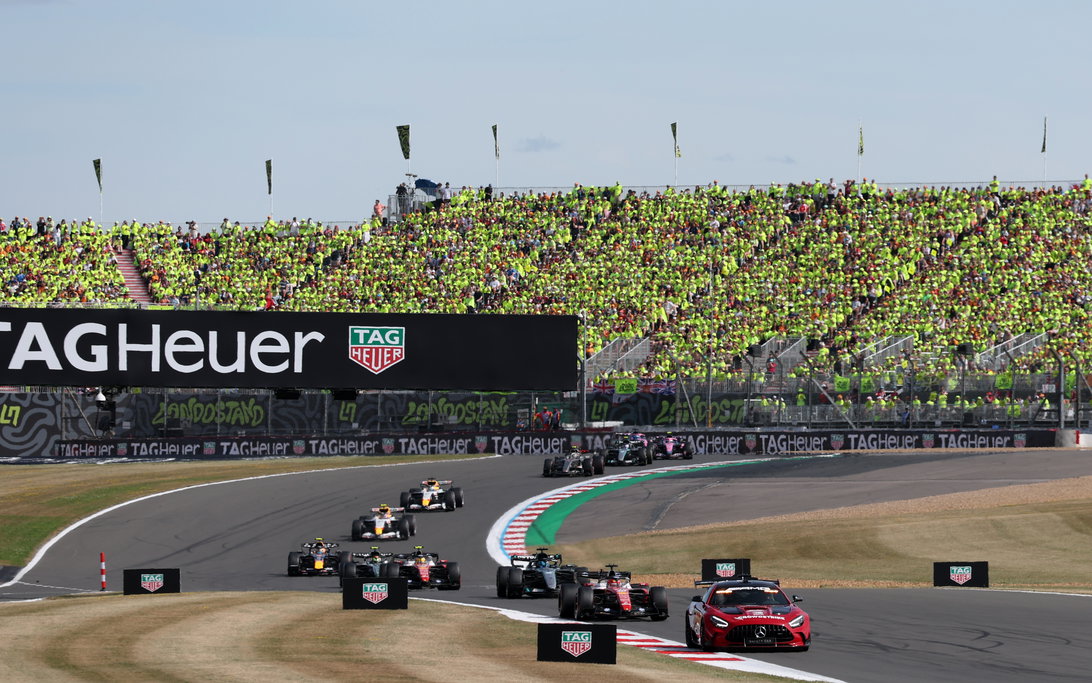
Gabriel Bortoleto urges the FIA to avoid rushing rule changes after the British Grand Prix, where Max Verstappen’s lap‑48 crash left Silverstone’s race to finish behind the safety car.
The late incident forced the final laps to run neutralised, denying a green‑flag shootout. Calls followed for revisions to restart procedures and the management of lapped cars near race end.

At the heart is Article B5.13.5. Once lapped cars receive permission to overtake, the regulations require a further full lap before the safety car can withdraw for a restart.
In Silverstone’s case, that instruction arrived late. Charles Leclerc had already begun lap 51 of 52, locking the field into one more lap and eliminating any restart window.
Confusion escalated when timing screens briefly displayed ‘Safety Car In This Lap’ on the penultimate tour. The FIA later attributed the message to a software glitch, not a regulatory decision.
Software error triggered a false ‘Safety Car In This Lap’ message, the FIA confirms.
Leclerc won for Ferrari, ahead of George Russell and Lewis Hamilton. Bortoleto finished eighth for Audi, noting his result would have been unchanged with or without a restart.
The eighth place extends a steadier spell after he missed points in Austria, following an Audi F1 breakthrough earlier in the campaign.
During the Belgian Grand Prix media day, he accepted the deployment complied with the regulations but warned against overreaction. When safety is assured, he prefers minimal intervention.
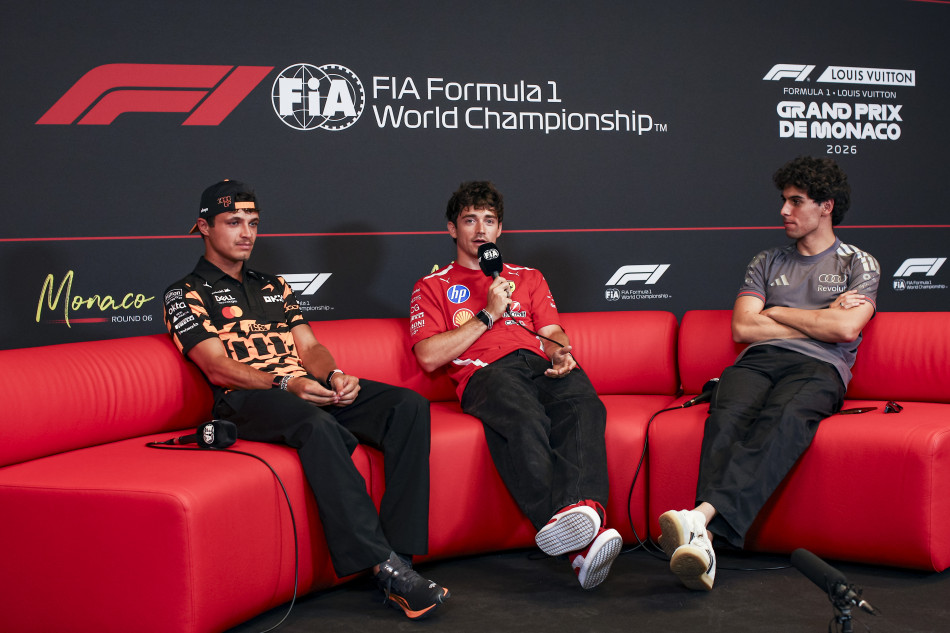
“If there is no safety concern, there is no reason to keep the safety car out.” — Gabriel Bortoleto
He expects the FIA to fix the software and messaging workflow rather than rewrite stable frameworks. Clear, deterministic sequencing should prevent mixed signals when pressure peaks late in races.
The unlapping requirement now faces renewed scrutiny. It restores competitive order when distance remains, but late usage can inadvertently block restarts and undermine the sporting resolution.
Bortoleto floats limited discretion near the finish, while acknowledging drivers lack full oversight from the cockpit. He defers to race control to balance safety, fairness, and spectacle.
Others propose more flexible red flags to guarantee green‑flag finishes. Lewis Hamilton supports that pathway, while George Russell remains conflicted about consistency and competitive integrity.
Bortoleto counters that red flags should remain reserved for major safety risks or track damage. Entertainment cannot dictate tools designed for hazardous scenarios.
Red flags should remain for serious incidents, not to manufacture late-race restarts.
His stance fits a broader pattern in FIA policymaking, from safety‑car protocols to engine penalties: pursue precision changes, test rigorously, and avoid unintended consequences.
The bottom line is restraint: fix error paths, preserve safety primacy, and avoid knock‑on effects. Solve one problem cleanly rather than trigger ten new ones.
Visual Summary
SC
16
63
44
8
!
SC IN THIS LAP?
Safety Car Chaos: Bortoleto Calls for Caution, Not Quick Fixes
🐎 Leclerc Wins
⚠️ Final 2 laps: No Racing
🔧 Safety Car glitch: Mixed Signals
“
If we start changing things to fix every rare problem, we could create more issues. Safety first—don’t overreact.
”
If we start changing things to fix every rare problem, we could create more issues. Safety first—don’t overreact.
”
— Gabriel Bortoleto, P8 finisher (Audi)
Key Drama: Fans wanted a green-flag finish—regulations, software errors, and safety protocol said “No.”
Bortoleto urges: fix glitches, not the fundamentals.
Daniel Miller reports on Formula 1 Grand Prix weekends with race-day analysis, team-radio highlights, and point-standings updates. He explains power-unit upgrades, aerodynamic developments, and driver rivalries in straightforward, SEO-friendly language for a global F1 audience.