
https://shop.fervogear.com/cart

Mercedes’ Qualifying Move Reveals Why Russell Is Falling Behind

Highlights
- Russell trailed teammate Antonelli by 1.285 seconds in Belgian GP practice
- Early throttle lift-off cost Russell approximately 0.4 seconds on fastest lap
- Antonelli harvested energy more efficiently, improving straight-line speed
- Russell’s car had a fuel flow meter issue fixed after FP1 session
- Grip misjudgment and sliding affected Russell’s energy recovery and pace
- Upcoming qualifying will test Russell’s energy management and grip improvement
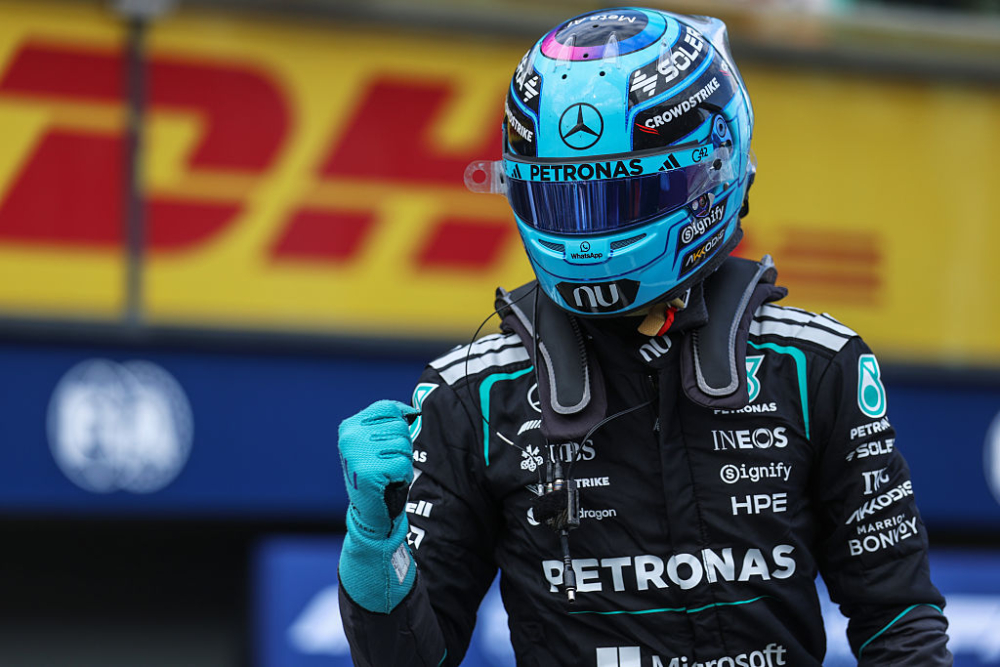
George Russell ends Friday at Spa 1.285s behind Mercedes teammate Kimi Antonelli, an outlier that sharpens the focus on energy management and driving consistency.
Mercedes’ pre-line lift tactic remains in play, but Russell lifts around 70 metres earlier than Antonelli, costing roughly 0.4s alone and magnifying the headline deficit.

Both drivers exit the final chicane with near-empty batteries and 350kW deployed, so earlier lift-off reflects weaker harvesting through the chicane on Russell’s lap.
Straight-line data reinforces the picture. Russell loses time from La Source to Les Combes, likely from wheelspin, then sheds more between Turns 6-8 and Pouhon-Fagnes.
Russell’s earlier throttle lift costs ~0.4s, around one third of the total deficit to Antonelli.
Blanchimont and the approach to the final chicane show persistent speed shortfalls, consistent with low battery state. Team radio confirms he is short of target by Turn 14.
Mercedes diagnosed a fuel flow meter problem on Russell’s car in FP1. That’s fixed for FP2, leaving style-versus-car traits as the likely source of the lingering gap.
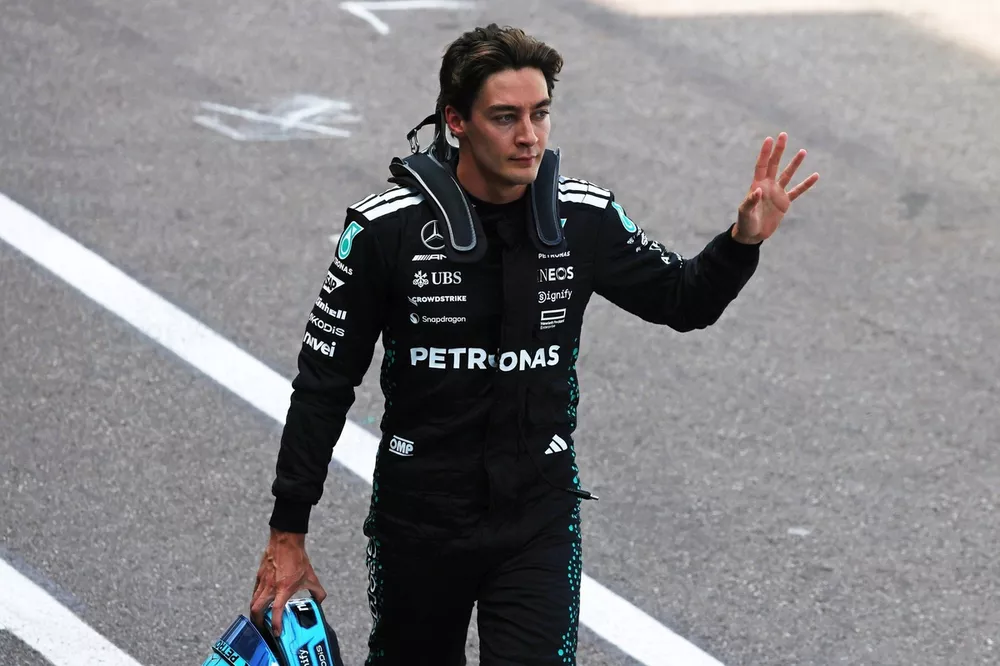
The 2026 rules couple straight-line deployment with corner-phase energy recovery. Sliding wastes energy and hurts efficiency, compounding pace and deployment late in the lap.
Russell reports more sliding after his soft-tyre run, echoing recent observations about his adaptation window as Mercedes tunes the car around evolving grip.
Mercedes radio indicates Russell has not topped the battery by Turn 14, exposing him on the long run to Blanchimont.
This headline lap stems from a single soft-tyre attempt, so the gap likely overstates the true picture. But energy recovery and grip judgement remain the core priorities.
Context matters for the title fight. Russell has trimmed the deficit from 68 to 25 points, as covered in recent title analysis, but quali execution must now tighten.
Mercedes’ form also sits within a broader competitive arc, with attention on deployment efficiency versus rivals discussed in recent comparative evaluations of the 2026 pecking order.
For Spa, the clearest proxy is pre-line lift distance. If Russell aligns with Antonelli there, it signals progress in chicane harvesting and overall energy balance.
FP1’s fuel flow meter issue is resolved; remaining losses point to energy capture, traction, and lift timing rather than raw power.
The team will monitor those cues through qualifying, where small gains in entry stability and exit traction can unlock both corner speed and straights performance simultaneously.
Visual Summary
Russell
Struggling with grip
Antonelli
Effortlessly fast
Russell trails Antonelli by 1.285s —
Energy management & grip efficiency decide the battle
Energy management & grip efficiency decide the battle
Key moment: Russell lifts off sooner before the finish, costing precious battery power on Spa’s long straight.
Antonelli maximizes energy recovery with smooth grip, pulling away at crucial sectors.
Next test: Qualifying will reveal if Russell can close the gap through better cornering & battery balance ⚡

Daniel Miller reports on Formula 1 Grand Prix weekends with race-day analysis, team-radio highlights, and point-standings updates. He explains power-unit upgrades, aerodynamic developments, and driver rivalries in straightforward, SEO-friendly language for a global F1 audience.