https://shop.fervogear.com/cart

The Impossible 2026 F1 Demand Drivers Struggle to Handle

Highlights
- Drivers face complex multi-control tasks during 2026 qualifying laps.
- Williams’ James Vowles calls current demands on drivers excessive.
- Miami GP saw multiple drivers lose qualifying due to energy management.
- Albon’s throttle mismanagement on outlap caused significant time loss.
- Teams warn complexity may exceed drivers’ capacity at tracks like Monaco.
- Simplified rules might be needed to reduce costly qualifying errors.
Senior Formula 1 figures warn 2026 qualifying outlaps now overload drivers, with Miami exposing the limits. Williams’ James Vowles calls the workload excessive and unsustainable at tight venues ahead.
Drivers must hit exact throttle targets, manage battery state, maintain turbo pressure, and control tyre temperatures while navigating traffic. The margin for error is minuscule and increasingly punitive.
“It’s far too much that we’re asking the drivers to do.” — James Vowles
Teams brief drivers to create specific gaps, hold throttle between 20–40 percent without lifting to zero, and avoid overcharging the battery while keeping the turbo primed.
All of this happens within seconds on the approach to key corners. Teams accept the sequence is overwhelming and needs rethinking before it dictates qualifying fortunes.
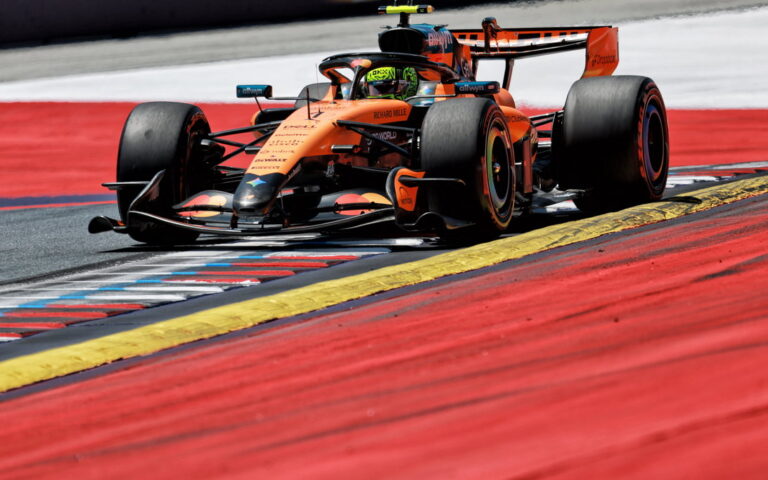
Miami showcased how small missteps unravel laps. Kimi Antonelli lost a sprint pole shot, Lando Norris compromised his main qualifying, and Alex Albon failed to escape Q2.
The causes often trace to energy deployment logic tightly linked to throttle and turbo conditions. McLaren identified insufficient turbo pressure through the final corner as decisive for Norris.
“Everything is so sensitive, is so interlaced.” — Andrea Stella
That shortfall reduced battery delivery onto the main straight. Even a tidy final sector could not mask the exit deficit, which multiplied down the pit straight.
Albon’s case is instructive. He was told to go full throttle for three seconds, then hold 60 percent to spin the turbo and stabilise battery state before his push lap.
He then lifted completely to let Carlos Sainz through. That unexpected lift reset energy algorithms, prompting higher-than-planned deployment and leaving reduced power at the final corner.
Albon lost 0.35s by Turn 1 after the algorithm reset, a decisive deficit in the midfield.
Miami’s long straight into a tight corner amplified the sensitivity. Montreal poses similar risk from the hairpin to the chicane, as outlined in the 2026 Canadian Grand Prix analysis.
Vowles and Albon argue the complexity already matches drivers’ cognitive limits on outlaps. Monaco’s constraints will magnify the challenge, raising the chance of randomised qualifying outcomes.
McLaren traced Norris’ deficit to inadequate turbo pre-boost before the last corner, starving exit deployment.
The regulatory backdrop matters. With greater reliance on electrical deployment and turbo management without MGU-H, pre-boost techniques become critical. That compounds preparation-lap precision and volatility.
The broader technical picture on energy use is explored in our look at power unit management, including how throttle maps and SOC targets interact.
Teams float mitigations: simplified preparation procedures, tighter automation windows, or clearer guardrails. This aligns with an active rules debate, including recent Ferrari-led change discussions.
Others see competitive opportunity. Squads that master software tools, radio scripting, and live traffic handling could unlock gains, echoing trends in recent team resurgence analyses.
For now, teams iterate software and driver routines to contain risk. Until solutions land, qualifying margins hinge as much on pre-lap choreography as raw one-lap speed.
Visual Summary
F1
Throttle
Battery
Turbo
Tyres
Traffic
Overload Level ?
F1 drivers are operating nearly at max capacity during qualifying prep
⚡
Antonelli
Sprint pole lost
⚡
Norris
Main qualy ruined
⚡
Albon
Q2 missed
“It’s far too much that we’re asking the drivers to do.”
— James Vowles (Williams Team Principal)
— James Vowles (Williams Team Principal)
Montréal and Monaco will only raise the stakes.
2026 Canadian GP Analysis | Power Unit Control Deep Dive
2026 Canadian GP Analysis | Power Unit Control Deep Dive

James William covers the IMSA WeatherTech SportsCar Championship, from the Rolex 24 at Daytona to sprint-race formats. His reports include prototype performance reviews, GT class battles, and pit-stop strategy insights for endurance-racing fans.