https://shop.fervogear.com/cart

Mercedes and McLaren Face Off in High-Stakes F1 Showdown

Highlights
- Mercedes unveiled major aerodynamic upgrades at Canadian Grand Prix.
- Redesigned bargeboards and diffuser improved Mercedes’ airflow management.
- McLaren introduced front wing and rear bodywork updates in Montreal.
- McLaren postponed ‘Macarena’ rear wing to Austrian Grand Prix.
- Mercedes maintains slight power unit advantage over McLaren.
- Both teams continue close development race for better race pace.
Mercedes and McLaren escalate their upgrade battle at the Canadian Grand Prix in Montreal, bringing significant aerodynamic packages as Formula 1’s development race tightens.
Mercedes focuses on reshaping flow‑conditioning elements around the lower sidepods, bargeboard‑style screens that better split airflow between the bodywork and the underfloor to stabilise the car’s platform.

Further changes target the rear. The ‘coke bottle’ region gains slots to cut turbulence, while a reprofiled diffuser upper surface and new brake‑duct winglets refine rear‑end load.
The revised package shifts floor load distribution and improves traction across Montreal’s demands. Mercedes still enjoys a slight advantage in power unit performance during deployment and efficiency.
Mercedes’ Montreal package shifts floor load and improves traction, aided by diffuser and brake‑duct refinements.
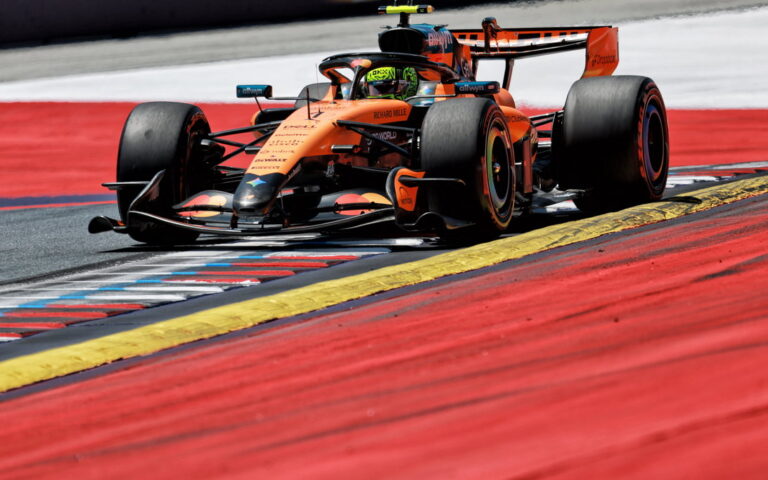
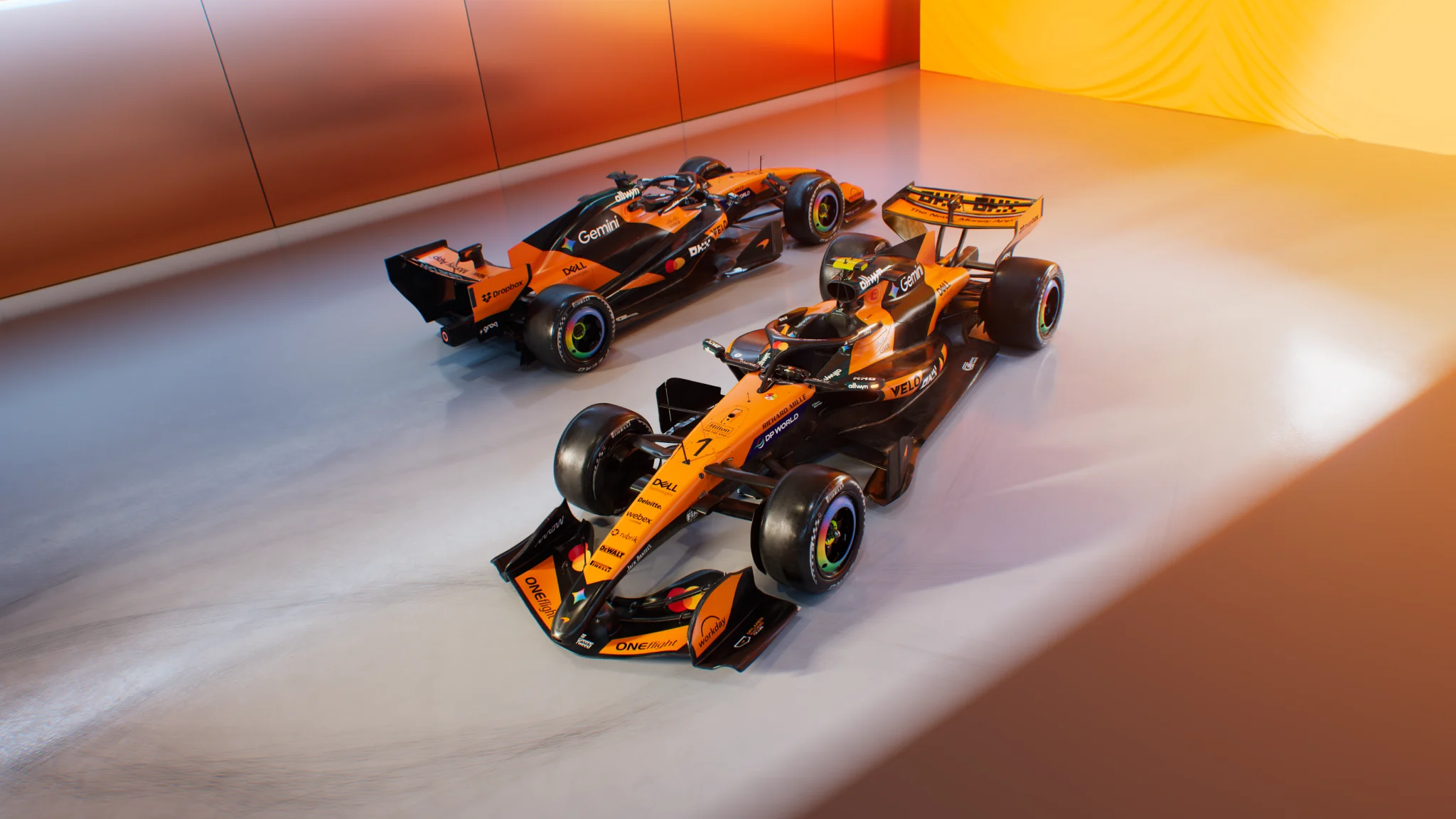
McLaren counters with a revised front wing, new rear bodywork details, and tweaked rear‑wing endplates. The planned ‘Macarena’ rear wing is deferred to Austria.
Initial running brings mixed returns. Setup sensitivity and limited learning time prompt McLaren to remove some parts for correlation work and to chase a more consistent balance.
McLaren postpones its ‘Macarena’ rear wing to Austria while focusing on front‑wing and rear‑bodywork gains.
Both teams use the same power unit, yet operating modes and energy deployment strategies differ. That nuance still favours Mercedes, while McLaren closes the gap via chassis and aero efficiency.
The comparison between the Mercedes W17 and McLaren MCL40 is compelling. McLaren’s upgrades show promise once the setup window matches the new aero load distribution.
Power unit parity on paper, but Mercedes retains a slight deployment edge as McLaren chases aero efficiency.
Mercedes’ flow‑control screens manage sidepod airflow to resist separation and generate local load, aiding high‑speed grip. That complements floor work intended to clean up the diffuser’s feeding stream.
Slots ahead of the rear wheels push turbulent structures away from the diffuser, improving stability. McLaren’s front wing reshapes the outboard flap to lift local load and balance.
Development cadence remains crucial. Expect iterative updates before Austria, where McLaren plans its rear‑wing concept and Mercedes pursues gains in floor efficiency and ride control.
The broader development battle continues, with leadership stressing relentless pace. Results across Montreal‑style circuits will show which concept converts updates into sustainable race‑day performance.
Visual Summary
?
Mercedes vs. McLaren:
Aero Race in Montreal
Aero Race in Montreal
Two teams, one target: Upgrade breakthroughs battle on a knife-edge at the Canadian Grand Prix.
New bodywork, floor secrets, and the hunt for downforce supremacy.
New bodywork, floor secrets, and the hunt for downforce supremacy.
Mercedes W17
Bargeboards & Coke-bottle rear
+ Traction •
+ Downforce
Cleaner airflow at rear
+ Downforce
Cleaner airflow at rear
McLaren MCL40
New front wing & rear tweaks
+ Efficiency •
+ Balance
Potential not fully unlocked
+ Balance
Potential not fully unlocked
McLaren closes the gap—
Mercedes holds slim aero edge.
Mercedes holds slim aero edge.
Upgrades are the battleground.
Every detail counts.
Which team’s evolution will triumph as the development race speeds on?
Every detail counts.
Which team’s evolution will triumph as the development race speeds on?

Daniel Miller reports on Formula 1 Grand Prix weekends with race-day analysis, team-radio highlights, and point-standings updates. He explains power-unit upgrades, aerodynamic developments, and driver rivalries in straightforward, SEO-friendly language for a global F1 audience.