https://shop.fervogear.com/cart

Early Reactions to Leclerc’s Bold Ferrari Brake Experiment

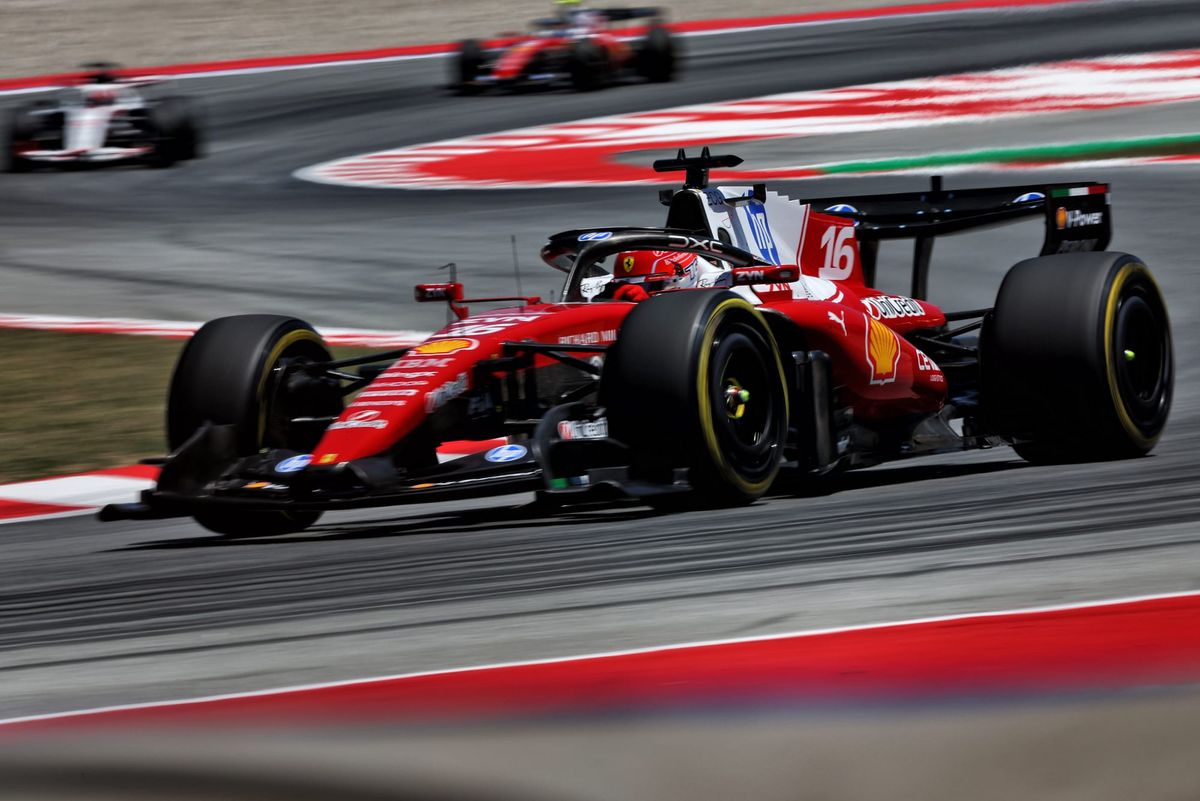
Highlights
- Leclerc tested Carbon Industrie brakes replacing Brembo at Barcelona GP.
- Brake issues at Monaco prompted Ferrari to adopt Hamilton’s brake setup.
- Leclerc ranked fourth fastest in FP2, 0.373 seconds behind the leader.
- Ferrari introduced an eight-part upgrade package enhancing car performance.
- Hamilton had limited track time due to tire and front wing issues.
- Team principal Vasseur described brake tests and upgrades as promising.
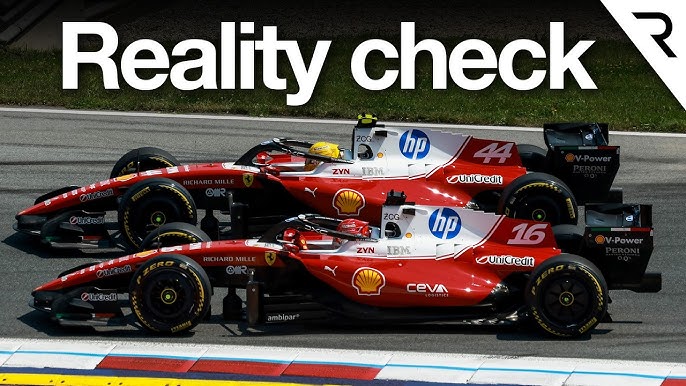
Charles Leclerc tests Carbon Industrie brake discs in Friday practice at the Barcelona Grand Prix, replacing Brembo to address confidence and consistency after Monaco.
The switch aligns with Lewis Hamilton’s preference, with Ferrari moving to his specification after Suzuka. That strategic choice reflects a push for consistency across the garage and shared feedback loops.

It follows Leclerc’s Monaco problems, where he reported three brakes not working and retired early. That episode sharpened Ferrari’s focus on feel and durability during heavy-braking phases.
Ferrari’s early runs require push laps followed by cooling phases to manage the CI discs, according to team principal Fred Vasseur. The signs are positive, and Leclerc is likely to persist with CI through the weekend.
While Brembo and CI offer comparable peak performance, small differences in bite, modulation, and temperature windows can transform driver confidence and repeatability across a stint.
Ferrari alternated push–cool cycles to manage the CI discs during runs.
Leclerc ends FP2 fourth fastest, 0.373 seconds off the benchmark. His long-run pace sits just behind Mercedes, suggesting progress without masking the deficit to the current leaders.
“It’s too early to tell how competitive we really are,” Leclerc says. “We need to maximize what we have and see what happens tomorrow.”
The braking focus coincides with an eight-part upgrade package. Ferrari split old and new specs in FP1 for back-to-back checks, then converged on the updated specification for FP2 on both cars.
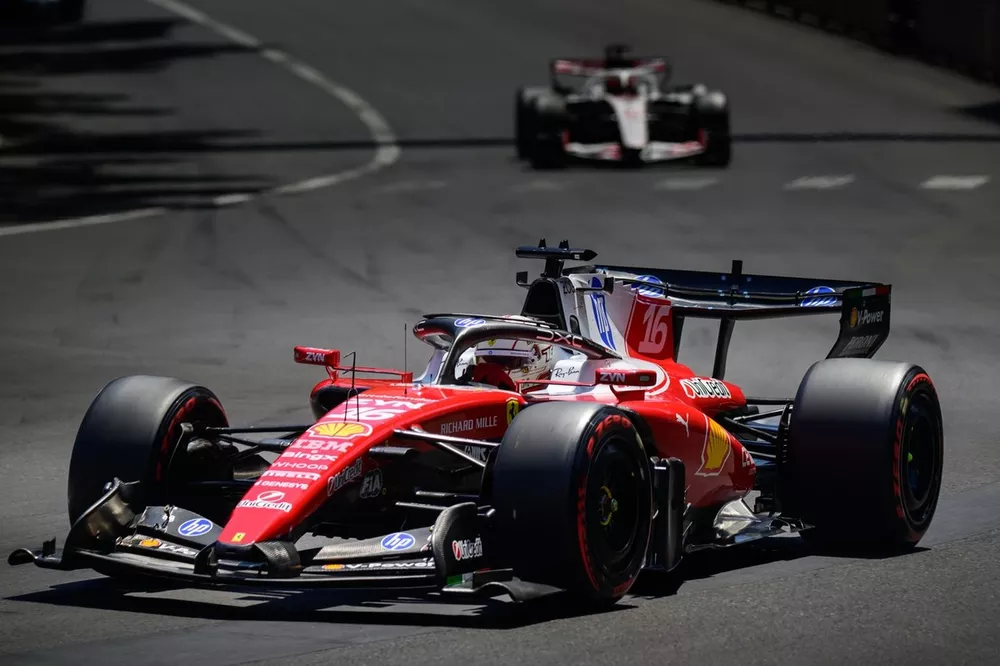
Leclerc ends FP2 fourth, 0.373s off the pace.
Hamilton’s day proves fragmented. He sits out FP1 and completes only two laps in FP2, limited by tire issues and a front wing problem that hurts straight-line speed, leaving him over nine-tenths slower than Leclerc.
Vasseur describes both the brake trial and the aero updates as encouraging on first read. The team will refine cooling, setup, and ride-height choices as conditions evolve into Saturday.
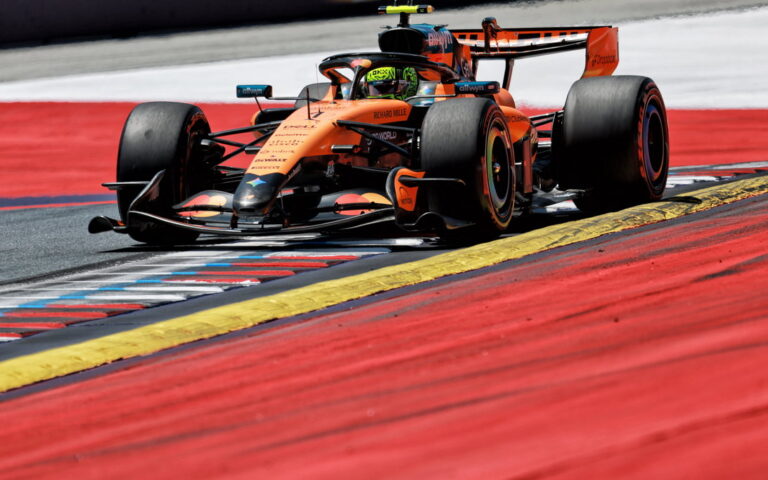
McLaren tops FP2 while Mercedes works through its delays, underlining a tight but volatile competitive order. Barcelona’s representative layout offers Ferrari a clear measure of its upgrade and brake direction.
“It’s too early to tell how competitive we really are.” — Charles Leclerc
The switch to Hamilton’s supplier formalizes Ferrari’s pursuit of stability across both cars, a move detailed in its plan to adopt Hamilton’s brake supplier for Barcelona.
The Monaco context remains central, with the Monaco Grand Prix retirement reinforcing the need for predictable bite and thermal control on heavy stops.
Such nuances feed directly into driver feel, mirroring Leclerc’s recent braking struggles and Ferrari’s efforts to restore confidence over a race stint.
Alongside the hardware shift, the eight-part package launched at Barcelona is a focal point of Ferrari’s development plan, as outlined in its Barcelona upgrade overview.
Visual Summary
?️
LECLERC PULLS THE BRAKE SWITCH
?
?
Ferrari swaps Leclerc to Carbon brakes after Monaco failures, fueling fresh hope in Barcelona practice.
4th fastest in FP2 – upgrade gamble paying off?
4th fastest in FP2 – upgrade gamble paying off?
Leclerc’s Brake Confidence
▲
“Getting better, but rivals still ahead.”
Hamilton Upgrade Impact
▼
Front wing issues, little running!
?
Monaco drama
3/4 brakes failed
?✨
8 new upgrades
Ferrari’s performance boost
⏱️
Pace in FP2
Leclerc +0.373s off lead
FERRARI: Momentum builds—will the new brakes tip the balance?

Daniel Miller reports on Formula 1 Grand Prix weekends with race-day analysis, team-radio highlights, and point-standings updates. He explains power-unit upgrades, aerodynamic developments, and driver rivalries in straightforward, SEO-friendly language for a global F1 audience.
Related FervoGear guide: custom race suits built for driver protection, custom fit, and sponsor-ready design.