https://shop.fervogear.com/cart

How Russell Plans to Fix His F1 Driving Style Challenges

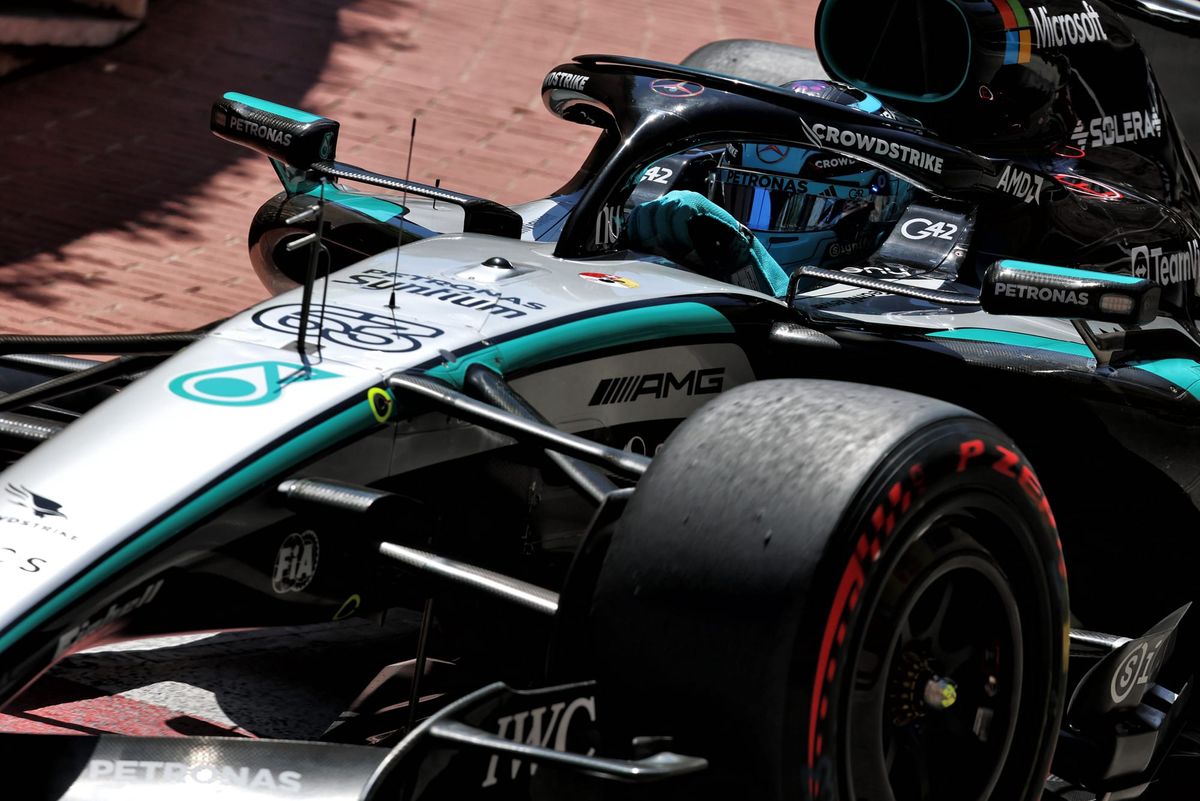
Highlights
- George Russell struggled with Monaco due to new 2026 Pirelli tyres.
- He plans to focus more on instinct than telemetry in future races.
- Russell praised teammate Kimi Antonelli’s consistent, effective driving style.
- High tyre pressures this season are the highest ever in F1 history.
- Russell aims to regain natural driving rhythm seen in early races.
George Russell says he will lean more on instinct to counter the driving‑style issues exposed by Monaco, as Mercedes searches for a consistent operating window with Pirelli’s 2026 tyres.
The 28‑year‑old accepts his qualifying critique was overly harsh but believes reconnection with his natural approach is essential, particularly with teammate Kimi Antonelli extracting strong, repeatable performance.

The 2026‑spec Pirellis use a narrower profile and mandate higher starting pressures. That changes contact patch behaviour, transient balance, and tyre warm‑up, with pressures currently at the highest levels in F1 history.
Russell points to competitive outings in Melbourne, China, and Canada, suggesting Monaco magnified a confidence shortfall on a track that punishes micro‑errors and discourages pushing while the car feels edgy.
He intends to strip back the process, reduce over‑analysis of telemetry, and drive more by feel, echoing the rhythm he used in karting and during last season’s most accomplished weekends.
Tyre pressures this season are the highest in F1 history, according to Russell.
He notes that grip evolution varies markedly circuit‑to‑circuit, altering how his inputs suit the car and tyre state, and occasionally placing his baseline technique outside the most effective window.
Instead of forcing a style shift, he prefers gradual adaptation. Mercedes expects refinements to arrive organically as mileage accumulates and the car‑tyre platform becomes more predictable.
A simulator reference underscores that view. After a full day’s running two years ago, Russell returned and immediately lapped two‑tenths quicker within two laps, without consciously changing technique.
A simulator session showed a two‑tenths gain overnight without deliberate changes, reinforcing subconscious adaptation.
Antonelli provides a useful benchmark, delivering pace with minimal stylistic variance. Russell believes his own approach can click similarly once confidence and tyre understanding align.
The target is to recreate the early‑season flow, leaning less on data and more on instinct in the Mercedes W17, whose sensitivity amplifies small mismatches in inputs and tyre state.
He plans to rely less on telemetry and more on driving instinct from race to race.
Context matters too. Russell has spoken about the F1 title pressure surrounding expectations, while Toto Wolff’s advice shapes the team’s response to these oscillations.
As 2026 progresses, Mercedes’ yield will hinge on instinctive adaptation to the tyre regulations. Russell’s ability to stabilise his style should narrow the gap and unlock cleaner execution.
Visual Summary

Daniel Miller reports on Formula 1 Grand Prix weekends with race-day analysis, team-radio highlights, and point-standings updates. He explains power-unit upgrades, aerodynamic developments, and driver rivalries in straightforward, SEO-friendly language for a global F1 audience.
Related FervoGear guide: custom race suits built for driver protection, custom fit, and sponsor-ready design.