https://shop.fervogear.com/cart

Did Red Bull’s Strategy Cost Max Verstappen Victory in Austria?

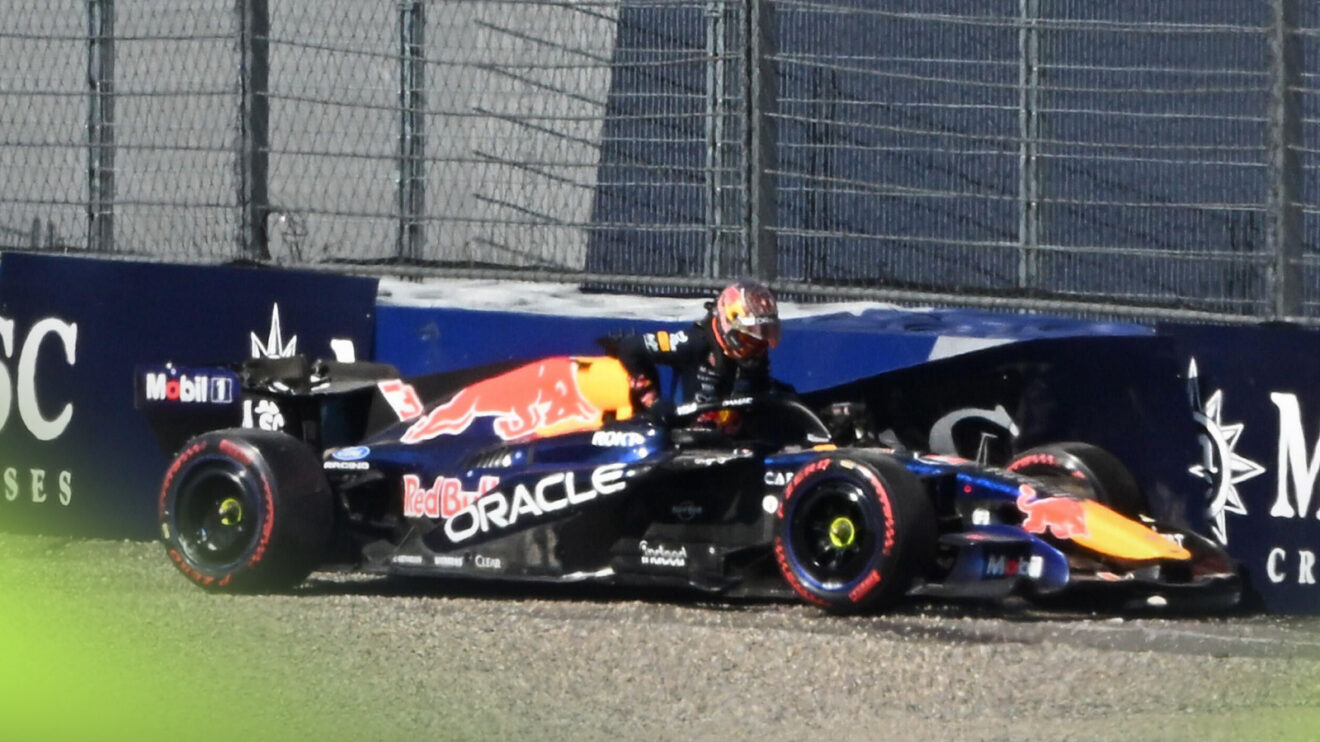
Highlights
- George Russell won Austrian GP, finishing 1.8 seconds ahead.
- Max Verstappen started fifth and closed gap but lost time.
- Red Bull gambled on overcut, delaying Verstappen’s pit stop.
- Verstappen’s worn tyres lost grip, allowing Russell to extend lead.
- Verstappen had fastest pace but strategy cost potential victory.
- Red Bull showed strong pace, keeping Verstappen in title contention.
George Russell wins the Austrian Grand Prix at the Red Bull Ring, beating Max Verstappen by 1.8 seconds after a decisive strategic split shapes the final stint.
Verstappen starts fifth and carves past Charles Leclerc, Kimi Antonelli, and Lewis Hamilton, while Russell controls from pole in clear air.

The leading trio compress late on, yet Russell preserves track position to the flag, with Antonelli shadowing in third.
Verstappen often laps up to half a second quicker than Russell around the first stops, underscoring RB22 pace, as detailed in the Red Bull Verstappen review.
The race pivots on lap 43 when Mercedes pits Russell. Red Bull readies a response, then leaves Verstappen out to chase an overcut on ageing tyres.
Russell’s lap 43 stop triggered Red Bull’s overcut gamble; six laps later the gap ballooned from about one second to roughly 11 seconds.
Fresh rubber lets Russell run around 1.5 seconds faster per lap. Verstappen’s grip falls away rapidly as degradation bites.
By lap 49, when Verstappen finally pits, the margin stretches from roughly one second to approximately 11 seconds, flipping control back to Mercedes.
Verstappen closes late on fresher tyres, but the deficit proves too large, keeping alive debate over a potential Verstappen Austrian GP win.
Verstappen records the strongest average race pace among the leading trio.
Post-race, Verstappen concedes the tyres felt poor before that final stop and accepts that extending the stint cost more time than the extra laps gained.
He suggests an earlier stop could have enabled an attacking undercut, while stressing that such calls are easier with hindsight.
Final winning margin: 1.8 seconds after Verstappen’s late chase.
The Red Bull Ring typically rewards the undercut when degradation is high. Short lap time and quick tyre warm-up amplify immediate gains after pitting.
Red Bull’s modelling appears to overestimate tyre life and underestimate Russell’s out-lap potential, turning a calculated risk into a net loss.
High degradation at the Red Bull Ring amplifies the undercut’s power versus a long overcut.
Even so, the RB22 shows competitive race pace again and keeps Verstappen firmly in the title conversation, supported by team-by-team notes from Austria.
Team dynamics and execution remain central, as debated in the hidden team order Austrian GP.
A sharper reaction to Mercedes may have created a late-race duel rather than a chase from distance.
Visual Summary

Daniel Miller reports on Formula 1 Grand Prix weekends with race-day analysis, team-radio highlights, and point-standings updates. He explains power-unit upgrades, aerodynamic developments, and driver rivalries in straightforward, SEO-friendly language for a global F1 audience.