
https://shop.fervogear.com/cart


Explore Everything About the Thrilling Marina Bay Street Circuit

Highlights
- Singapore hosts final 2026 F1 Sprint race at Marina Bay Circuit
- Circuit features 19 corners over 4.927 km, 62 laps total
- Lewis Hamilton holds 2025 lap record of 1:33.808
- Five zones use Straight Mode for aerodynamic drag reduction
- Overtake Mode boosts speed, activated after Turn 17 detection
- Drivers can lose up to three kilograms due to heat
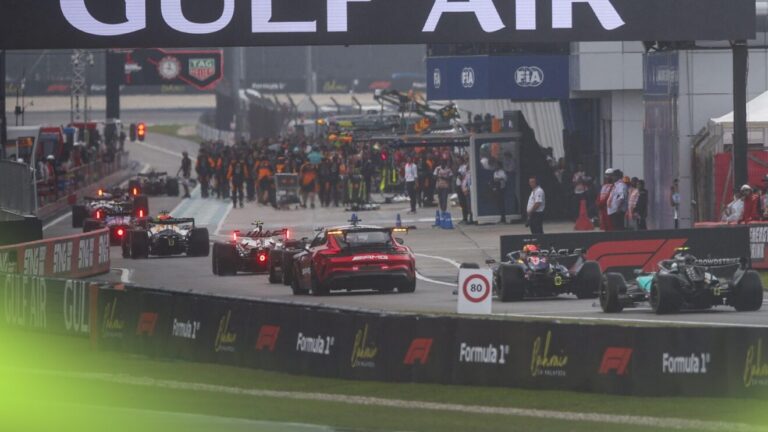
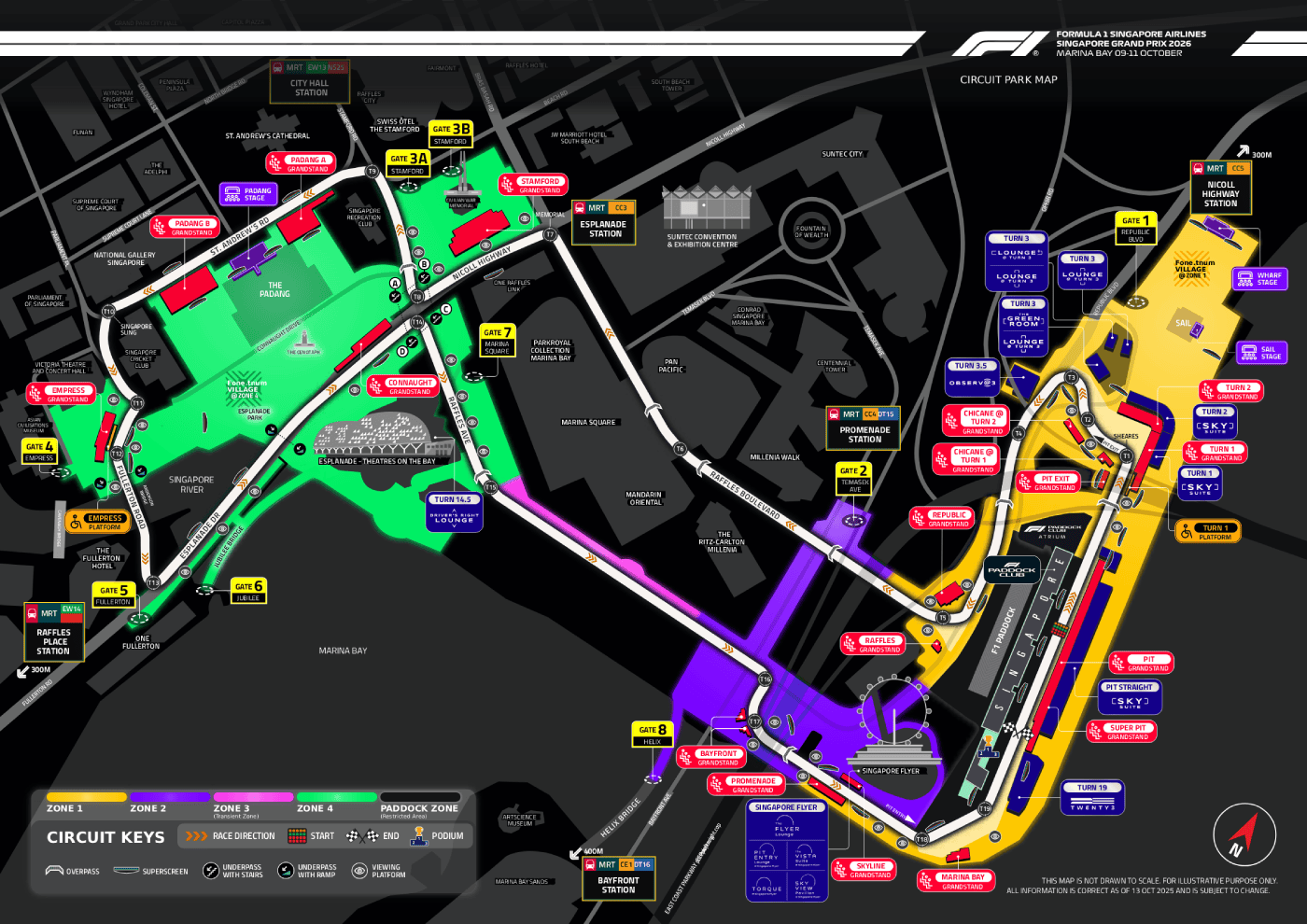
Singapore stages the season’s final Sprint this weekend at the Marina Bay Street Circuit, a night venue that will stress cars and drivers and influence late‑season championship momentum.
The lap covers 4.927km with 19 corners. Drivers complete 62 laps for 305.337km. Lewis Hamilton’s 2025 benchmark remains 1m33.808s, underlining the circuit’s sustained low‑speed, traction‑limited character.

Singapore’s F1 story began with Thomson Road’s non‑championship events from 1966‑73. The modern Grand Prix arrived in 2008 on a Hermann Tilke design later refined by KBR, using downtown public roads.
The surface is bumpy, humidity extreme, and laps long, compounding fatigue and error risk. Sebastian Vettel’s five victories stand as the benchmark here, one clear of Hamilton’s tally.
Pre‑2023 revisions removed four corners, trimming the layout from 23 to 19 without diluting its technical demands. The streamlined profile marginally eased traffic flow while preserving punishing braking zones.
Lewis Hamilton holds the current lap record at Marina Bay: 1:33.808 set in 2025.
Historically, Safety Cars were a given until 2024, when Lando Norris won despite repeated wall brushes. Reduced chicanes lowered incident likelihood, but the close barriers still punish misjudgments.
Jolyon Palmer likens the challenge to Monaco for mental and physical strain. Precision through repeated low‑speed sequences is essential, and late‑lap rear‑tyre temperatures frequently dictate qualifying and race performance.
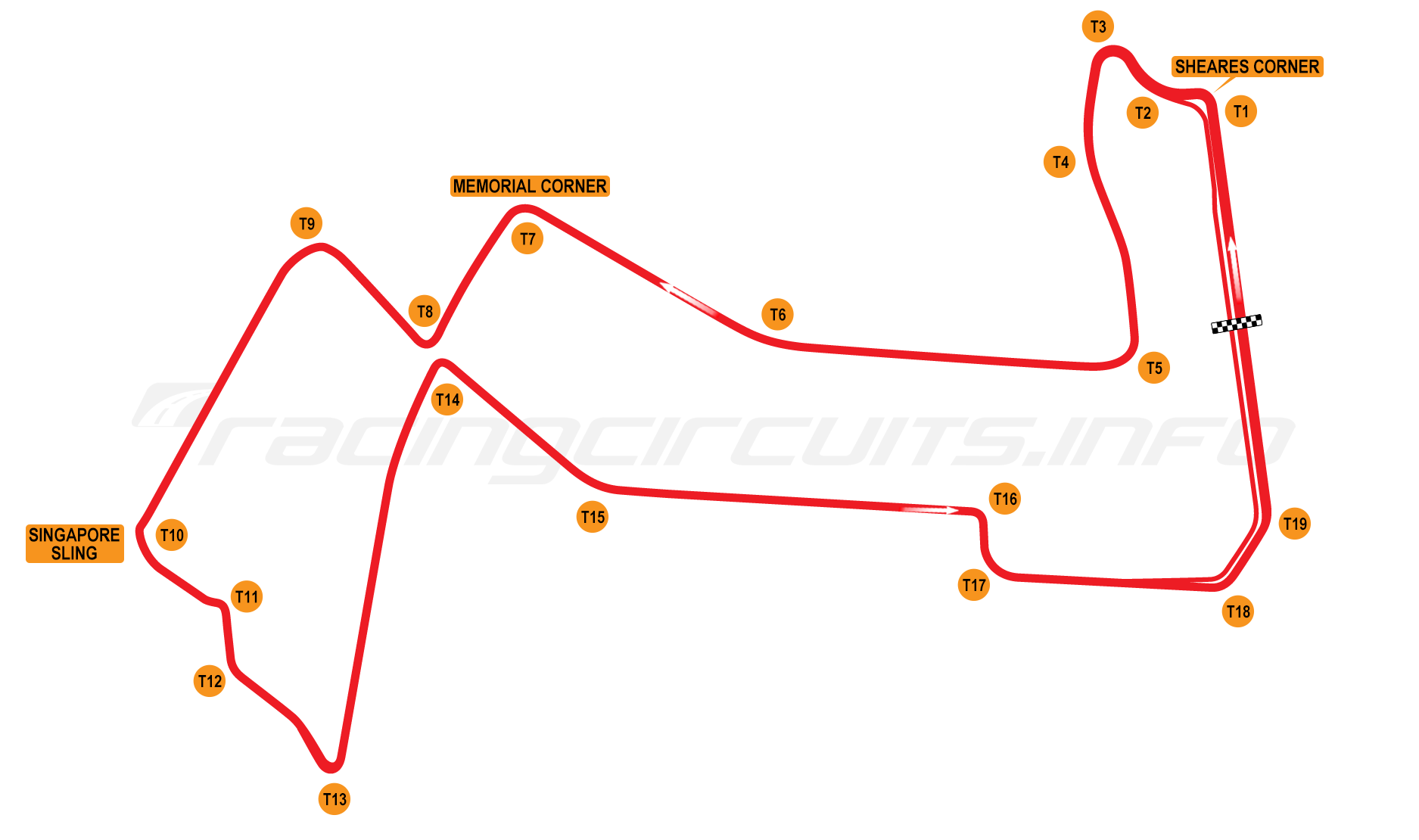
Turn 7’s heavy braking tempts drivers into overshoots, while the revised ‘Singapore Sling’ through Turns 10‑11 can unsettle cars. Managing exits without overheating rears defines competitive long‑run pace.
Drivers can lose up to three kilograms during the race due to heat and humidity.
New‑era aero introduces Straight Mode in five zones, trimming drag by re‑profiling wings for the straights before reverting to high downforce for braking and rotation. Set‑up compromises are significant.
The zones cover the start/finish, Turns 5‑7, 9‑10, 13‑14, and 15‑16. Teams must balance downforce for traction with Straight Mode efficiency to defend or attack along extended full‑throttle sections.
Overtake Mode, replacing DRS, extends speed using stored electrical energy rather than a movable wing. The detection is after Turn 16, with activation following just beyond Turn 17.
A driver within one second at detection uses it next lap, shaping timing games into the final sector. Energy budgeting and battery temperatures prove decisive in defence and attack.
Overtake Mode is armed after Turn 16 and activated just after Turn 17, rewarding precise timing.
This weekend’s 21‑lap Sprint is Singapore’s first, compressing strategy and tyre learning ahead of the 2026 Singapore Grand Prix. Expect parc fermé compromises to echo into Sunday.
Ferrari and Mercedes share five wins apiece, reflecting strengths in traction and braking stability. McLaren’s gains invite scrutiny of Singapore pace versus rivals on heavy‑braking layouts.
Tyre selection and warm‑up will be critical on the low‑grip surface, with teams eyeing degradation control over stint length. Early data from practice will shape tyre strategy and straight‑mode usage.
Singapore inaugurated F1’s night‑race era, with teams often staying on European time to manage body clocks. Operations shift accordingly, from late‑afternoon ‘breakfasts’ to early‑morning debriefs.
Visual Summary
Singapore Street Showdown: 2026 F1 Sprint Finale
305.3km
Race Distance
19
Corners
1:33.808
Lap Record (Hamilton ’25)
Sprint & Overtake Zones
OVERTAKE
5 “Straight Mode” zones for max speed. Overtake Mode (next-gen DRS) unlocks after Turn 17.
Racing in a Sauna
Drivers lose up to 3kg from heat/humidity. Only F1 night race under city lights.
Mental & physical test = Monaco on steroids.
Mental & physical test = Monaco on steroids.
🏆 Kings of the Night
Vettel (5 wins), Hamilton (4), Ferrari & Mercedes (5 wins each)
✨ Unique Traditions
F1’s first ever night GP • Teams run on “European time” • 100% city streets
⏱️ 2008 – 2026
Defining races, historic drama & pure F1 spectacle
CITY LIGHTS. SPEED & SURVIVAL. SINGAPORE DEFINES CHAMPIONS.

Daniel Miller reports on Formula 1 Grand Prix weekends with race-day analysis, team-radio highlights, and point-standings updates. He explains power-unit upgrades, aerodynamic developments, and driver rivalries in straightforward, SEO-friendly language for a global F1 audience.