

https://shop.fervogear.com/cart


Fred Vasseur Defends Ferrari Over Lewis Hamilton Mistake

Highlights
- Hamilton started Singapore GP on medium tyres, unlike leading drivers.
- Ferrari’s early tyre switch favored softs, outperforming mediums by lap 18.
- Hamilton stayed out during VSC, losing positions to Leclerc and others.
- Hamilton apologized for strategic error and missing pit entry during VSC.
- Vasseur stressed Hamilton made final call to stay on track.
- Wet Sprint race created tyre data uncertainty, complicating strategy decisions.
Ferrari team principal Fred Vasseur addresses Lewis Hamilton’s Singapore Grand Prix strategy after a call under the Virtual Safety Car. He clarifies Hamilton chose to remain out against fresh-tyre runners.
Hamilton is the only frontrunner to start on mediums. Max Verstappen leads from pole on softs, matched by Charles Leclerc. The offset aims to challenge Red Bull with track position.

By lap 18 Ferrari judges softs quicker and more resilient. Hamilton switches to used softs, committing to a demanding 44-lap run. He cycles to third once rivals complete their stops.
Lap 40 brings a VSC after Lance Stroll’s Aston Martin stoppage. Leclerc and Kimi Antonelli pit for fresher tyres. Hamilton stays out, protecting track position on heavily worn rubber.
The restart exposes the tyre deficit. Leclerc passes immediately. Antonelli, Lando Norris, and Oscar Piastri follow. Hamilton fades to sixth. He later apologizes for missing the VSC pit entry.
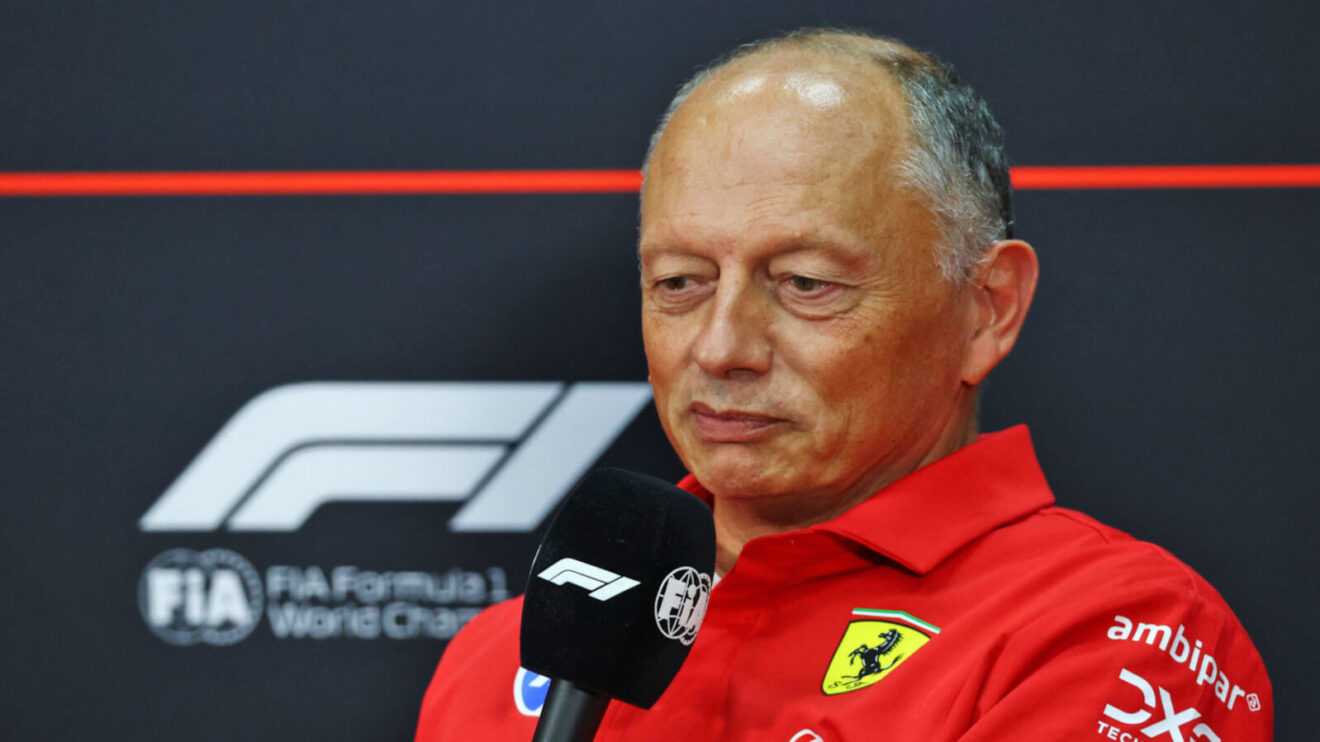
“Vasseur: Hamilton made the final call to stay out under the VSC.”
Vasseur tells reporters the team proposed pitting, but the driver decided otherwise, a view consistent with Hamilton’s own admission. His fuller explanation features in Ferrari’s pit-call debrief released post‑race.
Asked to compare McLaren’s Sprint approach, Vasseur stresses circumstances differ. He rejects apportioning blame to the pit wall, noting aligned pre-race scenarios and evolving constraints during the VSC window.
Ferrari splits tyre strategies due to scarce data. A wet Sprint clouds degradation models. FP1’s hard-tyre running leaves mediums versus softs unresolved. The medium proves weaker, forcing an early pivot.
From lap one Ferrari weighs one-stop against a safer two-stop. The early change covers Verstappen’s pace and SC variance. Vasseur highlights the swift pre‑VSC swap in his assessment made afterward.
Wet Sprint conditions deprived teams of representative tyre data for Sunday.
The episode underscores execution and communication margins. Hamilton accepts responsibility, and Ferrari reviews decision gates. Further context on Hamilton’s Singapore setback aligns with Vasseur’s driver-support stance this month.
Sixth place blunts Ferrari’s attempt to pressure Verstappen for the win. The focus shifts to upcoming rounds, where Ferrari and Mercedes target cleaner reads on tyres and bolder, better-timed stops.
Strategy splitting carries upside, but magnifies risk when the tyre hierarchy is unclear.
Visual Summary
🔄 Hamilton’s Singapore Spiral
Tyre gamble. Missed pit. From podium to P6.
Ferrari’s strategy unravelled in real time.
Ferrari’s strategy unravelled in real time.
Starting Tyre ❓
Mediums
Alone among leaders
VSC Pit Missed 🚦
Lap 40
Tyres faded fast
Final Finish 🏁
P6
After running P3
“The team suggested pitting, but ultimately Hamilton made the call. It wasn’t about blame—just a very difficult scenario.”
– Fred Vasseur
– Fred Vasseur
🟡
⬇️
🟤
⬇️
⚫️
⬇️
🟤
⬇️
⚫️
Mediums → Softs → Nothing left by the flag.
Ferrari’s lessons learned—for the next battle.
Ferrari’s lessons learned—for the next battle.

Daniel Miller reports on Formula 1 Grand Prix weekends with race-day analysis, team-radio highlights, and point-standings updates. He explains power-unit upgrades, aerodynamic developments, and driver rivalries in straightforward, SEO-friendly language for a global F1 audience.




