https://shop.fervogear.com/cart

Mekies Confirms Red Bull Will Boldly Recruit Top Talent

Highlights
- Gianpiero Lambiase to join McLaren as Chief Racing Officer by 2028.
- Several key Red Bull personnel including Adrian Newey have departed recently.
- Red Bull prioritizes internal talent development and strategic external hires.
- Currently fourth in Constructors’ Championship after four rounds of this season.
- Red Bull confident in managing transitions without losing competitiveness.
- New recruit Andrea Landi reinforces Red Bull’s technical team structure.
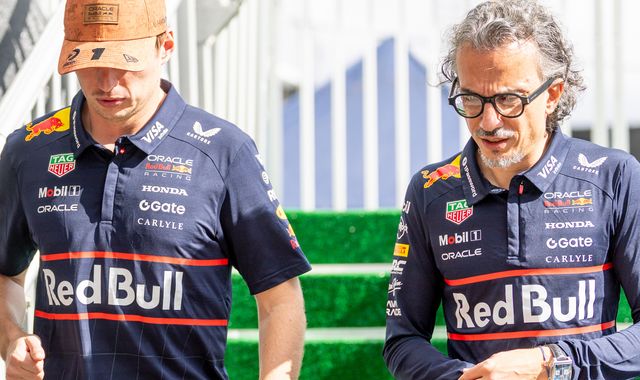
Red Bull Racing faces an exit as Max Verstappen’s engineer Gianpiero Lambiase prepares to leave when his contract ends in 2027, before joining McLaren as Chief Racing Officer in 2028.
His departure adds to exits involving Rob Marshall, Will Courtenay, Jonathan Wheatley, and Adrian Newey, who moves to Aston Martin. Red Bull insists the reshuffle does not compromise competitiveness.

Gianpiero Lambiase will join McLaren as Chief Racing Officer in 2028.
Racing director Laurent Mekies frames turnover as normal in a fast-moving market and stresses Red Bull’s emphasis on internal development and a supportive environment to retain and attract expertise.
Key technical leaders remain in place. Ben Waterhouse steers power-unit operations, while Pierre Wache leads chassis development. Both oversee deep departments designed to maintain performance continuity.
Red Bull prioritizes promoting from within, supplemented by targeted external hires.
The strategy prioritizes promotion from within but remains pragmatic. If gaps emerge, selective external hiring provides experience and fresh perspective without disrupting established processes.
Recent additions include Andrea Landi from Racing Bulls, strengthening the technical structure and underpinning succession planning across key functions.
After four rounds, Red Bull sits fourth in the Constructors’ standings behind Mercedes, Ferrari, and McLaren.
Early-season form reflects that rebuild. After four rounds, Red Bull holds fourth in the standings behind Mercedes, Ferrari, and McLaren amid evolving regulations and tighter competitive margins.
Mekies argues culture and organization safeguard performance. Clear structures, internal pipelines, and reputation across the paddock support continuity despite headline departures.
Lambiase’s timeline also helps planning. With two seasons remaining, Red Bull can develop successors, refine trackside processes, and protect Verstappen’s working rhythms.
The longer horizon aligns with the 2026 rules reset. Integrating power-unit and chassis programmes under stable leadership will be central to sustaining performance through the transition.
Red Bull’s stance remains pragmatic rather than complacent. Internal elevation carries the load, while selective recruitment targets specific deficits that could otherwise threaten development velocity.
The result is a managed evolution rather than upheaval. If executed cleanly, it keeps the team competitive now and positions it strongly for the next regulatory cycle.
Visual Summary
?
?
??
?
?
?
Red Bull’s Engineering Powerhouse
⬅️
➡️
➡️
Key Figures Out,
New Talent Grows In
New Talent Grows In
2024
?
?
2027
2028+
?
?
?
RB
Red Bull: 4th after 4 rounds
Red Bull’s real race? Nurturing Talent
As old heroes exit, new stars rise. The strategy is change itself.

Daniel Miller reports on Formula 1 Grand Prix weekends with race-day analysis, team-radio highlights, and point-standings updates. He explains power-unit upgrades, aerodynamic developments, and driver rivalries in straightforward, SEO-friendly language for a global F1 audience.