https://shop.fervogear.com/cart

Unveiling the Huge Performance Gap in McLaren’s Engine Power


Highlights
- McLaren uses shorter gear ratios than Mercedes in 2026 season.
- Shorter ratios improve acceleration but reduce speed on long straights.
- Lando Norris was 0.151 seconds slower than George Russell in qualifying.
- McLaren builds its own gearboxes, unlike other Mercedes-powered teams.
- New 2026 rules allow one mid-season gear ratio change.
- McLaren currently plans no changes, satisfied with current gear setup.
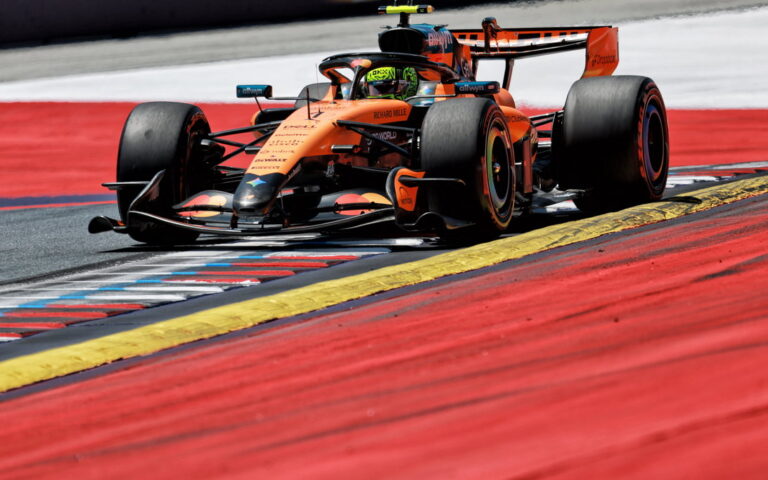
McLaren’s selection of shorter gear ratios than Mercedes shapes the competitive picture at the 2026 Canadian Grand Prix in Montreal.
The choice allows earlier upshifts and one extra gear on three stretches, enhancing punch out of slower corners and short bursts.

The compromise is top-end speed. On the runs to Turn 10 and the final chicane, Mercedes stretches away, with Lando Norris 0.151s shy of George Russell in qualifying.
The flipside is tangible. Acceleration gains appear where traction and rapid speed changes matter most across the lap. Insight on Norris’s qualifying execution features in McLaren’s Montreal analysis.
McLaren runs a Mercedes power unit but designs its own gearbox, enabling bespoke ratios. Customer teams using Mercedes gearboxes face standardised sets, as explored in the Mercedes Canadian GP advantage.
Andrea Stella confirms the shorter ratios. He notes benefits for starts and intermediate straights, but concedes a deficit in sustained Vmax on Montreal’s longest sections.
Norris qualifies 0.151s behind Russell, with straight-line losses tied to shorter gearing.
Longer gears suit the blast from Turn 10 to Turn 13. Montreal exposes that trade-off more starkly than average circuits.
The 2026 rules permit a single mid-season change to gear ratios and the final drive. McLaren currently has no plan to use that allowance, aligned with its broader Canadian GP upgrade direction.
Stella indicates the balance fits the car’s operating window and race priorities. The team values all-round performance over marginal straight-line gains.
2026 regulations allow one in-season ratio change, but McLaren intends to stay with its current set.
Gearing also interacts with hybrid deployment and energy recovery. That affects acceleration traces, peak speed windows, and stint management across the race.
The Canadian weekend underscores how small specification calls swing competitiveness in a tight field. The context around Mercedes and Russell’s package is covered in recent upgrade analysis.
McLaren’s bespoke gearbox approach differentiates it from Mercedes-supplied customers and shapes on-track trade-offs.
Visual Summary
Acceleration
Top Speed
+0.151s
McLaren
Shorter Gears
Faster off the line
↕️ Quicker out of slow corners
Slightly lost on long straights
Shorter Gears
Faster off the line
↕️ Quicker out of slow corners
Slightly lost on long straights
Mercedes
Longer Gears
More speed on Montreal’s straights
↔️ Holds high gear longer
Edges ahead on pole
Longer Gears
More speed on Montreal’s straights
↔️ Holds high gear longer
Edges ahead on pole
Acceleration
Top Speed
Adaptability
McLaren gambled with faster acceleration by picking shorter gears,
but Mercedes maximized top speed for pole.
Every gear is a choice.
but Mercedes maximized top speed for pole.
Every gear is a choice.

Daniel Miller reports on Formula 1 Grand Prix weekends with race-day analysis, team-radio highlights, and point-standings updates. He explains power-unit upgrades, aerodynamic developments, and driver rivalries in straightforward, SEO-friendly language for a global F1 audience.