https://shop.fervogear.com/cart

Massive Mercedes Upgrade Sparks Major Question About George Russell

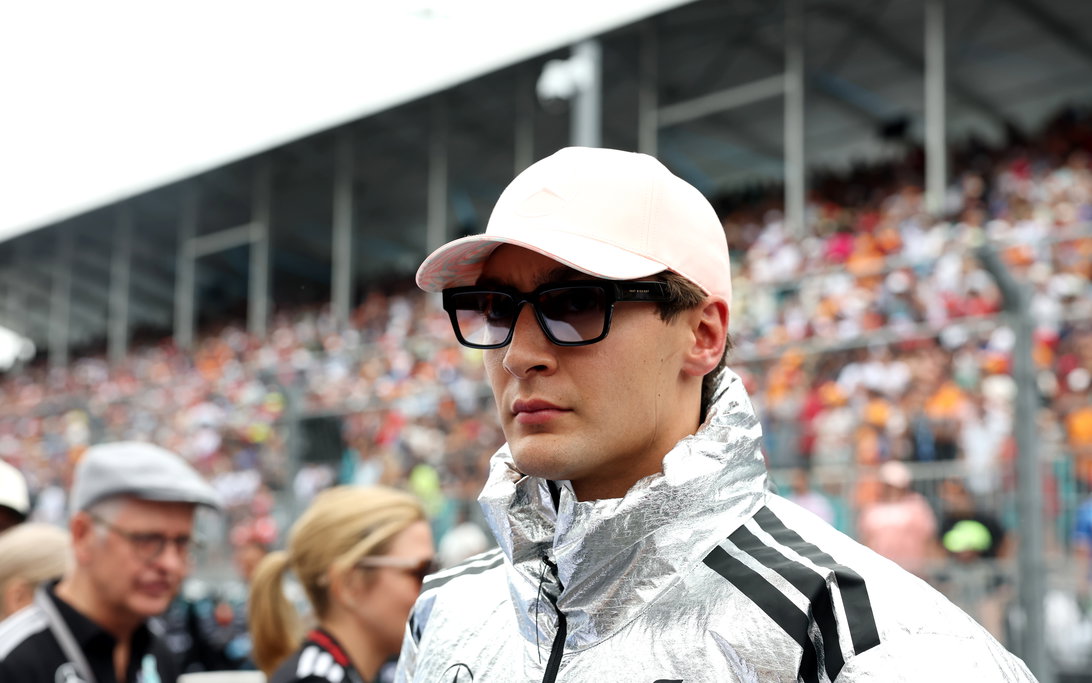
Highlights
- Mercedes introduced eight upgrades to W17 during Canadian GP weekend
- Focus on aerodynamics and front brake cooling improvements
- Barge boards reshaped to improve airflow under the car
- Updates increase downforce with reduced drag on straights
- Kimi Antonelli involved in development, favoring drivability retention
- George Russell’s feedback will influence future upgrade directions
Mercedes has rolled out eight updates to its W17 at the Canadian Grand Prix in Montreal, targeting aerodynamic efficiency and brake robustness to shift performance after a stuttering 2026 start.
George Russell and Kimi Antonelli split evaluation duties in practice, offering complementary feedback as Mercedes gauges correlation between simulation promises and the Circuit Gilles Villeneuve’s stop‑start demands.

The front wing sees reworked endplates and added winglet detail to increase downwash, managing front‑wheel wake and stabilising corner entry, a recurring balance sensitivity on earlier iterations.
Extra strakes around the front‑wheel area further condition flow toward the floor, aiming to raise mid‑corner grip without compromising straight‑line efficiency.
Mercedes introduced eight upgrades to W17 during Canadian GP weekend.
Cooling receives attention too. A revised section of the front brake intakes increases thermal headroom for Montreal’s repeated heavy stops, protecting consistency late in stints.
Barge boards are reshaped into two defined sections, separating streams toward the lower sidepods and channelling more energised air beneath the floor for stronger load generation.
Along the rearward floor edge, additional vents reinforce the tyre‑squirt seal ahead of the rear wheels, combating losses as the shoulder deforms under load.
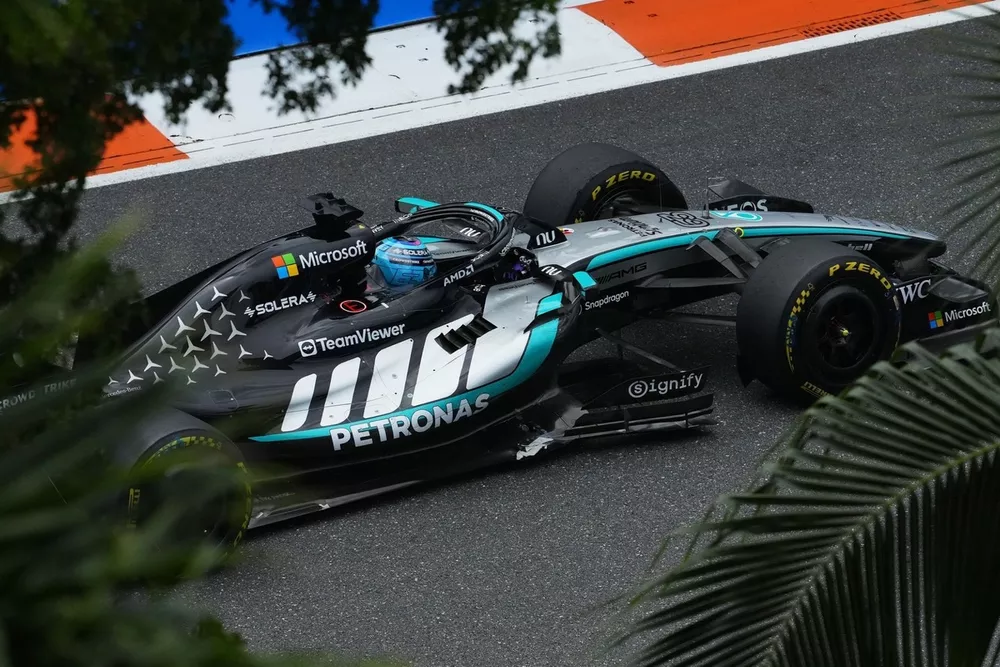
Updates extend to the upper diffuser and side‑mounted winglet cascade, cleaning the wake and strengthening the low‑pressure region behind the rear wing to raise local efficiency.
Rear wing retains downforce with reduced drag when DRS is open.
This enhancement helps retain rear‑wing load with reduced drag when DRS is open, improving straight‑line speed while preserving traction confidence on exits.
Crucially, this is refinement rather than a concept pivot. Mercedes pursues incremental gains while protecting the W17’s balance window established across recent events.
Antonelli contributes to development direction, advocating drivability retention over bolder geometry shifts. That approach preserves predictability across braking phases, chicanes, and kerb interactions.
Kimi Antonelli influenced the package, prioritising drivability and stability.
Russell’s feedback during Montreal running will carry weight, complementing analysis from practice in Mercedes’ Canadian GP test programme as engineers compare his comments with Antonelli’s.
That process feeds a broader strategy to prise gains in Montreal, alongside tyre preparation and DRS usage explored in their Canadian GP advantage analysis.
Any directional call requires leadership alignment, with the Wolff–Russell dynamic central to converting development mileage into sustained points.
If correlation holds, these steps can support Russell’s title push without slowing Antonelli’s adaptation, strengthening Mercedes’ grip on the upper midfield and pressuring the leaders.
Red Bull and Max Verstappen remain the benchmark. Montreal’s heavy-braking profile rewards stability and traction, areas Mercedes targets through cooling headroom and cleaner underbody flow.
Ultimately, this package aims to convert simulation into race-day substance. Sunday will show whether efficiency gains translate into lap-time, tyre life, and overtaking resilience.
Visual Summary
Antonelli / Russell
The Mercedes W17
Upgrade Cascade
Upgrade Cascade
? Aerodynamic
refinements
refinements
? Brake cooling
intake upgrade
intake upgrade
? Split bargeboards
?️ Extra rear vents
⬆️ Rear downforce tweak


8
distinct components improved
A critical step forward in pursuit of Verstappen

Daniel Miller reports on Formula 1 Grand Prix weekends with race-day analysis, team-radio highlights, and point-standings updates. He explains power-unit upgrades, aerodynamic developments, and driver rivalries in straightforward, SEO-friendly language for a global F1 audience.