https://shop.fervogear.com/cart

Michael Schumacher’s Epic F1 Win Seals Legendary Career Status

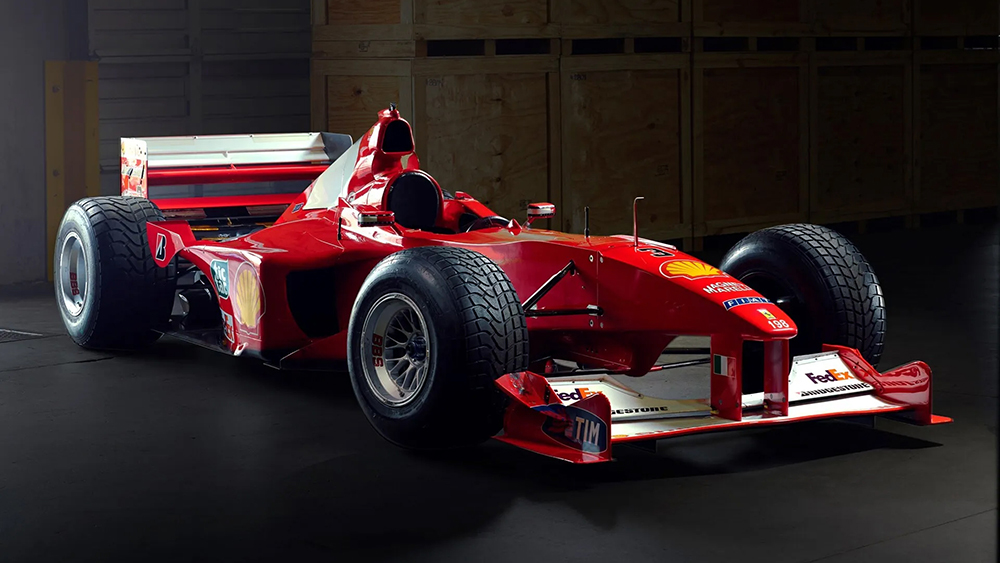
Highlights
- Michael Schumacher won 1996 Spanish Grand Prix in rainy conditions.
- First Ferrari victory for Schumacher despite initial clutch problem.
- Schumacher finished 45.3 seconds ahead, lapping all but two drivers.
- Race saw heavy crashes; only six of 20 cars finished.
- Schumacher set fastest lap, over two seconds quicker than others.
- Engine issues reduced power, but Schumacher still maintained a dominant lead.
On June 2, 1996, at rain-soaked Barcelona-Catalunya, Michael Schumacher delivers a defining first Ferrari victory, turning adversity into dominance and reframing expectations for the struggling F310 programme.
He finishes 45.3 seconds clear, lapping every driver except Jean Alesi and Jacques Villeneuve. Attrition is brutal, with only six of 20 starters reaching the chequered flag.

Schumacher wins by 45.3 seconds, lapping all but two cars.
Context matters. Williams-Renault controls qualifying with Damon Hill and Villeneuve. Schumacher starts third, nearly a second slower, then drops back at the start with a clutch problem.
From there, the recovery is relentless. Through heavy spray, he picks off rivals decisively, builds rhythm, and assumes control by lap 11 as others struggle to keep cars on track.
His speed advantage is stark. On lap 14 he records a 1:45.517, more than two seconds faster than any competitor manages across the entire Grand Prix.
Fastest lap: 1:45.517 on lap 14, over two seconds quicker than anyone else.
The conditions punish imprecision. Hill, Gerhard Berger, Johnny Herbert, and Eddie Irvine spin or crash, underlining how Schumacher’s precision and throttle modulation generate sustainable pace, not fleeting sector time.
Even when the Ferrari V10 loses two cylinders around lap 35, costing roughly 10 km/h on the straights, the margin remains unassailable thanks to earlier gains and consistent low-risk lines.
Ferrari V10 runs on eight cylinders from mid-race yet stays untouchable.
Alesi finishes second for Benetton, 45.3 seconds back, with Villeneuve third, three seconds adrift of Alesi. Everyone else is lapped, a rare scale of superiority in modern Formula 1.
The drive showcases how an elite operator can transcend machinery limitations, reinforcing debates about generational talent and establishing credibility that underpins Ferrari’s 2000–2004 title run.
In wet conditions, the control and racecraft invite comparisons with Prost and Senna, though the emphasis here is sustained margin rather than single-lap heroics.
First Ferrari win becomes the benchmark for wet-weather dominance in the modern era.
Strategically, Ferrari benefits from clear air and simplified calls, prioritising track position over risk. That discipline mirrors patterns seen in notable champion comebacks across eras.
Decades on, Barcelona 1996 remains a touchstone for adverse-condition excellence, the day Schumacher proves he can elevate Ferrari even when the car is plainly second best.
Visual Summary
+45.3s
Schumacher’s margin in the rain —
only two others on the lead lap
only two others on the lead lap
From 7th on lap 1 to 1st by lap 11
In a car down two cylinders by lap 35
6
Finishers
out of 20
out of 20
1:45.517
Fastest Lap
(+2s clear)
(+2s clear)
#20
Schumacher Career Win
“A victory not just of speed,
but of willpower — a legend born in the storm.”
but of willpower — a legend born in the storm.”
Barcelona 1996: Schumacher vs. the rain, the odds, the field.
Ferrari’s turning point.
Ferrari’s turning point.

Daniel Miller reports on Formula 1 Grand Prix weekends with race-day analysis, team-radio highlights, and point-standings updates. He explains power-unit upgrades, aerodynamic developments, and driver rivalries in straightforward, SEO-friendly language for a global F1 audience.