

https://shop.fervogear.com/cart

F1 Faces Major Strategic Split After Shocking Belgian GP Results

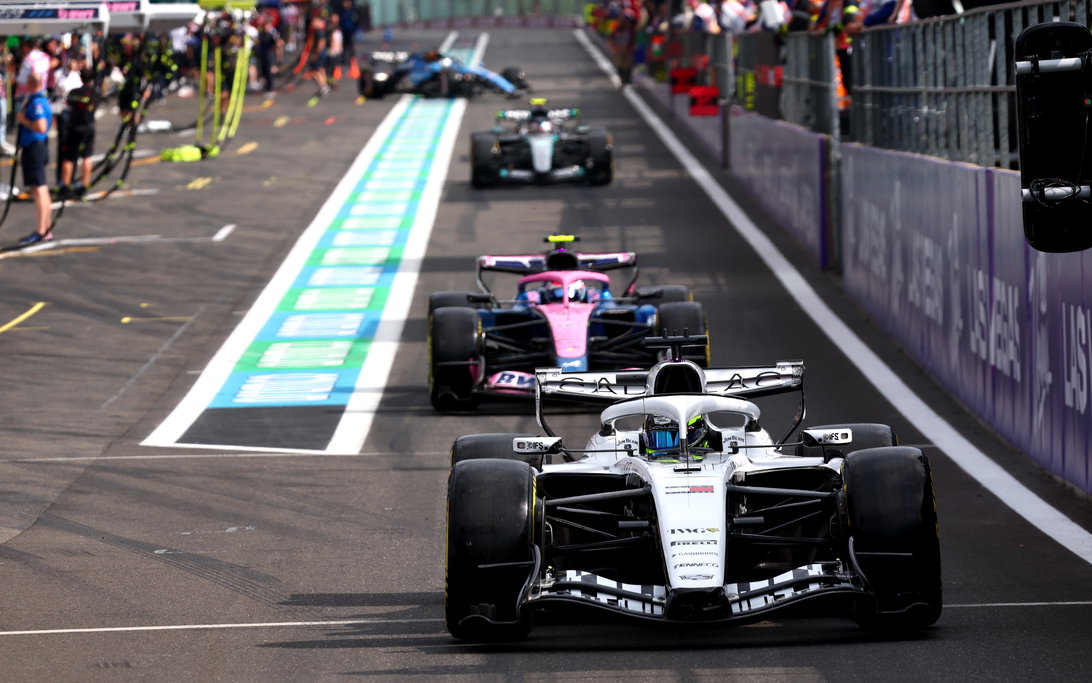
Highlights
- Soft tyre performs better than expected during Belgian GP practice.
- Teams may adopt medium-hard or soft-hard one-stop strategies.
- Two-stop strategy costs around 10 seconds, less favorable overall.
- Soft tyre shows unusually low degradation at Spa-Francorchamps.
- Hard compound expected to remain part of most race strategies.
- Race weekend conditions will influence final tyre strategy decisions.
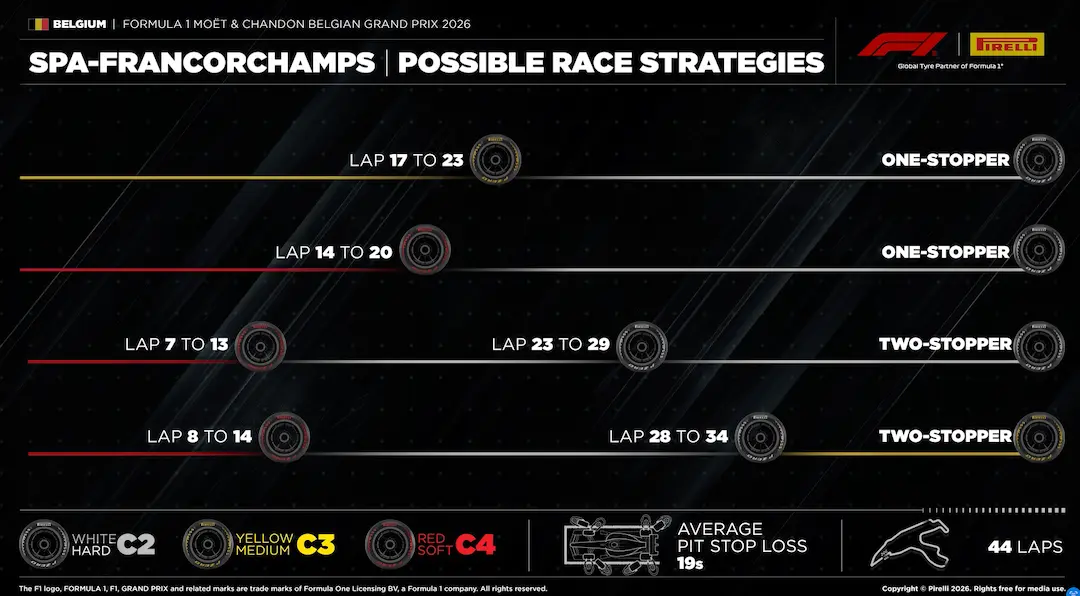
Spa-Francorchamps is set for a genuine strategy split after the soft compound exceeded expectations in Friday running. Pirelli still projects a one-stop across the 44 laps.
Dario Marrafuschi says the baseline remains medium-hard or soft-hard. A two-stop is estimated to be roughly 10 seconds slower over race distance unless conditions swing significantly.

The catalyst is unusually low soft-tyre degradation at Spa. Typically, teams favour the medium’s durability for stint one. Friday data suggests several cars can open on softs, then commit to hards.
That choice pivots on track position and stint length. Softs offer early grip and track position, but demand disciplined management to protect the undercut window and avoid an early safety-car trap.
Soft-tyre wear is lower than expected at Spa, making a soft-hard one-stop genuinely viable for multiple teams.
If degradation spikes or weather intervenes, Pirelli’s models keep two-stoppers alive, including soft-hard-hard or soft-hard-medium, though penalties are significant. Latest expectations sit in the Belgian GP weather forecast.
Tyre holding patterns reflect the uncertainty. Most teams preserved both hard sets after practice, while Audi, Cadillac, and Alpine used one set, subtly shaping stint flexibility on Sunday.
The hard compound should still anchor race plans. Managing thermal peaks through Sector 2 while keeping tyre surface temperatures stable will decide whether soft-start runners can extend effectively.
Ferrari’s campaign faces scrutiny at Spa, with Leclerc central to how aggressively the team leans on a soft opener. Red Bull’s rear-wing choice also intersects tyre load and thermal stability.
Pirelli estimates a two-stop would cost around 10 seconds across the race, limiting its appeal unless conditions worsen.
Updated long-run analysis, plus evolving track temperature, will refine approaches before lights out. Broader competitive themes are outlined in the 2026 Belgian Grand Prix preview.
Given the unusual softness resilience, tyre selection could decide points swings. Additional compound behaviour detail is available in the dedicated Belgian Grand Prix tyres analysis.
Most teams kept both hard-tyre sets available, preserving crucial flexibility for Sunday strategy calls.
Visual Summary
Traditional Choice
→
Medium → Hard
Surprise Contender
→
Soft → Hard
2026 Belgian GP: Tyre Tactics Split the Grid
Unexpectedly strong soft tyres tempt teams away from the usual strategy—will it be bold or safe for the Spa showdown?
1
Stop expected
Fastest plan
(unless conditions change)
(unless conditions change)
Soft’s Sensation ⚡
Lower-than-expected
degradation at Spa
degradation at Spa
Strategy Showdown
?
Bold vs Safe: Who blinks first?
Key questions for Sunday:
Will soft tyres go the distance?
Who dares to risk?
Will soft tyres go the distance?
Who dares to risk?

Daniel Miller reports on Formula 1 Grand Prix weekends with race-day analysis, team-radio highlights, and point-standings updates. He explains power-unit upgrades, aerodynamic developments, and driver rivalries in straightforward, SEO-friendly language for a global F1 audience.