

https://shop.fervogear.com/cart

F1 Drivers Fight Back: Can They Regain Control from Complex AI Engines?


Highlights
- Drivers criticize AI’s control over energy deployment in races.
- Oscar Piastri voices concerns over AI deciding qualifying outcomes.
- 2027-28 rule changes will favor combustion engines over electric power.
- Team bosses call for simpler tech for better driver control.
- Some drivers defend technology as core to Formula 1’s identity.
- Future updates aim to balance driver skill and technology influence.
Drivers arrive in Hungary voicing unease about how artificial intelligence shapes outcomes in 2026 Formula 1. The Belgian Grand Prix exposed qualifying swings linked to automated energy deployment.
Advanced algorithms now govern when and how hybrid power is delivered. That creates perplexing straightline speed differences between otherwise identical cars, with lap-time volatility drivers struggle to influence.

“Qualifying being decided by computers ‘behaving or misbehaving,’ says Piastri.”
Oscar Piastri says the systems can make him feel like a passenger, particularly at power-sensitive tracks such as Spa and Silverstone. He expects the Hungaroring’s short straights to mute the effect.
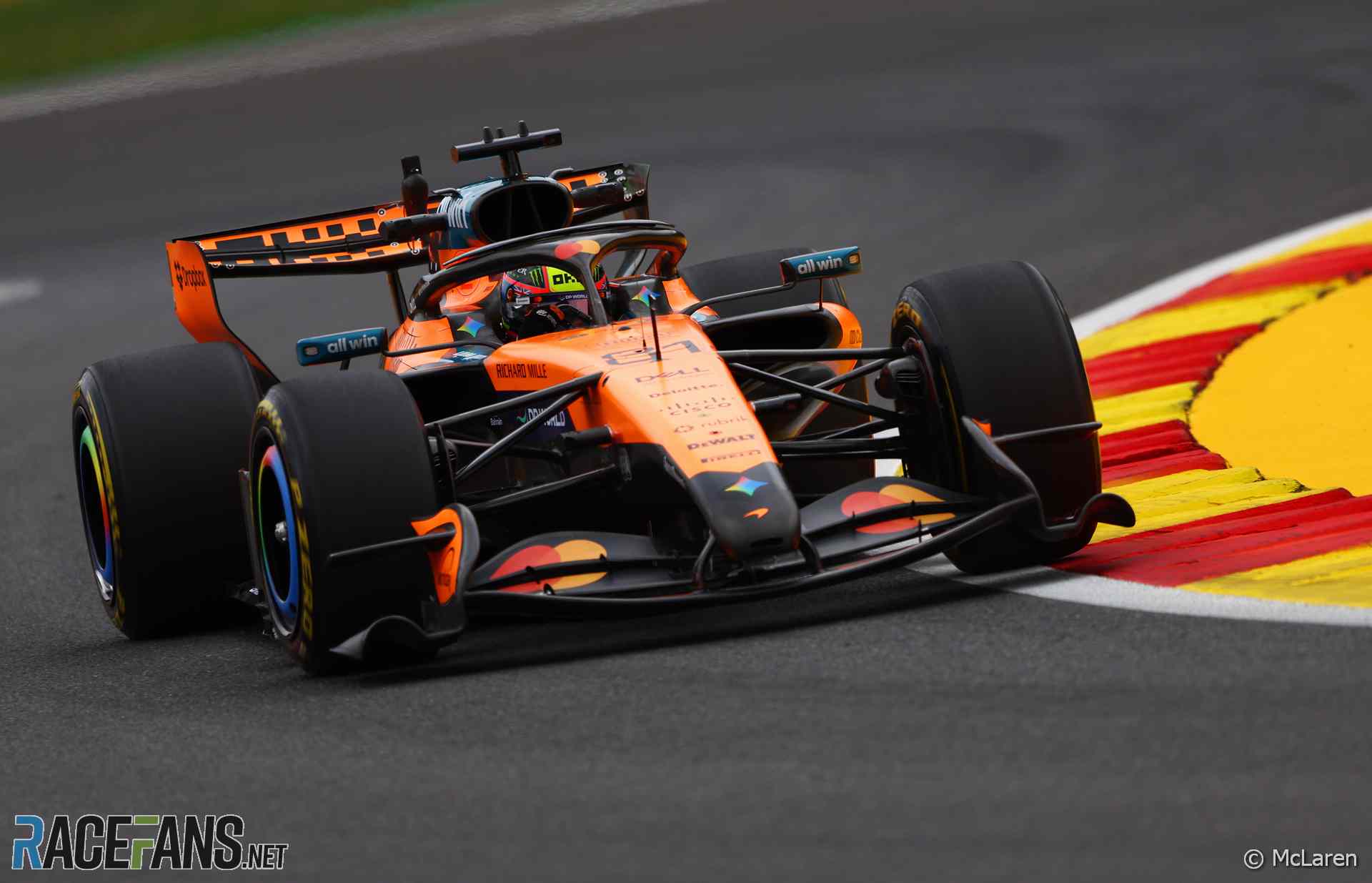
Piastri describes losing close to half the car’s output before the end of long straights as electrical assistance tails off, forcing reliance on the combustion engine alone.
Oops
Visual Summary
Who Controls F1 Qualifying?
AI Algorithms vs Human Instinct
AI Algorithms vs Human Instinct
New Formula 1 power units let software decide half the car’s speed.
Oscar Piastri & others say tight qualifying battles now hinge on glitchy, unpredictable AI.
Oscar Piastri & others say tight qualifying battles now hinge on glitchy, unpredictable AI.
DRIVER
CONTROL METER
AI
CONTROL METER
AI
🤖
In 2026, roughly half the car’s power comes from AI-managed battery deployment,
not the driver’s right foot.
not the driver’s right foot.
“It sometimes feels like I’m just a passenger…”
– Oscar Piastri
– Oscar Piastri
“Sometimes you push and the system saves power for later—not when you want it.”
– Charles Leclerc
– Charles Leclerc
Power drops
mid-straight
From 2027, engine rules will tip the balance
back
toward driver control—
but “algorithm battles” aren’t going away.
back
toward driver control—
but “algorithm battles” aren’t going away.

Daniel Miller reports on Formula 1 Grand Prix weekends with race-day analysis, team-radio highlights, and point-standings updates. He explains power-unit upgrades, aerodynamic developments, and driver rivalries in straightforward, SEO-friendly language for a global F1 audience.