
https://shop.fervogear.com/cart

Lando Norris Shares Unexpected Timing of McLaren’s Comeback

Highlights
- Lando Norris won 2026 Hungarian Grand Prix, first McLaren win this year
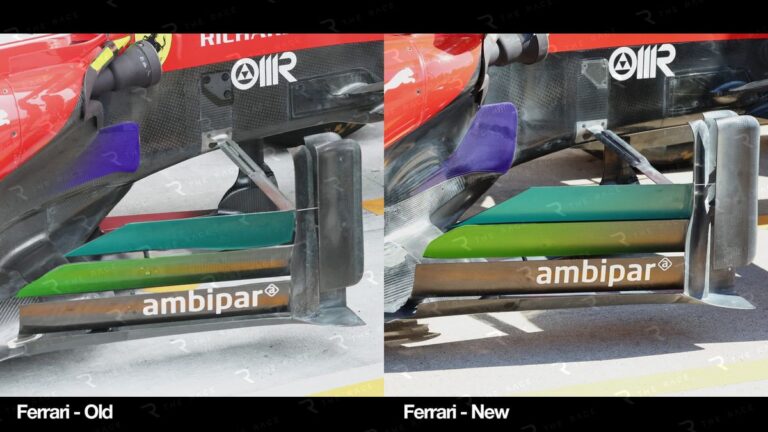
- McLaren’s upgraded MCL40 included floor, corners, and brake duct changes
- Early season issues: MGU-K problems and Piastri’s Melbourne crash
- Norris is fifth in standings, 91 points behind leader Kimi Antonelli
- Car’s high-speed corner performance remains McLaren’s biggest weakness
- Team expects full car improvement within two to three months
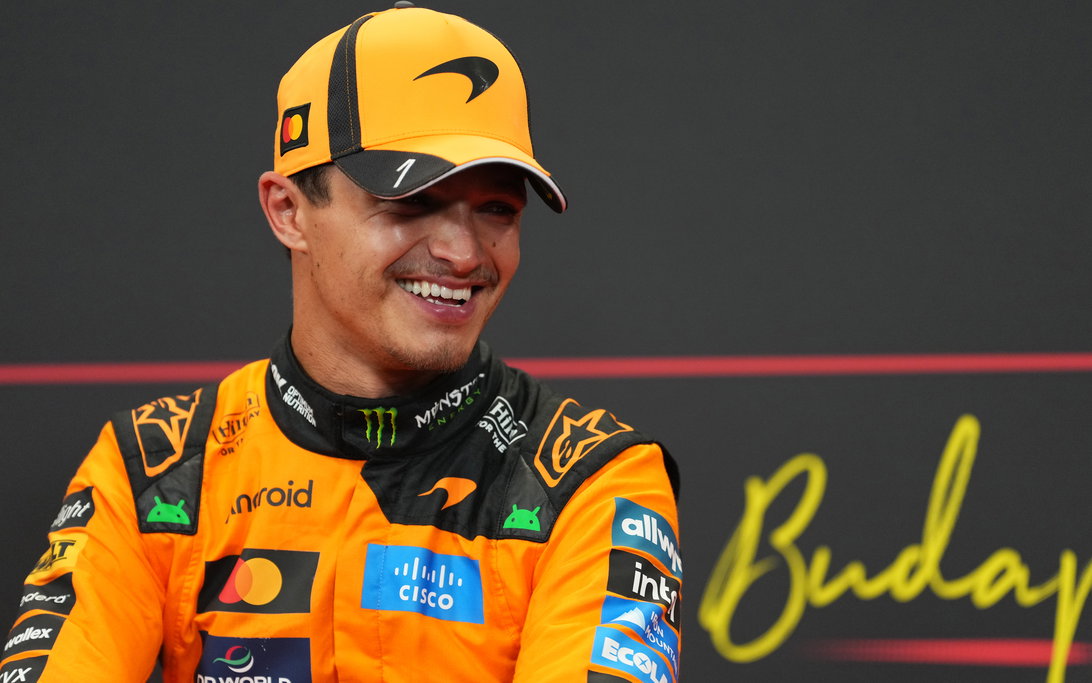
Lando Norris converts McLaren’s first major 2026 upgrade into victory at the Hungarian Grand Prix, delivering a faster-than-expected return to winning form at the Hungaroring.
He controls the race and finishes over 15 seconds clear of Max Verstappen, underlining the immediate impact of the revised MCL40 package.

The upgrade targets the car’s floor, front and rear corner assemblies, and brake ducts, addressing efficiency and load consistency through a wide operating range.
McLaren begins the season as double constructors’ champion but stumbles early. MGU-K failures in Shanghai and Oscar Piastri’s reconnaissance-lap crash in Melbourne sap momentum.
Across two rounds, the team gathers only 18 points and trails Mercedes by 80, framing a cautious development stance as costly in the short term.
Andrea Stella prioritises understanding the launch-spec MCL40 and power unit integration, delaying speculative parts to ensure correlation and reliability.
Norris wins by over 15 seconds after McLaren’s first major 2026 upgrade hits immediately at the Hungaroring.
The deficit is real in the standings. Norris holds fifth with 128 points, 91 behind Kimi Antonelli, reflecting the early-season drag on results and form.
That context matches McLaren’s measured approach, which sacrifices early performance for confidence in car direction and systems maturity.
Norris’s victory suggests correlation is now strong, especially with floor-driven load and cooling efficiency from the revised ducts.
Key weak point remains high-speed corners, requiring a concept “redirection” and an estimated two-to-three-month timeline for full effect.
Yet limitations persist. High-speed corner performance still trails class leaders, and Stella signals a concept redirection to unlock that final chunk of load.
He frames the fix as medium-term. Stella suggests one-to-two months for a step, while Norris expects around three months for full improvement.
Track characteristics will therefore dictate volatility. Power-limited or traction-heavy venues suit McLaren, while flat-out aero tracks remain exposure points.
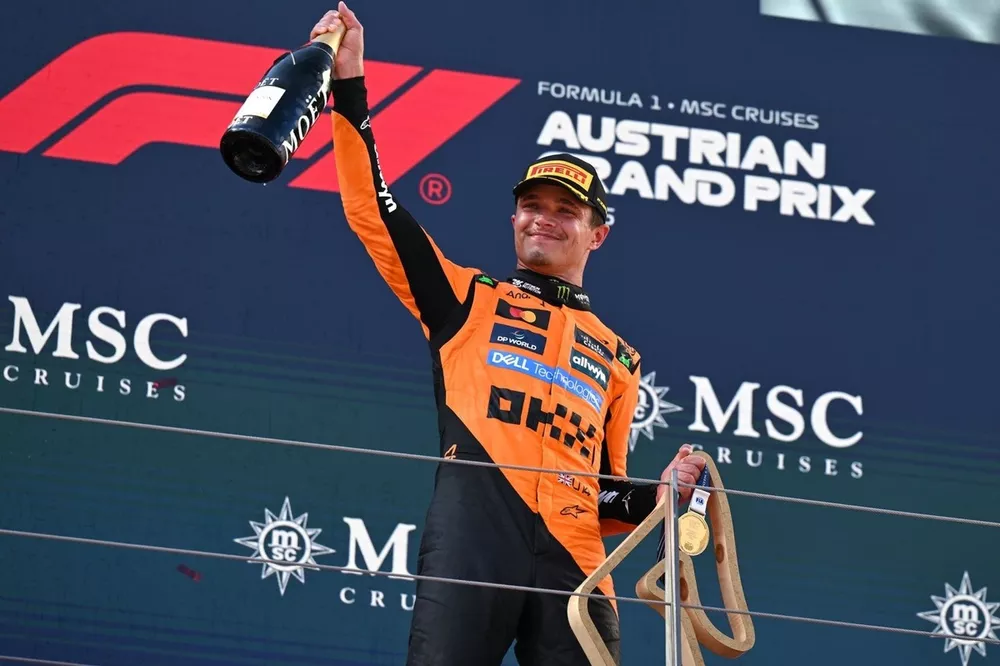
Constructors’ wise, McLaren trails Mercedes by 159 points, so repeat execution is vital to compress the gap before the concept shift lands.
Hungary is a targeted milestone for the revised development path, and the result exceeds internal expectations for timing and scale of gain.
Norris stresses process over hype, citing disciplined execution and incremental learning as key to turning the car’s potential into points.
McLaren targets Hungary for the first fruits of its revised pathway, and the upgrade overdelivers as a season turning point.
That mindset is pragmatic, given the calendar mix ahead. Some venues will flatter McLaren; others will underline the high-speed shortfall.
The victory also reframes Norris’s campaign. It complements his recent consistency, explored in detail through his current form and standings picture.
It fits the broader arc of McLaren’s programme, which has tracked a deliberate, correlation-first approach to development and upgrades.
Norris sits fifth in the standings on 128 points, 91 behind Antonelli; McLaren is 159 adrift of Mercedes in the constructors’ race.
How robust this step is will be clearer after a range of circuit tests, as outlined in the team’s development trajectory through mid-season.
For Norris, the win signals momentum rather than transformation. It’s a solid platform to build on, not a guarantee of week-to-week superiority.
Expect variability to remain, but Hungary shows the MCL40 can win when correlation, tyre management, and execution all align.
That combination, consistently delivered, is the only route to a meaningful title fight, as assessed in our look at Norris’s season to date.
Visual Summary
2
Verstappen
🎉
✨
🥇
Surprise victory!
+15.2s
ahead of Verstappen
1st win of 2026
for Norris & McLaren
+128 pts
Norris in drivers’
standings (5th)
standings (5th)
McLaren 2026 Season: 📉→📈
🔧
💥
⬆️
🇭🇺
Slow season start → Upgrades click in Hungary
🔶
Hard work makes the difference.
Norris & McLaren rise again — Hungary marks a turning point for 2026.
Hard work makes the difference.
Norris & McLaren rise again — Hungary marks a turning point for 2026.

Daniel Miller reports on Formula 1 Grand Prix weekends with race-day analysis, team-radio highlights, and point-standings updates. He explains power-unit upgrades, aerodynamic developments, and driver rivalries in straightforward, SEO-friendly language for a global F1 audience.