
https://shop.fervogear.com/cart

Critical Warning for Mercedes from Zandvoort Race Data Insight


Highlights
- Russell secured sprint pole at Dutch Grand Prix for Mercedes.
- Mercedes made only one major upgrade, deployed in May.
- McLaren’s Norris outpaced Russell in middle sector by nearly 0.5 seconds.
- Mercedes struggles with speed in Zandvoort’s high-speed corners 7 and 8.
- Mercedes plans heavier upgrades later, relying on rivals’ budget depletion.
- Next qualifying will clarify Mercedes’ corner speed issues and strategy.
George Russell takes sprint pole at Zandvoort, easing Mercedes concerns that a conservative upgrade plan is costly. The lap comes as Ferrari and McLaren push fresh developments.
Mercedes has introduced only one major change, launched in May at the Canadian Grand Prix. The team plans heavier spending later, expecting rivals to slow as budgets tighten.

Russell edges Lando Norris by 0.041s, confirming the W17’s baseline is competitive. But the timing traces highlight a clear weak spot that the headline time conceals.
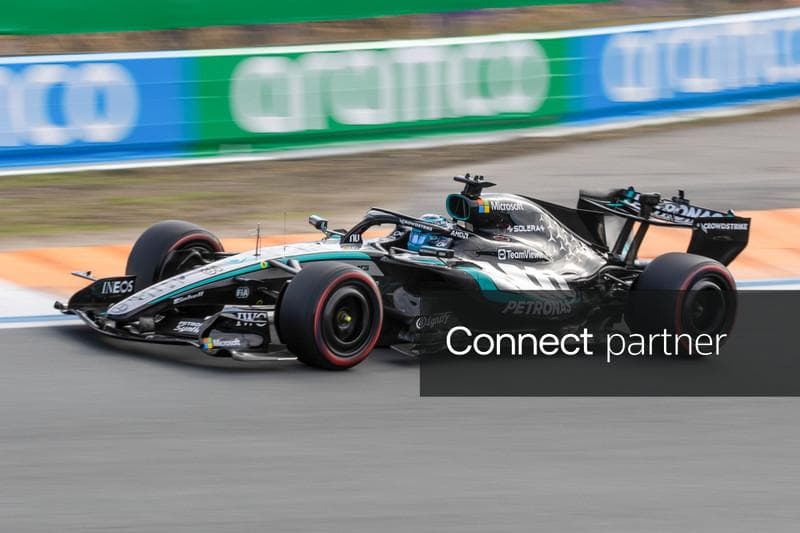
Sector two tells the story. Russell records 25.434s against Norris’s 24.983s, almost half a second. Kimi Antonelli trails similarly in the sister Mercedes, pointing to a pattern.
Russell’s sprint pole margin is just 0.041s over Norris, masking a near 0.5s loss in sector two.
Variable energy deployment is allowed under the 2026 rules, so sector swings are expected. Russell hits 317 km/h on the final straight. Norris peaks at about 307 km/h.
The deficit does not stem from straightline speed. It concentrates in high-speed corners. At Zandvoort turns seven and eight, Russell’s minimums are 242 and 205 km/h.
McLaren holds 253 and 219 km/h through Zandvoort’s turns seven and eight, underlining a high-speed corner advantage.
Norris sustains 253 and 219 km/h at the same points. That erases Russell’s earlier gains and drags the lap times together by the finish line.
Elsewhere, the picture is tighter. At Silverstone, Norris is only about 7 km/h slower than Russell through Copse and Stowe. Zandvoort shows a larger gap.
Mercedes’ weakness sits in fast cornering, not power deployment or drag efficiency.
That suggests McLaren’s latest upgrade improves fast-corner load and stability. Mercedes exposes a shortfall on Zandvoort’s quicker sequences, despite good deployment on straights.
Mercedes must now separate car trait from setup or driving effects. The next qualifying session should reveal whether adjustments recover corner speed.
The broader strategy remains under scrutiny. A measured upgrade cadence only works if rivals fade. The coming events will test whether Mercedes can hold the line or pivot sooner, as outlined in this Mercedes F1 development war.
For more on Russell’s Zandvoort form, see our analysis of his sprint breakthrough with Mercedes at the Dutch venue here, and how he managed the weekend’s reset here.
Visual Summary
+0.041s
Russell’s Sprint Pole
242
Russell (T7)
205
Russell (T8)
km/h
vs
253
Norris (T7)
219
Norris (T8)
McLaren Outpaces Mercedes in High-Speed Corners
M
Mc
Mercedes’s cautious strategy holds—but for how long?
Next Quali: Will Mercedes upgrade or gamble?
Sector times hint at a brewing development war.

Daniel Miller reports on Formula 1 Grand Prix weekends with race-day analysis, team-radio highlights, and point-standings updates. He explains power-unit upgrades, aerodynamic developments, and driver rivalries in straightforward, SEO-friendly language for a global F1 audience.