
https://shop.fervogear.com/cart

Rain Shakes Up Action at Dutch GP in Zandvoort

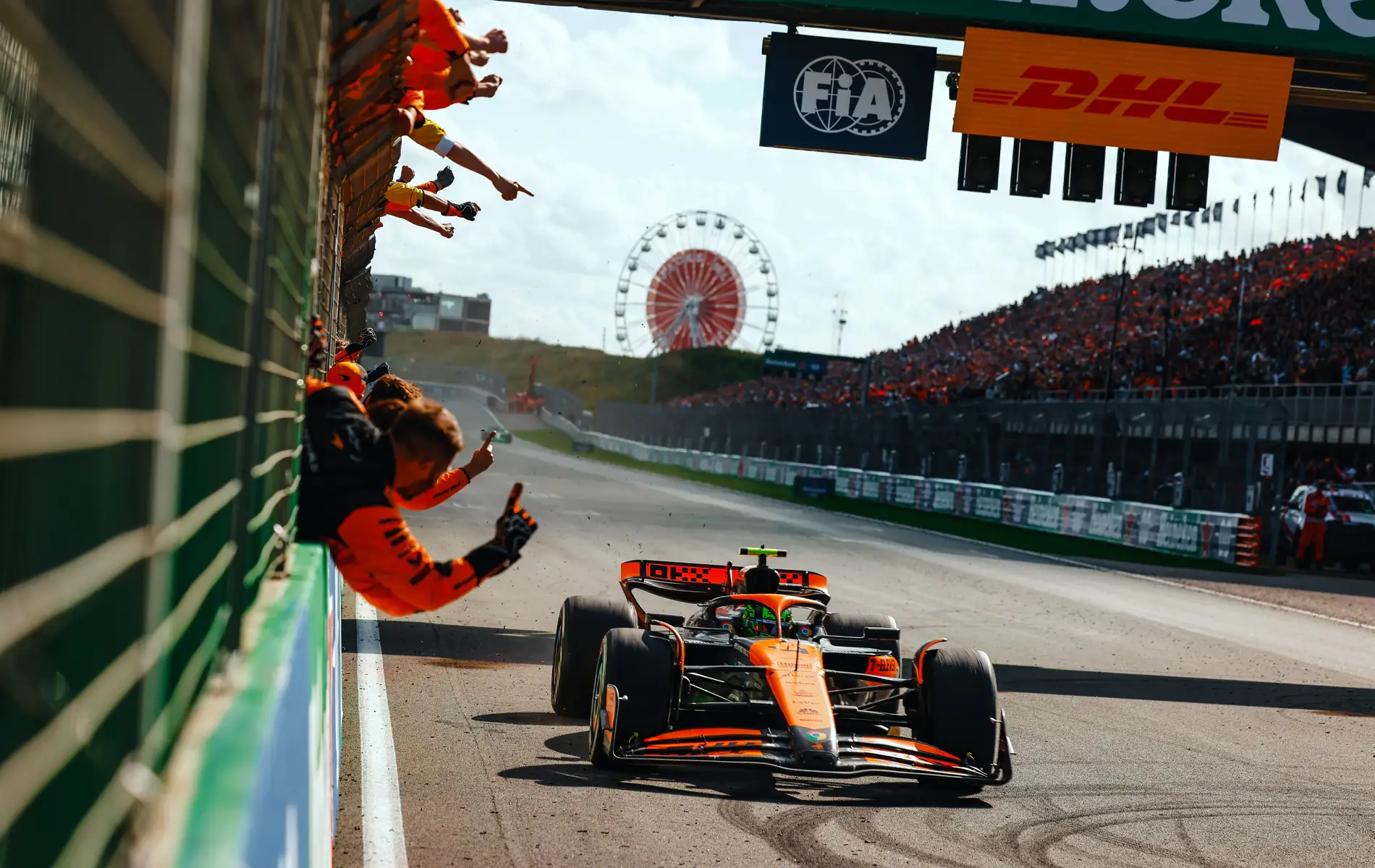
Highlights
- Rain began at Zandvoort 40 minutes before Dutch Grand Prix start
- Teams scrambled to protect equipment and adjust tyre strategies
- Intermediate tyres favored due to wet and slippery track conditions
- Liam Lawson briefly slid off track in slippery final corner
- Pit lane start penalties complicated wet race strategy for some drivers
- Unpredictable weather may influence race outcome and podium finishers
Rain hits Zandvoort 40 minutes before lights out, forcing rapid contingency plans. Contrary to the pre-race weather guidance, crews deploy covers and rethink tyre choices for a 72‑lap race.
Showers arrive earlier than forecasts indicated, intensifying ahead of the start. Sky Sports F1 describes heavy rain; Natalie Pinkham calls it “tipping it down” as conditions deteriorate across the grid.

The current ruleset compounds the challenge. This generation has not raced in wet conditions this season, increasing uncertainty over braking references, spray management, and crossover points.
Tyre strategy pivots toward intermediates, matching Anthony Davidson’s assessment of the track state. Green-walled rubber offers security while teams monitor grip loss and aquaplaning risk sector by sector.
“It’s tipping it down,” says Natalie Pinkham on Sky Sports F1.
Driver feedback reinforces that call. Oliver Bearman reports the surface is too wet for slicks, guiding teams toward conservative opening stints and flexible stop windows.
Liam Lawson slides into the gravel approaching the final corner, a brief off that underlines low grip and the punishment for over-commitment while temperatures fall.
Liam Lawson’s brief off at the final corner highlights how little margin exists in the wet.
The rain reshapes race management. Penalties forcing pit-lane starts after rule breaches complicate track position, especially with limited visibility and longer stopping distances.
Strategy groups prepare for multiple transitions. Forecasts fluctuate through the afternoon, with the latest Dutch Grand Prix forecast leaving teams unsure whether showers persist to lights out.
Teams anticipate several crossover points as weather bands move unpredictably across the circuit.
Operations staff lean on live radar, sector deltas, and drainage patterns to judge crossover timing. Historical trends matter less than immediate data in these gusty coastal conditions.
The home narrative adds intrigue. Max Verstappen faces scrutiny over form as Ferrari’s perceived killer edge threatens Red Bull’s control in mixed conditions.
Charles Leclerc’s qualifying errors, potentially weather-influenced, leave Ferrari managing risk and recovery. Any safety car or mistimed stop could swing podium prospects.
With changeable grip, teams plan offset stints, quick pit readiness, and conservative out-laps. Execution under pressure likely decides track position more than outright pace.
If conditions stabilise, leaders may convert early track position. If showers return, adaptability, tyre warm-up, and visibility management become decisive.
Either way, Zandvoort rewards agility and discipline as the field braces for a demanding, weather-led contest.
Visual Summary
Slick
💧
Inter
Sudden Zandvoort Downpour
Rain rewrites the script before lights out—teams scramble for intermediate tyres, drivers test the grip, and chaos brews on the grid.
⛺
Tents up, grid in panic
Tents up, grid in panic
Lawson off-track
Eyes on radar
“It’s tipping it down.”
“Pouring!”
Tyre chaos. Local stars under pressure. Surprise contenders await as rain redraws the Dutch GP grid.
Will adaptability outrun the storm?

Daniel Miller reports on Formula 1 Grand Prix weekends with race-day analysis, team-radio highlights, and point-standings updates. He explains power-unit upgrades, aerodynamic developments, and driver rivalries in straightforward, SEO-friendly language for a global F1 audience.