
https://shop.fervogear.com/cart

How Alonso’s Bold Strategy Secured P9 at Zandvoort Race


Highlights
- Fernando Alonso finished ninth at the Dutch Grand Prix
- Aston Martin used a rare one-stop strategy during the race
- Alonso earned two points after Max Verstappen’s retirement
- AMR26 showed chassis improvements but struggled with Honda power unit
- Lance Stroll retired early due to handling issues
- Aston Martin aims for more points as car development continues
Fernando Alonso finishes ninth at Zandvoort, converting P18 on the grid with a rare one-stop. Verstappen’s retirement aids the haul, yielding two valuable points for Aston Martin’s uneven 2026 campaign.
The AMR26 lacks top-six pace but benefits from tidy execution and Alonso’s tyre management. He ends just behind Nico Hulkenberg’s Audi after a controlled, low-risk run in clean air.

The weekend starts poorly. Sprint qualifying leaves Alonso 22nd after a scruffy lap. A pit-lane sprint start for setup changes aimed at race trim yields 18th, behind Lance Stroll.
Qualifying proves similarly tough, with Alonso and Stroll starting 18th and 19th. From there, Aston Martin prioritises tyre life and track position over outright pace.
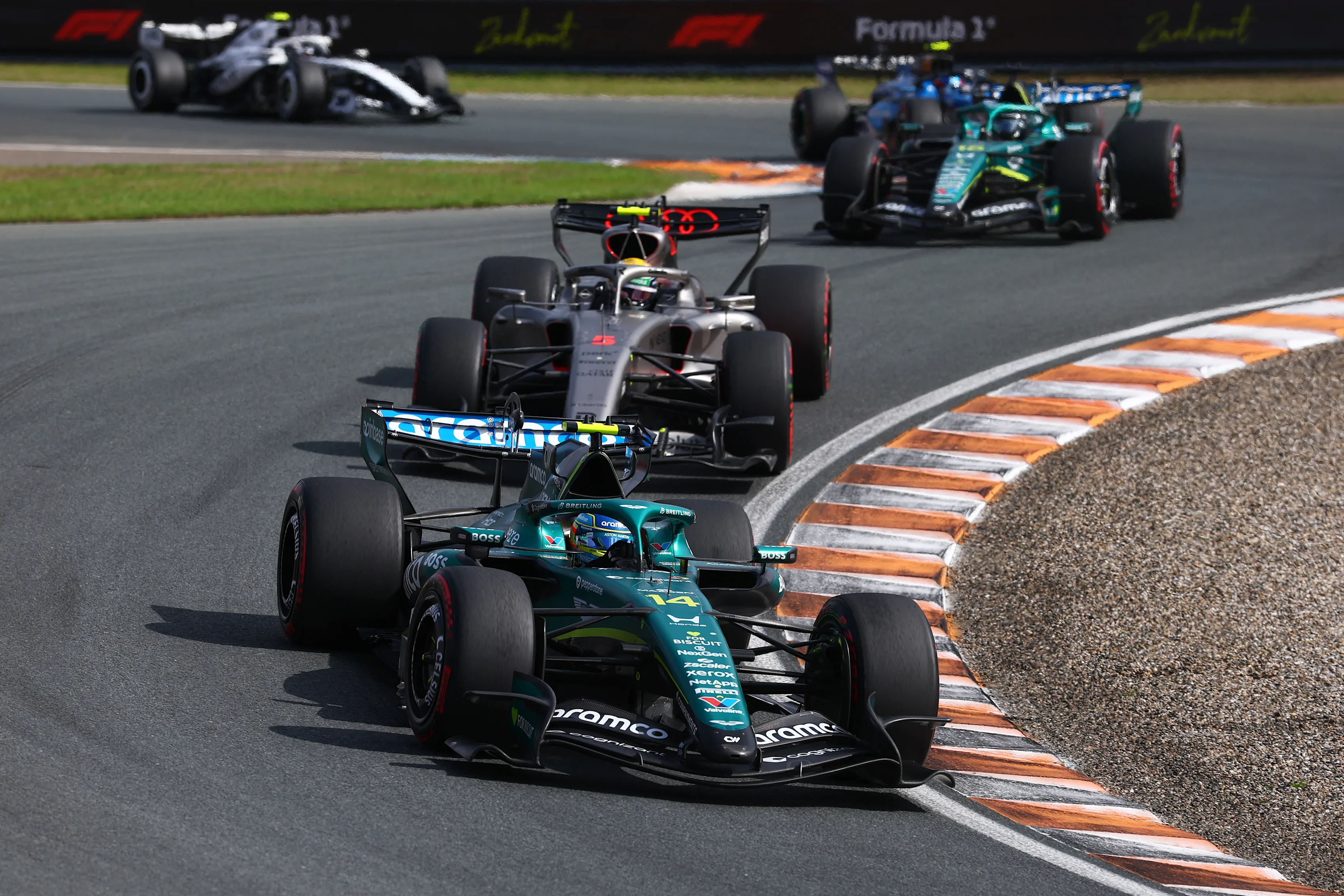
Alonso converts P18 on the grid into P9 with a disciplined one-stop at Zandvoort.
Starting on softs, Alonso runs deep before stopping on lap 34 for hards. The 37-lap closing stint holds together, allowing a one-stop while rivals commit to two.
Initially targeted as a two-stop, the plan flips when degradation stabilises. Extending the opening stint creates the option, with track position prioritised over undercut risk.
The car is stronger in corners than on straights, making passes difficult. When released into clear air, Alonso maintains pace and protects the tyres to bank the result.
AMR26 shows chassis gains, but straight-line speed and energy deployment remain limiting factors.
The AMR26’s upgraded aerodynamics bring better balance since Budapest, underlining incremental progress. Yet Honda’s new power unit still needs refinement, notably downshifts and engine-braking behaviour across corner entries.
Alonso tempers expectations, stressing development pace and integration work ahead, echoing his recent comments on Aston Martin and the challenges of sustaining upgrades.
Verstappen’s retirement reshapes strategy windows and promotes midfield runners. The race narrative is detailed in the Zandvoort report, underscoring how timing rewarded one-stoppers.
For Red Bull, the setback prompts an operational reset, with reliability and procedures under scrutiny after Zandvoort.
Two points arrive after Verstappen’s DNF reshapes track position and pit windows.
Team boss Mike Krack calls the weekend a step forward, citing the need to optimise aero-package setups and power-unit calibration while praising the garage for clean execution under pressure.
Stroll retires early with handling issues from damage, masking his representative pace. That limits cross-car learning but reinforces the value of Alonso’s clean run.
The result fits the competitive picture at Zandvoort, where leaders control tempo and Lando Norris excels. That context leaves execution as the main midfield differentiator.
Alonso leaves with three points for the season and a clearer baseline. The target now is repeatability as Aston Martin refines correlation, procedures, and race-day decisiveness.
Visual Summary
Alonso Climbs to P9
with One-Stop Masterclass 🟢
Zandvoort delivers two vital points after unconventional strategy.
1
pts
pts
➤
3
pts
pts
Unlikely Top 10
Started P18, climbed to P9 with bold one-stop tire risk and brilliant in-corner pace.
37 Laps
on hard tires
🛞 (one stop only!)
Aston Martin’s Resilience
Against the odds after a pit-lane start, Alonso’s strategic mastery and car upgrades bring Aston Martin back into the points at Zandvoort.

Daniel Miller reports on Formula 1 Grand Prix weekends with race-day analysis, team-radio highlights, and point-standings updates. He explains power-unit upgrades, aerodynamic developments, and driver rivalries in straightforward, SEO-friendly language for a global F1 audience.