
https://shop.fervogear.com/cart

McLaren Unleashes New H-Wing as Title Race Intensifies

Highlights
- McLaren to run new ‘H-wing’ rear wing at 2026 Italian GP
- McLaren’s upgrades aim to reduce drag, improve straight-line speed
- Ferrari introduces second ADUO engine upgrade to fix power issues
- Red Bull adds floor revisions and new exhaust tailpipe
- Aston Martin updates front suspension and floor for better downforce
- Mercedes uses low-downforce package, no new performance upgrades
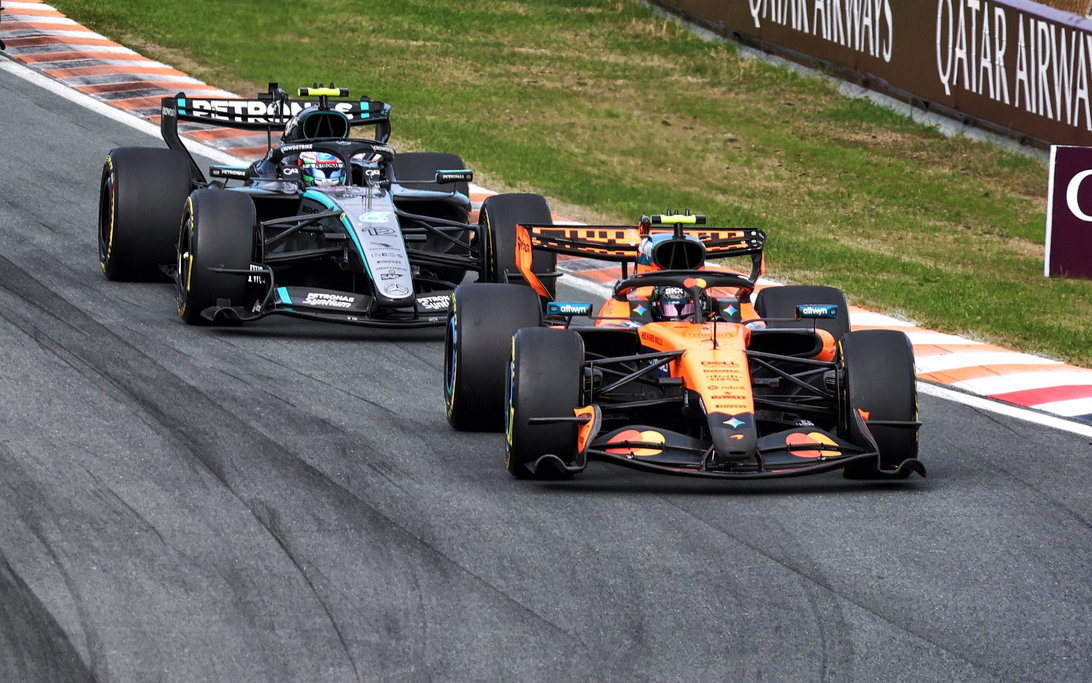
McLaren will debut its new ‘H-wing’ rear wing at the 2026 Italian Grand Prix in Monza, targeting lower drag and higher straight-line speed on F1’s quickest circuit.
The concept mirrors Ferrari’s preseason solution, since echoed by Red Bull. McLaren trialled its version in Hungary FP1 but held it back for qualifying and the race.

Monza’s low-downforce profile makes it the logical venue. McLaren also fits revised floor elements to better manage airflow and reduce drag, complementing its Monza upgrades plan.
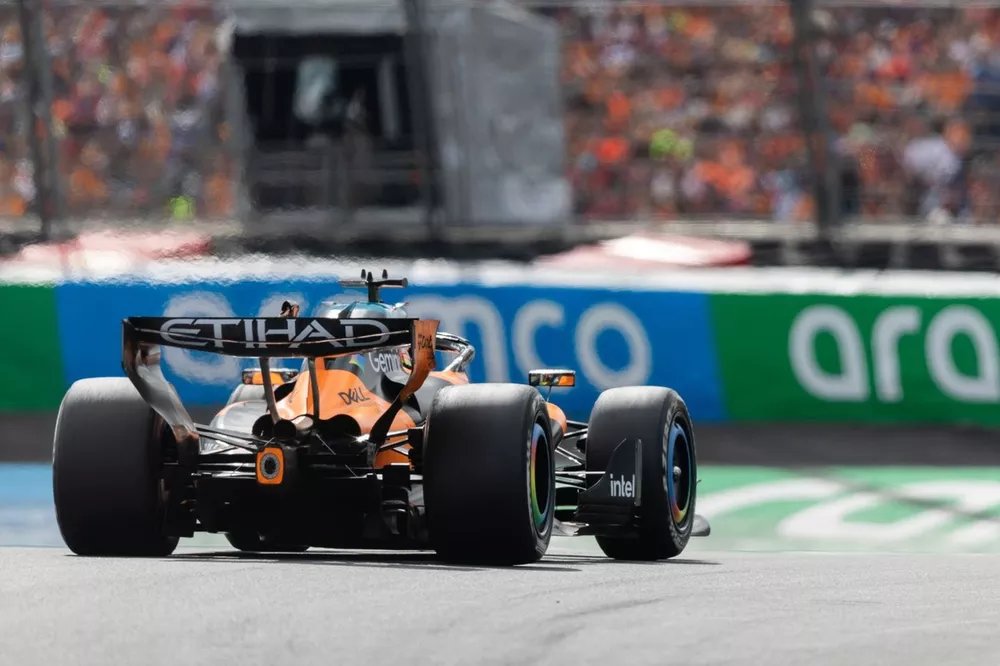
The ‘H-wing’ name reflects sponsor branding on the rear wing, not a formal technical designation. The intent is clear: trim resistance without surrendering essential stability through Lesmo and Parabolica.
That echoes McLaren’s 2010 F-duct era ingenuity, when branding masked aerodynamic thinking. The modern equivalent must work within strict passive-aero limits and parc fermé constraints.
Red Bull brings floor-bodywork revisions to increase local load and stability. It also installs a new exhaust tailpipe, plus a front-wing trial with adjusted endplates for evaluation in practice.
McLaren introduces ‘H-wing’ at Monza to cut drag and boost top speed.
Mercedes focuses on execution rather than new performance parts. The team runs a low-downforce configuration, aligning with Ferrari’s approach, as outlined in its team decision.
Ferrari’s centrepiece is a second ADUO engine upgrade, designed to address earlier power shortfalls. Monza’s long straights will quickly reveal whether that fix holds under race conditions.
Aston Martin introduces a front-suspension update, revised fairings, and floor-edge changes. The target is improved load distribution and predictability in low-drag trim.
Haas delivers a sizable package for Oliver Bearman and Esteban Ocon. New floor, bodywork, and rear-corner updates aim to clean up airflow and increase mechanical grip.
Ferrari deploys a second ADUO engine upgrade to close its power gap.
Alpine modifies its front-wing endplate to raise local load. It also removes the rear-wing SM pod fairing, seeking lower drag and better straight-line speed.
Williams and Racing Bulls run low-downforce setups without major additions. Racing Bulls still fits a new exhaust tailpipe to tidy central airflow.
Cadillac targets rear stability with updated floor geometry and diffuser sidewall vanes. Audi arrives without fresh parts, concentrating on baseline optimisation.
Red Bull pairs floor revisions with a new tailpipe to stabilise airflow.
For McLaren, execution matters as much as concept. The team must convert efficiency into lap time, amid an ongoing season challenge defined by fine margins.
Driver feedback will be critical. Expect Lando Norris to judge straight-line gains against cornering trade-offs, as explored in recent analysis.
With several teams trimming drag and refining aero maps, qualifying tow tactics and race DRS trains may decide outcomes. Marginal efficiency steps could reset the Monza hierarchy.
Visual Summary
H
The ‘H-Wing’ Arrives at Monza!
McLaren’s bold upgrade for high-speed domination
McLaren’s bold upgrade for high-speed domination
🚗
McLaren
H-Wing
& Floor
McLaren
H-Wing
& Floor
🚙
Red Bull
Exh., Floor
Red Bull
Exh., Floor
🚘
Ferrari
ADUO Eng.
Ferrari
ADUO Eng.
🚖
Mercedes
Low DF
Mercedes
Low DF
⚙️
Haas
Haas
🦖
RB
RB
Upgrade Race at Monza →
What Makes This Race Special?
- McLaren’s unique ‘H-wing’ for max speed on Monza’s straights
- Historic echoes of the F-duct revolution
- Almost every team in the upgrade race – floor tweaks, wings, exhausts
- Red Bull,
Ferrari, Mercedes: all in for Monza-specific change - Battle for points & glory heats up as championship pressure rises
Speed meets
Innovation at Monza
Innovation at Monza

Daniel Miller reports on Formula 1 Grand Prix weekends with race-day analysis, team-radio highlights, and point-standings updates. He explains power-unit upgrades, aerodynamic developments, and driver rivalries in straightforward, SEO-friendly language for a global F1 audience.