
https://shop.fervogear.com/cart

Max Verstappen’s Car Issue Won’t Be Fixed Until 2027, Red Bull Reveals

Highlights
- Red Bull’s car degradation issue unresolved until 2027
- Verstappen criticizes RB22’s rear grip and fragile handling
- Budget cap limits improvements for the current 2023 season
- Positive stability signs seen after Monza, improved in Madrid
- Team focuses on 2027 car redesign to fix problems
- Verstappen may not win a race this season for first time
Red Bull concedes Max Verstappen’s recurring degradation problem will not be fully solved before 2027, with the RB22 still losing performance across weekends despite the 2026 regulation reset.
Verstappen reports rear-axle grip fade and fragile handling, highlighted by Monza qualifying, when he called the car ‘made of paper’. The trend compromises confidence on push laps and race stints.

Team principal Laurent Mekies describes the phenomenon as complex and long-standing. The group advances cautiously, prioritising root-cause mapping over short-term patches, and accepting only partial mitigation for now.
Work from Monza carried into Madrid. Red Bull observed improved stability at the Spanish Grand Prix, yet only a step. The mechanism remains active, limiting the scope of weekend corrections.
Budget cap limits extensive RB22 redesigns. The team is shifting resource to 2027 car’s development, targeting chassis-level changes to resolve the recurring car performance degradation properly.
Red Bull does not expect a complete fix until 2027 despite the 2026 rules reset.
The behaviour harms both qualifying and race execution. Balance migrates as fuel drops and track evolves, with rear stability particularly sensitive to tyre state and aero load. Mekies declines specifics.
Competitive cost is clear. Verstappen may not win this season, underlining Red Bull’s recent struggles, despite a yearly victory record dating back to 2016.
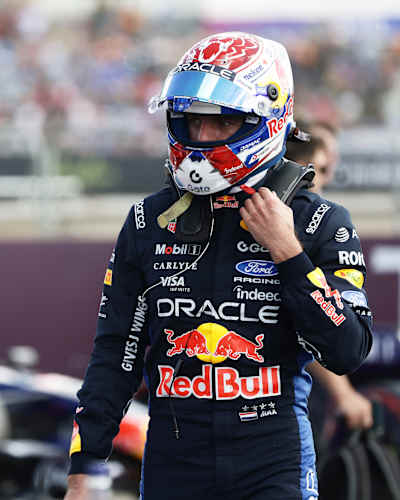
Budget cap constraints are pushing resources onto the 2027 chassis redesign.
Driver-engineering interplay remains central. Feedback shapes set-up experiments, yet trade-offs persist between peak cornering and tyre life. Recent Verstappen complaint clarifications reflect that focus.
Track profiles will decide opportunities. Cooler conditions, lower degradation tracks, or clean air could mask the weakness, creating chances. But a structural cure awaits the 2027 package.
Verstappen risks his first winless season since 2015.
For now, Red Bull concentrates on characterising the degradation signature, tightening operational control, and protecting tyre phases, while laying foundations for the redesign that should lift qualifying and race pace.
Visual Summary

Daniel Miller reports on Formula 1 Grand Prix weekends with race-day analysis, team-radio highlights, and point-standings updates. He explains power-unit upgrades, aerodynamic developments, and driver rivalries in straightforward, SEO-friendly language for a global F1 audience.