

https://shop.fervogear.com/cart

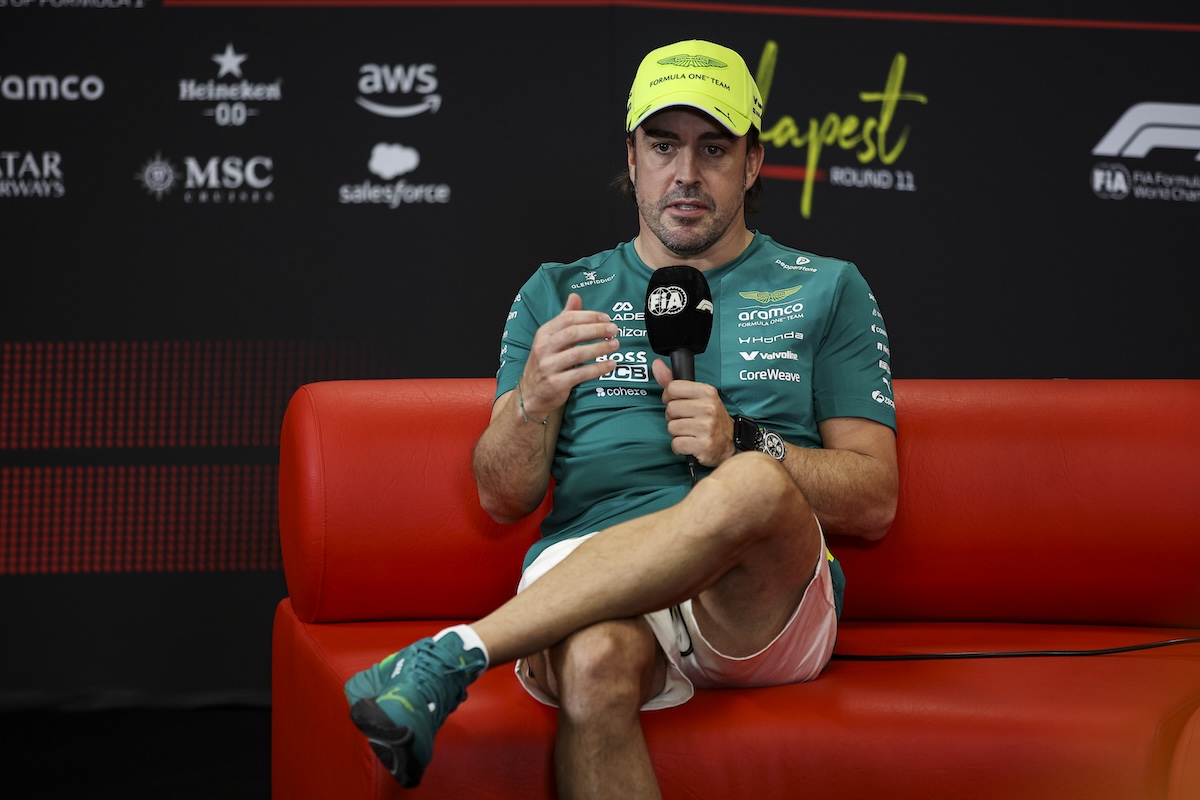
Fernando Alonso’s Aim in Baku: Save Key Parts for F1 Triple-Header

Highlights
- Aston Martin struggled with Honda engine power deficit in Baku.
- Alonso’s car was 30 km/h slower than Mercedes on main straight.
- Both drivers took engine penalties causing significant grid position drops.
- Alonso prioritized preserving car parts for Malaysia and Singapore races.
- Setup improvements boosted corner speed but engine power remains weak.
- Team focuses on reliability and preparation for upcoming triple-header.
Fernando Alonso and Aston Martin endure a compromised weekend in Baku, limited by a persistent Honda power deficit and grid penalties. Strategy shifts to damage limitation before the triple‑header.
Friday running, outlined in the Azerbaijan weekend build-up, underlines the scale of the challenge. Straight‑line speed proves the decisive weakness.

Speed‑trap data in FP2 shows Alonso around 30 km/h slower than George Russell on Baku’s two‑kilometre main straight. That deficit dictates race and qualifying prospects.

The gap persists into qualifying. Aston Martin sits roughly three seconds off Q1’s best and about four seconds from Russell’s pole benchmark.
Both drivers take fresh power unit elements and exceed allocations. Under the regulations, those changes trigger significant grid penalties.
Alonso still finds time for self‑assessment. A Turn 15 lock‑up in qualifying compromises his lap, prompting a pragmatic target of a clean, damage‑free race.
Speed-trap data shows Alonso around 30 km/h down on the main straight in FP2.
With points a long shot, the emphasis moves to preserving components for Malaysia and Singapore. Those circuits are less power sensitive and should favour Aston Martin’s package.
Overnight setup work brings progress. Alonso reports better cornering confidence in final practice and qualifying, trimming losses in the more technical sections.
However, the straight‑line shortfall remains the defining limitation. That weakness constrains overtaking and complicates race‑day strategy on Baku’s long flat‑out sections.
The team frames Baku as a penalty‑burn weekend. Clearing engine liabilities now should unlock flexibility and fresher hardware for the coming triple‑header.
Both Aston Martin drivers take engine penalties, accepting grid drops to reset their power unit pools.
Reliability and resource management take priority. The aim is to avoid damage, protect stock, and introduce parts when the competitive return is greater.
The broader paddock shows contrasting approaches. Williams introduces upgrades to chase gains, as covered in its Baku development push, while errors prove costly, exemplified by Esteban Ocon’s crash.
Alonso prioritizes part preservation for Malaysia and Singapore, where layouts better suit Aston Martin’s strengths.
Alonso’s measured approach anchors the campaign. Preparation now, combined with targeted setup steps and fresh engines, offers the clearest route to stronger results.
Visual Summary
Alonso faces powerless Baku: Survival, not attack
“Weekend to get penalties out of the way”
30 km/h slower
on the straight vs. Russell, huge grid drop, but eyes set on Malaysia & Singapore.
30 km/h slower
on the straight vs. Russell, huge grid drop, but eyes set on Malaysia & Singapore.
💡
Pragmatic
Parts preserved
⛑️
Survival Mode
Mistakes avoided
🔜
Triple-header
Malaysia & Singapore in sight
Turning setbacks into opportunity.
Alonso’s F1 wisdom: It’s a marathon, not a sprint.
Alonso’s F1 wisdom: It’s a marathon, not a sprint.

Daniel Miller reports on Formula 1 Grand Prix weekends with race-day analysis, team-radio highlights, and point-standings updates. He explains power-unit upgrades, aerodynamic developments, and driver rivalries in straightforward, SEO-friendly language for a global F1 audience.