

https://shop.fervogear.com/cart

Everything You Must Know About Sepang International Circuit Now

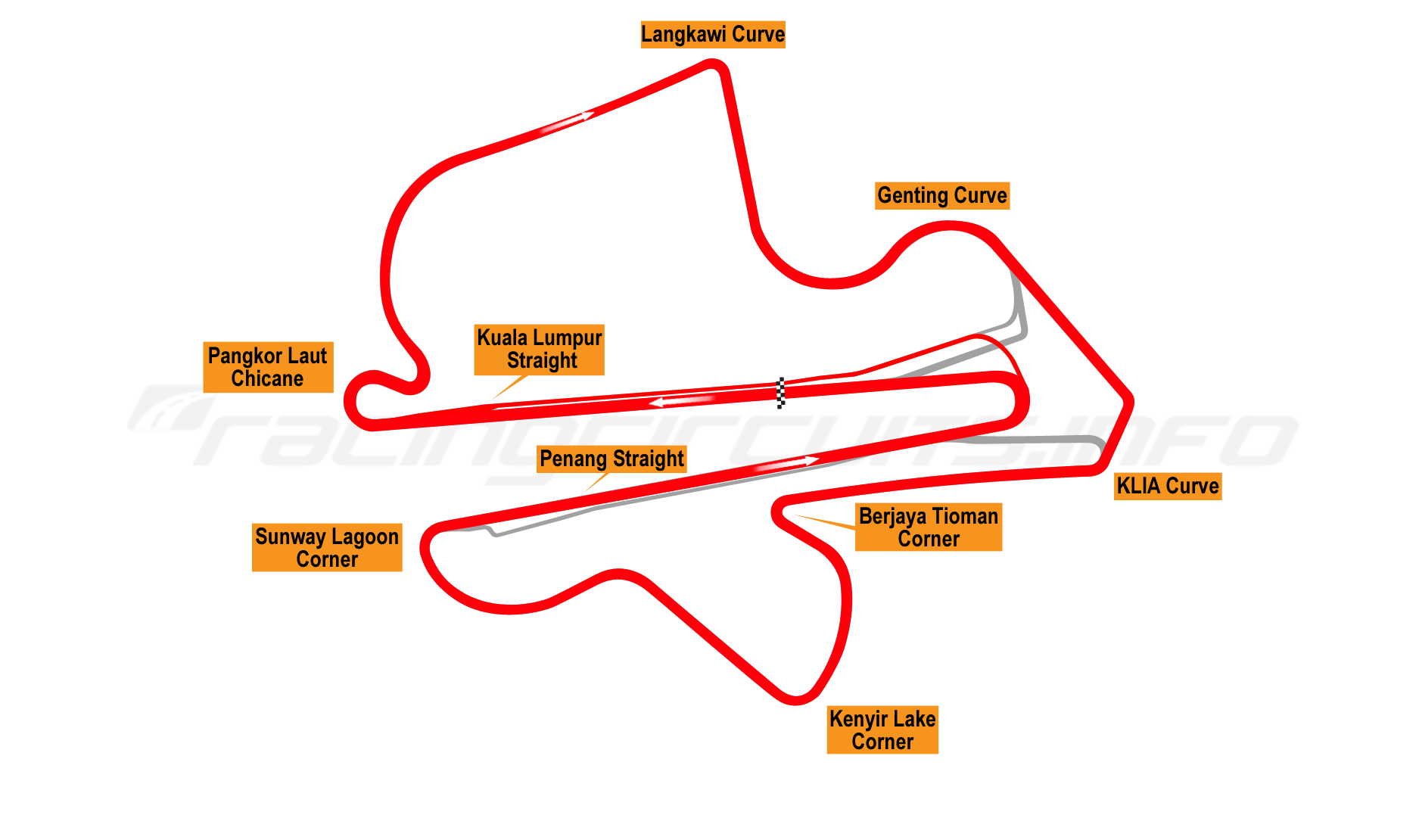
Highlights
- Malaysia returns to F1 calendar at Sepang after seven years
- Sepang circuit measures 5.543 km with 15 challenging turns
- Race features 56 laps covering over 310 kilometers
- Sebastian Vettel holds Sepang lap record from 2017
- Four Straight Mode zones aid speed and aerodynamics
- Unpredictable tropical weather impacts race strategy and car setups
Formula 1 returns to Malaysia as Sepang hosts the Bahrain Grand Prix, the first visit since 2017.
Malaysia steps in after Bahrain’s schedule change, highlighted in the Azerbaijan GP build-up, and arrives after George Russell’s Baku victory.
At the 5.543km Sepang International Circuit, drivers tackle 15 corners over 56 laps, totaling just over 310km. Sebastian Vettel’s 1:34.080 from 2017 remains the official lap record.
Opened in 1999 after construction began in 1997, Sepang is Hermann Tilke’s first clean‑sheet F1 design, backed by then–Prime Minister Dr Mahathir Mohamad.
Only a handful of current drivers know Sepang firsthand. Teams lean on simulations and Friday runs, a contrast to the streets of the Baku City Circuit last week.
Malaysia returns to F1 at Sepang after a seven‑year absence.
Jolyon Palmer characterises Sepang’s flow as smooth and progressive. Turn 1’s wide entry demands heavy braking, feeding immediately into the tighter Turn 2.
The middle sector prioritises high‑speed balance, especially through Turn 5, one of the fastest corners. Precision at Turns 11 and 14 is critical to avoid lock‑ups and protect exit speed.
Sebastian Vettel’s 1:34.080 from 2017 stands as Sepang’s lap record.
Four designated Straight Mode zones reduce drag on the main straight and between Turns 3–4, 8–9, and 14–15, forcing constant trade‑offs between cornering downforce and straight‑line efficiency.
Overtake Mode becomes available once per lap after the detection point at Turn 15’s end, offering a deployment window to convert slipstream gains into passes on the following straight.
Lewis Hamilton and Michael Schumacher share the most Sepang poles, five each.
Weather is the wildcard. High humidity, intense heat, and sudden rain can swing tyre temperatures, cooling performance, and grip, reshaping stint lengths and undercut viability within minutes.
Expect conservative cooling packages, robust brake management, and flexible ride‑height choices. Tyre degradation dictates strategy, with the risk of crossover conditions complicating slick‑intermediate decisions.
Only a handful of current drivers have raced at Sepang.
Lewis Hamilton and Michael Schumacher share the most poles here with five each. The previous Malaysian finale was 2017, featuring Kimi Räikkönen’s maiden win and Fernando Alonso’s 2012 wet‑weather Ferrari triumph.
Sepang’s blend of long straights and fast corners rewards efficient aero platforms. That balance should expose weaknesses, making reliability, cooling headroom, and tyre discipline as decisive as outright downforce.
Russell’s momentum meets Verstappen’s response. Cars strong in traction and braking at Baku may not automatically prosper here, but operational sharpness remains transferable.
Visual Summary
1
5
Sepang Returns: The Ultimate F1 Challenge 🇲🇾
5.543km · 15 turns · 56 laps · 310.4km race distance
Lap Record:
1:34.080 (S. Vettel, 2017)
Lap Record:
1:34.080 (S. Vettel, 2017)
Weather Drama
Unpredictable
Driver Experience
Most: Never raced here
Overtaking Zones
4 Straight Mode / 1 Overtake
Sepang at a Glance:
🏁 First F1 race: 1999
🛠️ Designed by Hermann Tilke
⏱️ Official Lap Record: 1:34.080 (Vettel, 2017)
🌧️ Famous for wild weather
🏆 Hamilton & Schumacher: 5 poles
🔄 Back after 7-year break!
🛠️ Designed by Hermann Tilke
⏱️ Official Lap Record: 1:34.080 (Vettel, 2017)
🌧️ Famous for wild weather
🏆 Hamilton & Schumacher: 5 poles
🔄 Back after 7-year break!

Zane Muniz writes across NASCAR, IndyCar, F1, IMSA, NHRA, and dirt-racing news. His breaking-news alerts and event previews ensure motorsport fans never miss a lap, drift, or drag-strip showdown.