
https://shop.fervogear.com/cart

Laurent Mekies Triumphs in Ending Red Bull’s Second Seat Curse

Highlights
- Laurent Mekies credited with ending Red Bull’s second seat “curse”
- Isack Hadjar promoted in 2026, showing strong performance
- Mekies fosters supportive, low-pressure environment for drivers
- Hadjar returned from wrist injury with podium finish
- Team shifts away from Horner and Marko’s high-pressure approach
- Red Bull’s second seat stability improves under Mekies’ leadership
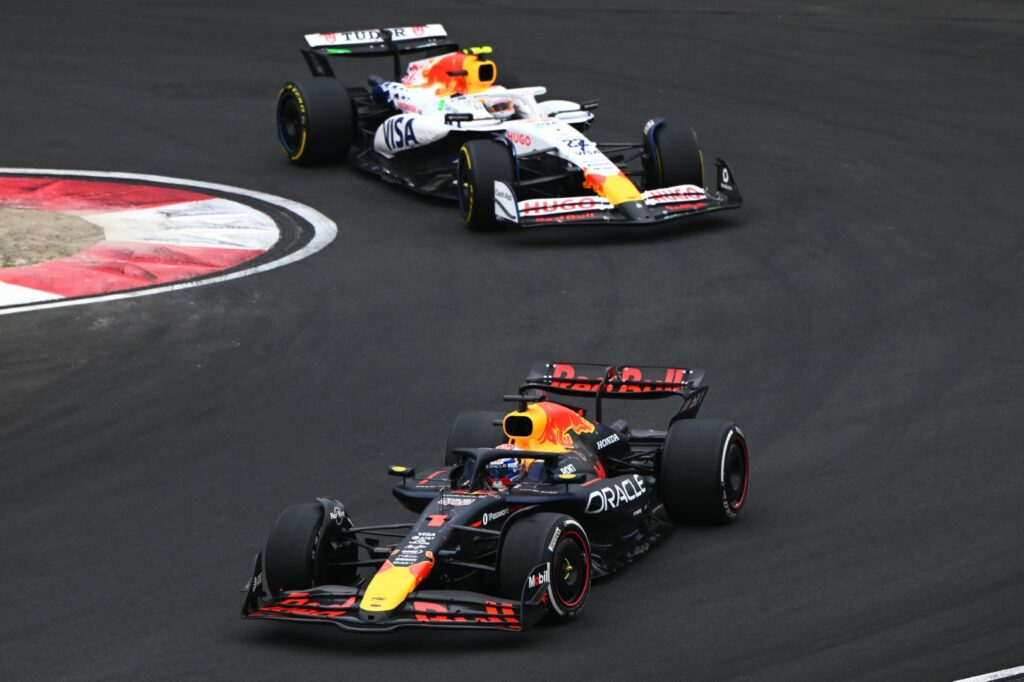
Laurent Mekies is credited with ending Red Bull’s long‑standing “second seat curse” in 2026, stabilising support for Max Verstappen through a clear cultural reset.
Under Mekies, support replaces pressure. The new approach appears to unlock Isack Hadjar’s potential after promotion from Racing Bulls, with clearer expectations and a calmer working environment.

Seat churn is well documented: Sergio Perez departed for Cadillac, Liam Lawson lasted two 2025 weekends before returning to Racing Bulls, and Yuki Tsunoda completed the 2025 season. More on Lawson’s brief spell appears in a detailed report published recently.
Mekies replaces a pressure‑first doctrine with a support‑led culture to stabilise Red Bull’s second seat.
Hadjar’s step up brings consistent pace and cleaner execution, giving Red Bull greater strategic latitude with offsets, undercuts, and safety‑car responses alongside Verstappen’s benchmark speed.
Broadcaster Will Buxton credits Mekies on the Up To Speed podcast, arguing performance gains follow reduced fear of failure and more constructive debriefs.
Mekies rejects the pressure‑first doctrine associated with Christian Horner and Helmut Marko. His composure during the Italian GP weekend underlined that approach, as noted in analysis of Monza operations earlier this month.
Hadjar missed several races for a wrist injury, then returned in Azerbaijan with third place, suggesting patience beats premature returns.
Hadjar returned from a wrist injury to take third in Baku, validating a patient, driver‑first management approach.
This cultural reset stabilises feedback loops, improves correlation work, and reduces operational volatility, strengthening Red Bull’s constructors challenge through cleaner weekends and more predictable tyre and stint execution.
A steadier number two improves development feedback and strategic flexibility alongside Verstappen.
Verstappen remains the performance reference. A confident second driver increases test item turn‑around and race‑day optionality, vital as the 2026 regulation landscape rewards efficient development cycles.
Broader structural alignment also appears in the recent Red Bull–Aston Martin signing, indicating strategic moves that complement personnel and cultural changes across departments.
If sustained, Mekies’ methods could finally neutralise the “curse” and deliver a balanced pairing, turning the second seat from liability into a competitive force.
Visual Summary
CURSE BROKEN!
1️⃣
Verstappen
SUPPORT
🥉
Hadjar
Perez
Lawson
Tsunoda
Hadjar
Laurent Mekies
ends Red Bull’s
“second seat curse”
ends Red Bull’s
“second seat curse”
By making support the new magic formula,
Red Bull finally has a strong, stable #2 in Isack Hadjar—after years of pressure and revolving doors.
Red Bull finally has a strong, stable #2 in Isack Hadjar—after years of pressure and revolving doors.
Hadjar returns from injury to score P3 at Baku 🏆
Proof support works
Proof support works

Daniel Miller reports on Formula 1 Grand Prix weekends with race-day analysis, team-radio highlights, and point-standings updates. He explains power-unit upgrades, aerodynamic developments, and driver rivalries in straightforward, SEO-friendly language for a global F1 audience.