

https://shop.fervogear.com/cart


Hamilton Reveals Why He Took Charge in Singapore


Highlights
- Hamilton ignored Ferrari’s pit order during virtual safety car
- Broadcast issues prevented radio communication from being heard live
- Hamilton took responsibility for split-second pit stop decision
- Started on medium tyres, unlike Leclerc on soft tyres
- Finished sixth after struggling with tyre performance and strategy
- Hamilton and Ferrari discuss improving communication and strategy coordination
Lewis Hamilton explains why he stayed out under the virtual safety car in Singapore, rejecting Ferrari’s pit call and triggering a strategy defeat that shapes the run‑in to Austin.
Ferrari maintains the instruction to “box” was issued in time, but TV feed problems masked the radio. Hamilton skipped media duties while unwell, prolonging uncertainty over the call.

Before the United States Grand Prix, he details a split‑second judgement at pit entry, unaware Charles Leclerc had already pitted. He accepts responsibility and moves on with the team.
“I made the call at pit entry, and it was the wrong one. I own that.”
The divergence starts on the grid. Hamilton chooses mediums to extend, while Leclerc runs softs to attack early. That split increases the undercut risk once a VSC compresses deltas.
Grip on the mediums underwhelms. The opening stint costs time, then late softs fade. Track position flips after the VSC, and Hamilton trails Leclerc on slower tyres, compounding losses.
He finishes sixth. Given Ferrari’s pace and Max Verstappen’s Red Bull benchmark, the missed VSC pit window proves decisive against rivals with cleaner execution.
Ferrari and Hamilton debrief deeply. The driver stresses the value of challenge, but alignment on trigger points, double‑stack feasibility, and delta targets needs tightening under pressure.
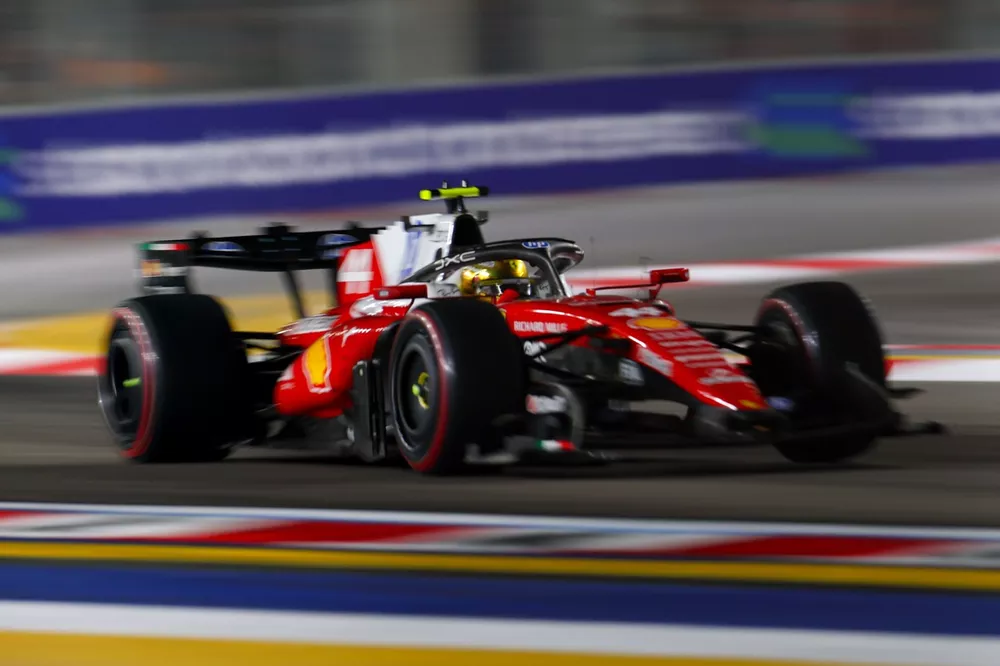
Ferrari’s radio was issued, but broadcast issues meant viewers never heard it.
The Singapore outcome fits the season’s theme: marginal gains lost at the edges. Strategy discipline and communication cadence must match Hamilton’s instinctive calls at VSC pit entry speed.
Points dropped sting. The setback dents momentum but does not end Hamilton’s title ambitions if Ferrari converts opportunities across the next phase.
Context matters. Marina Bay’s recent track fixes sharpen undercut power and reduce safety‑car variability. That increases the premium on nailing VSC timing and pit‑lane choreography.
“We win and lose together” remains the post‑race message, but execution must rise with the stakes.
Ferrari reviews decision trees and stack protocols against its evolving F1 blueprint. Clearer “box” language and earlier commit points should protect track position next time.
Hamilton’s explanation also clarifies the original storyline. The VSC call arrives; the driver makes a last‑moment stay‑out decision; the outcome underscores the cost of misalignment.
Looking ahead to Austin, the aim is simple: preserve optionality, pre‑agree the VSC triggers, and turn sharp instincts into consistent results after that costly Singapore misfire.
Visual Summary
🚫 Ignored Team Pit Call
✔️ Ferrari’s Ideal Pit
SPLIT-SECOND CHOICE
🥈P2
Leclerc
(pitted)
(pitted)
🛞
6th
Hamilton
(stayed out)
(stayed out)
⚡
Team radio mix-up — missed VSC pit stop!
Team radio mix-up — missed VSC pit stop!
Hamilton: Medium ➔ Soft
Leclerc: Soft ➔ Medium
“Questioning the norm is how you find greatness. Not every gamble pays off — but we win and lose together.”
— Lewis Hamilton
Communication chaos, unlucky tyres, big risks: Singapore 2026 left Hamilton sixth. Next time, will fortune follow the bold?

Daniel Miller reports on Formula 1 Grand Prix weekends with race-day analysis, team-radio highlights, and point-standings updates. He explains power-unit upgrades, aerodynamic developments, and driver rivalries in straightforward, SEO-friendly language for a global F1 audience.