

https://shop.fervogear.com/cart


NASCAR to Revamp Phoenix Dogleg to Reduce Driver Strain

Highlights
- NASCAR plans to soften Phoenix Raceway’s dogleg banking curve.
- High g-forces in dogleg cause physical strain on drivers.
- Bubba Wallace supports changes; Tyler Reddick urges caution.
- Modifications aim to preserve excitement while improving safety.
- Changes expected after review and testing in upcoming seasons.
NASCAR plans to modify Phoenix Raceway’s dogleg in upcoming seasons to cut driver load, responding to sensor data and extensive feedback about the banking-to-apron transition first used in 2018.
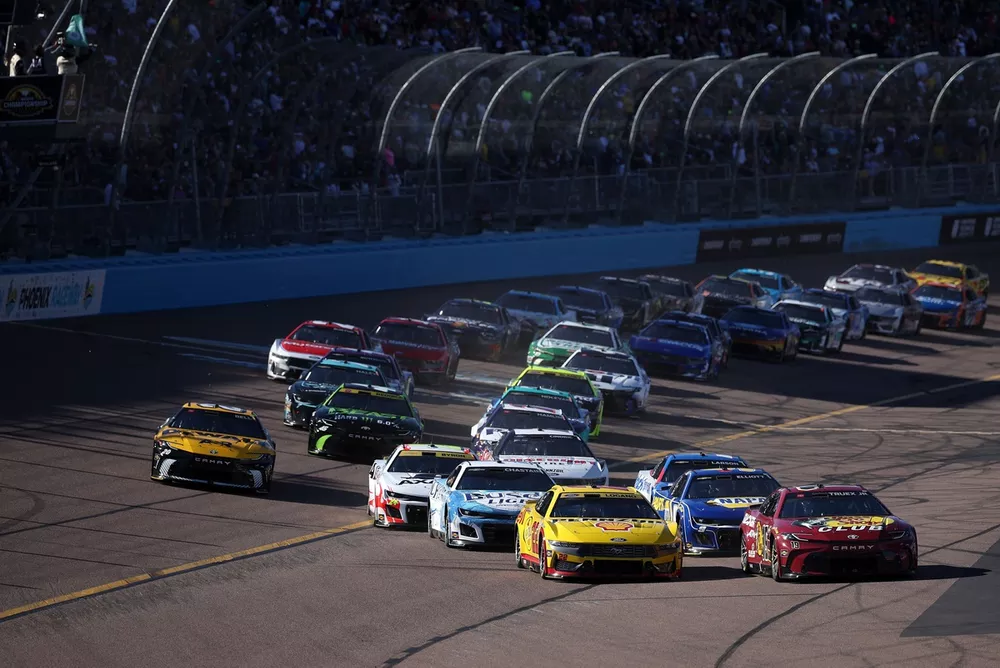
Officials target the abrupt step change that generates sharp lateral and vertical spikes, particularly on restarts, when fields fan across the apron to exploit the shortcut.

Wearable devices record loads in the low teens of g, not the exaggerated 30s, yet the repeated hits across two Phoenix events each year accumulate and raise long-term health concerns.
Bubba Wallace backs change, arguing the current loads are painful and potentially harmful with age, while acknowledging his initial g estimate overshot the verified figures.
“It looks cool on TV but it might not be cool when we’re 60,” says Bubba Wallace, supporting a softer dogleg.
Tyler Reddick advocates caution. He frames the jolts as comparable to other circuit bumps and stresses cockpit setup, belts, and seating position as key mitigations rather than eliminating the shortcut.
Christopher Bell likens the hit to the old Watkins Glen bus stop curbs. Joey Logano calls it painful yet entertaining, warning that over-smoothing risks muting the spectacle on restarts.
Joey Logano warns that over-smoothing the dogleg could blunt the restart spectacle fans expect at Phoenix.
The likely engineering route is to soften the banking profile through the dogleg, reducing the step change while preserving multiple lines and the strategic shortcut that defines the venue.
Wallace floats a deterrent, suggesting grass returns in key zones to make cutting costly to cars. William Byron supports change but emphasizes the restart energy created since the 2018 flip.
G-force sensor data in the low teens prompts NASCAR to prioritize driver health without removing the dogleg shortcut.
Byron notes a smoother, more continuous line could unlock different handling traits as the surface ages, though the present impact profile challenges reliability and driver comfort.
Recent 2026 NASCAR Phoenix results underscore how restarts and dogleg usage shape track position and strategy, informing NASCAR’s cost-benefit analysis on safety versus competitive variability.
Any adjustment could arrive alongside operational tweaks, including Phoenix pit stalls work and potential brake changes at Phoenix, forming a coherent package for driver welfare and racing quality.
NASCAR proceeds with simulations, data gathering, and targeted tests before execution, aiming to implement changes in upcoming seasons without eroding the competitive DNA that Phoenix has cultivated.
Visual Summary
🏎️
G-Force: 12g 💥
Phoenix Raceway’s dogleg shortcut delivers painful jolts
— and NASCAR is working to fix it.
— and NASCAR is working to fix it.
23
“It looks cool on TV, but it might not be cool when we’re 60 and struggling.”
– Bubba Wallace
45
“Other tracks feel as rough.
Safety gear matters.”
– Tyler Reddick
22
“Painful—yet makes restarts wild!”
– Joey Logano
NASCAR’s Challenge: Soften the Shock — Keep the Chaos
Modifications are coming: Expect a smoother dogleg for driver health, but with enough edge to keep Phoenix’s electric restarts.
Fans want drama.
Drivers want relief.
NASCAR is racing to balance both.
Fans want drama.
Drivers want relief.
NASCAR is racing to balance both.

John Martinez delivers real-time NASCAR Cup Series and Truck Series news, from live race updates to pit-lane strategy analysis. A graduate of the University of Northwestern Ohio’s Motorsports Technology program, he breaks down rule changes, driver tactics, and championship points with crystal-clear reporting.