https://shop.fervogear.com/cart

Ferrari Sparks Huge Backlash with Shocking F1 Team Orders

Highlights
- Ferrari issued controversial team order at 2002 Austrian Grand Prix.
- Barrichello led but allowed Schumacher to pass for the win.
- Schumacher won by 0.182 seconds amid boos from the crowd.
- FIA fined Ferrari €1 million for podium conduct breach.
- FIA banned team orders influencing race results from October 2002.
- Incident influenced Formula 1 rules on team orders until 2011.
Ferrari’s team order at the 2002 Austrian Grand Prix turns a routine one-two into a flashpoint. Twenty-four years on, it still frames debate over strategy versus sporting integrity.
Rubens Barrichello starts from pole after outqualifying Ralf Schumacher by around three-tenths. Michael Schumacher, third on the grid, sits in range but lacks the pace to force the issue.

After the stops, Barrichello leads by over four seconds. Ferrari then instructs him to cede victory to Schumacher, despite the German’s 21-point lead after four wins in five races.
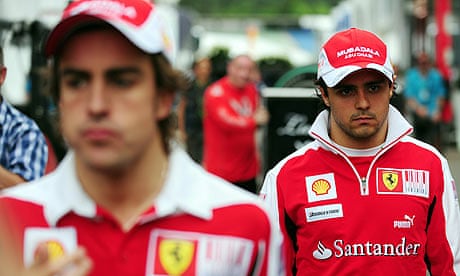
Schumacher held a 21-point championship lead before Austria, underscoring how conservative the call appeared.
A pre-race arrangement prioritises Schumacher’s title push, stipulating that the driver leading before the final stop would yield to him. Barrichello complies late on, slowing at the final corner.
Schumacher wins by 0.182s and the grandstands respond with boos. The optics are damaging, undermining a dominant car’s credibility and the spectacle’s competitive trust.
Schumacher beat Barrichello by 0.182s after a final-corner slow-down on the last lap.
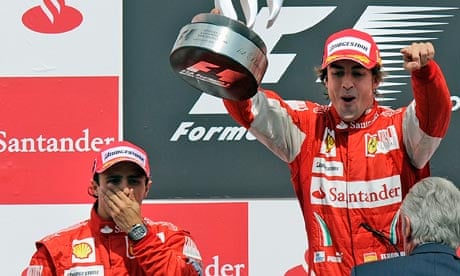
The podium only intensifies the fallout. Schumacher ushers Barrichello to the top step and gestures for him to take the winner’s trophy, tacitly acknowledging how contrived the outcome appears.
Regulatory response follows. The FIA fines Ferrari, Schumacher, and Barrichello a combined €1 million for podium-protocol breaches, not for the order itself, exposing a gap in the rulebook.
Ferrari received a combined €1 million fine — not for team orders, but for breaching podium protocol.
That gap closes later in 2002, when the FIA bans team orders that influence results. The prohibition lasts until 2011, pushing teams toward coded messages and strategy offsets.
The FIA banned team orders affecting results from October 2002, a prohibition that lasted until 2011.
In competitive terms, the instruction proves unnecessary. Schumacher dominates the season regardless, amassing double Barrichello’s points and sealing a fifth title with ease.
The episode hardens scrutiny of team orders. Teams weigh championship objectives against public perception, aware that clumsy execution can erode confidence in on-track authenticity.
The 2002 Spielberg call endures because it exposes the boundary between rational strategy and sporting fairness. Ferrari’s choice remains a defining, divisive moment in Formula 1.
Visual Summary
“Let Michael Pass For The Championship”
Ferrari’s most controversial team order 🚨
😢 😡 boooo!
Fans erupted in anger
at the blatant order.
at the blatant order.
🥇 → 🥇
Schumacher hands
the trophy to Barrichello.
the trophy to Barrichello.
💰❌
€1 million fine for
breaking podium protocol.
breaking podium protocol.
May 12, 2002
Outrage sparks the FIA’s team orders ban (Oct 28, 2002)
⬇️
Teams forced to play fair — until the rule is lifted in 2011.
⬇️
Teams forced to play fair — until the rule is lifted in 2011.
The Austrian Handover: F1’s Most Notorious Team Order
In one unforgettable corner, Ferrari’s call changed F1 rules and forever split fans on what’s fair in racing.

Daniel Miller reports on Formula 1 Grand Prix weekends with race-day analysis, team-radio highlights, and point-standings updates. He explains power-unit upgrades, aerodynamic developments, and driver rivalries in straightforward, SEO-friendly language for a global F1 audience.